
HR Helpdesk Chatbot: Benefits, Use Cases, and Top Tools (2026)
Learn how an HR helpdesk chatbot automates employee support, reduces tickets, and improves HR efficiency. Explore AI HR helpdesk chatbot tools and best practices.


TL;DR
An HR helpdesk chatbot transforms traditional ticketing into instant, conversational employee support with workflow automation and real-time HR system access.

The highest-value use cases include HR ticket triage, leave requests, payroll help, onboarding workflows, and benefits support at enterprise scale.
Successful deployment depends on strong HRIS integrations, clean knowledge sources, multi-channel access, and enterprise-grade security controls.
Workativ stands out by combining no-code AI agents, advanced HR workflows, live inbox escalation, and deep HR analytics in one platform.
Small companies do not always have a dedicated HR helpdesk team. But employees still expect fast answers to leave questions, payroll issues, onboarding steps, benefits queries, and policy requests. When every question becomes a ticket, lean HR teams spend more time managing queues than solving meaningful people problems.
That is why HR helpdesk ticketing automation small company is becoming a practical priority. The right HR helpdesk chatbot can automate HR support tickets, resolve repetitive employee questions before they ever reach HR, and use AI triage HR support requests to route complex cases with full context.
This guide explains how HR helpdesk chatbots work, where they reduce ticket volume, which use cases matter most, and how to choose a platform that supports employee HR ticket auto-resolution and HR case management automation without requiring a large support team.
For small and growing companies, the shift is simple: You don't need a help desk team. You need a help desk bot.
What is an HR helpdesk chatbot?
An HR helpdesk chatbot is an AI-powered support bot that helps employees resolve HR questions without waiting for a manual response from HR. It can answer common queries about leave, payroll, onboarding, benefits, policies, documents, and approvals while guiding employees through the next step.
For small companies, the value goes beyond instant answers. A chatbot helps automate HR support tickets by resolving repetitive requests before they enter the HR queue. Instead of every employee question becoming a ticket, the bot handles common issues automatically and sends only complex cases to HR.
This makes an HR helpdesk chatbot especially useful for teams that need an HR helpdesk without dedicated support team. It supports employee HR ticket auto-resolution, uses AI triage HR support requests when human review is needed, and helps HR teams manage escalations through HR case management automation.
In short, it gives small companies a practical way to deliver faster HR support without hiring a full helpdesk team.
For a better understanding of how Workativ actually helps SMBs with its HR chatbots, take a look at our HR chatbot page.
How it differs from traditional HR helpdesk software
Employees can interact naturally instead of filling forms, receive instant responses instead of waiting for HR teams, and get repetitive queries resolved automatically before they become tickets. This is the core difference between traditional HR case queues and employee HR ticket auto-resolution.
Traditional HR helpdesk software manages the queue. An AI HR helpdesk bot reduces the queue by resolving common questions instantly and using AI triage HR support requests only when a case needs human review.
Key capabilities of AI HR helpdesk chatbots
An HR AI agent does more than answer basic HR questions. It helps small HR teams reduce manual ticket handling by resolving common requests automatically and routing complex cases with context.
Here’s how it works:
Answers repetitive HR questions instantly Employees can ask about policies, leave, payroll, onboarding, benefits, documents, or approvals and get immediate answers without waiting for HR.
Helps automate HR support tickets Instead of creating a ticket for every routine question, the chatbot identifies repetitive requests, answers them automatically, and prevents unnecessary tickets from entering the HR queue.
Supports employee HR ticket auto-resolution Common requests such as leave balance checks, payslip access, policy clarification, benefit information, and onboarding steps can be resolved without human involvement.
Uses AI triage for HR support requests When a request is too complex for automation, the chatbot understands the issue, classifies the request, identifies urgency, and routes it to the right HR owner.
Enables HR case management automation For requests that need human review, the chatbot can create or update a case, attach conversation history, categorize the issue, and preserve employee context so HR can resolve it faster.
Reduces dependency on a dedicated helpdesk team Small companies can deliver faster HR support without hiring dedicated HR helpdesk agents for every employee request. The bot becomes the first layer of support, while HR handles only exceptions.
Key benefits of an HR helpdesk chatbot
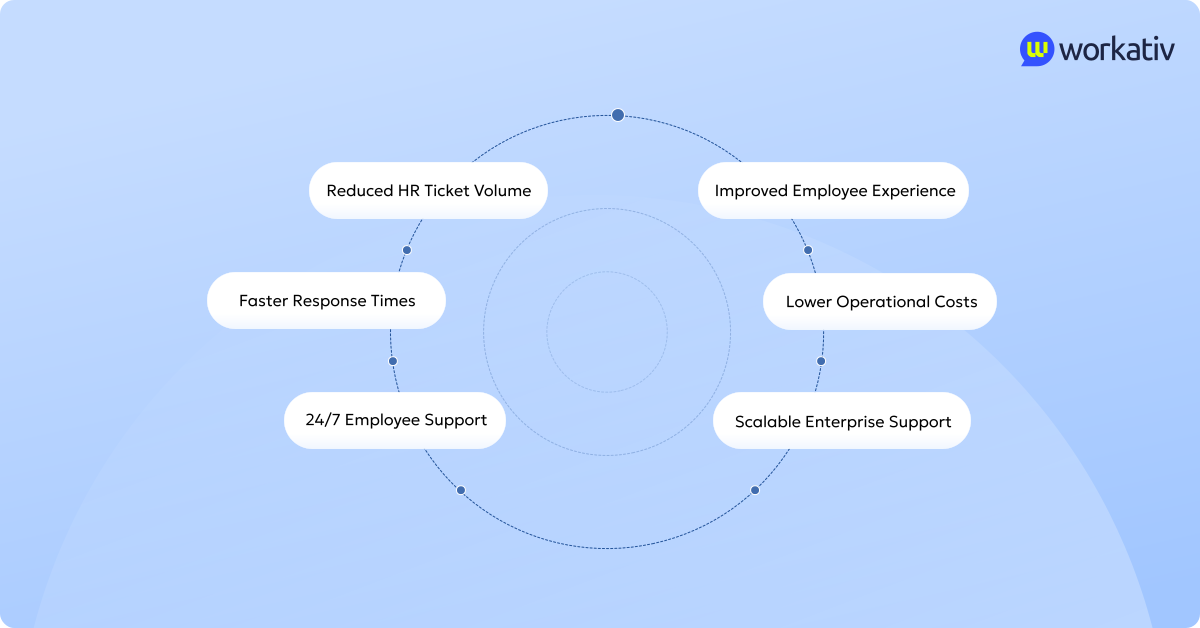
As organizations adopt digital HR solutions, the HR helpdesk chatbot is becoming a critical tool for improving employee support and operational efficiency. Unlike traditional systems, an AI HR helpdesk chatbot not only answers queries but also automates workflows and scales HR services across the organization.
Here are the key benefits of implementing an enterprise HR service desk chatbot:
Reduced HR ticket volume : Through help desk automation, an HR helpdesk chatbot resolves repetitive employee queries such as leave policies, payroll questions, onboarding steps, benefits information, and document requests before they become tickets. This helps teams automate HR support tickets instead of manually reviewing every request.
For small companies, this matters because they often cannot afford dedicated HR helpdesk agents. Workativ acts as the first layer of HR support, auto-resolving up to 80% of repetitive HR support requests and escalating only the complex ones with full context.
Faster response times : Unlike traditional HR systems, an AI HR helpdesk chatbot delivers instant answers instead of delayed responses. Employees no longer need to wait for HR teams, as the chatbot provides real-time support, improving efficiency across the enterprise HR service desk chatbot environment.
24/7 employee support : An enterprise HR service desk chatbot ensures employees get support anytime, regardless of time zones. This is especially critical for global organizations where HR teams cannot operate round the clock, but employees still need immediate assistance.
Improved employee experience : An HR helpdesk chatbot offers a seamless, conversational experience, making it easier for employees to find the information they need. By providing quick and accurate responses, an AI HR helpdesk chatbot reduces frustration and improves overall employee satisfaction.
Lower operational costs : By automating high-volume queries, an HR helpdesk chatbot reduces the dependency on large HR support teams. Organizations can lower operational costs while maintaining high-quality support through an AI HR helpdesk chatbot.
Scalable enterprise support : This is critical for hr shared services teams — an enterprise HR service desk chatbot handles thousands of queries simultaneously, scaling support without increasing HR workload.
What small companies should look for in HR helpdesk ticketing automation
Small companies should not evaluate HR helpdesk automation the same way large enterprises do. They usually do not have dedicated HR support agents, implementation teams, or months to configure a complex HR service desk.
For HR helpdesk ticketing automation a small company usually looks for, the following must include in the platform:
auto-resolution for repetitive HR questions
AI triage for complex HR support requests
HR case routing with full employee context
no-code workflow setup
HRIS and payroll integrations
shared inbox for escalations
analytics for ticket deflection and unresolved requests
pricing that supports SMB budgets
The goal is simple: reduce the number of tickets HR has to touch manually.
Top use cases of enterprise HR service desk chatbots
Across hr chatbot use cases, the HR helpdesk chatbot plays a critical role in automating repetitive tasks and streamlining internal support as employee request volumes grow. An AI HR helpdesk chatbot goes beyond answering questions by enabling end-to-end workflow automation, making it a key component of any enterprise HR service desk chatbot strategy.
Here are the most impactful use cases:
Employee HR ticket auto-resolution:
An HR helpdesk chatbot can resolve common employee requests related to leave balances, payroll, benefits, onboarding, policy access, and document submissions without creating a ticket. This supports employee HR ticket auto-resolution, where repetitive questions are answered instantly and HR teams only handle exceptions.
For small companies, this reduces the need for a dedicated HR helpdesk team while still giving employees fast support.
AI triage HR support requests
An HR service desk chatbot can use AI triage HR support requests to understand employee intent, classify the issue, detect urgency, and route complex requests to the right HR owner. Instead of manually sorting every request, HR teams receive only the cases that need human review.
Workativ strengthens this by routing escalations with full conversation history and request context, so HR does not need to ask employees to repeat the same details.
HR case management automation
Not every HR request can be fully auto-resolved. Some issues require approvals, policy interpretation, payroll review, document verification, or manager input. This is where HR case management automation becomes important.
Employee onboarding automation : An AI HR helpdesk chatbot can guide new hires through onboarding workflows, including document submissions, training resources, and policy acknowledgments. This ensures a consistent and structured onboarding experience while reducing manual HR effort.
Leave and attendance management : An HR helpdesk chatbot can automate leave requests, approvals, and attendance tracking by integrating with HR systems. Employees can check balances, apply for leave, and receive instant updates without submitting manual requests.
Benefits and payroll assistance : An enterprise HR service desk chatbot provides instant access to payslips, compensation details, and benefits information. An AI HR helpdesk chatbot ensures employees can retrieve critical financial and benefits data securely and without delays.
FROM TICKETING TO INSTANT RESOLUTION
Workativ's agentic AI resolves leave, payroll, onboarding and benefits queries - no ticket created.
No-code · HRIS integrations · Live in days
See Workativ AI in action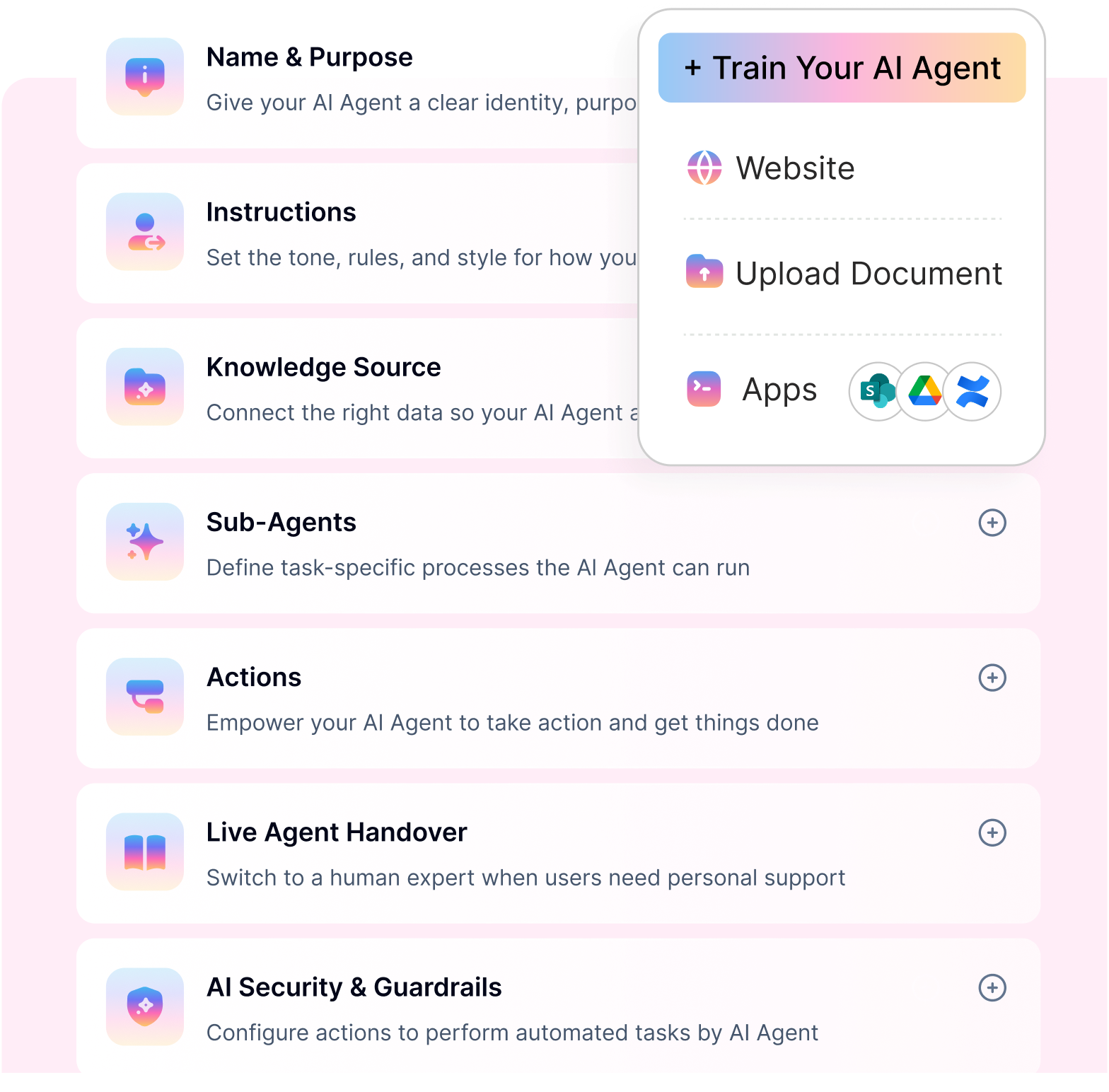
Top HR helpdesk chatbot tools in 2026
As organizations evaluate solutions, choosing the right HR helpdesk chatbot depends on factors like automation capabilities, integrations, scalability, and ease of deployment. Modern platforms are evolving from basic ticketing systems to intelligent solutions such as AI HR helpdesk chatbots, enabling end-to-end HR support automation within an enterprise HR service desk chatbot ecosystem.
Here are the leading tools to consider:
Workativ
Workativ is an Agentic AI-powered HR helpdesk bot built for companies that need HR support automation without building a dedicated helpdesk team.
Workativ ensures you don't need a help desk team. You need a help desk bot.
Small companies cannot afford to assign HR agents to every leave question, payroll request, onboarding task, policy clarification, or benefits query. Workativ solves this by auto-resolving up to 80% of HR support requests before they ever become tickets.
When a request is complex, Workativ routes it to the right HR owner with full context, including conversation history, request details, and employee information. This gives lean HR teams the operating power of enterprise HR case management without the enterprise cost.
With Workativ, you can seamlessly manage enterprise HR ops at SMB cost.
Key features:
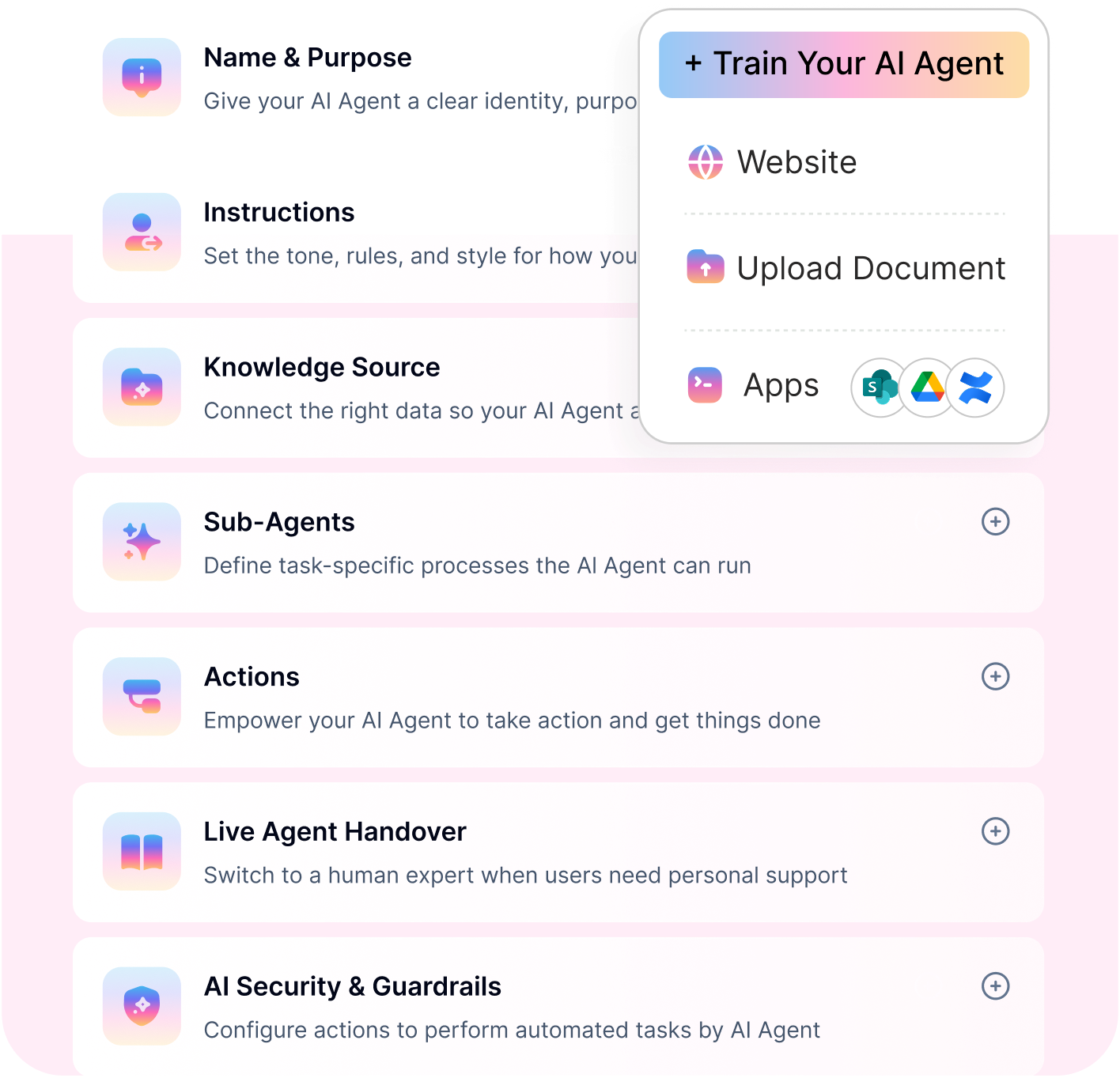
AI agent studio: Build and customize your HR helpdesk chatbot using a no-code interface, enabling rapid deployment without developer dependency
AI app workflows: Automate HR processes such as onboarding, approvals, leave requests, and document handling with end-to-end workflow automation
HR AI knowledge (RAG): Train your AI HR helpdesk chatbot using HR policies, documents, and internal knowledge bases to deliver accurate, context-aware responses
Agentic RAG: Enable advanced reasoning and multi-step query handling, allowing the chatbot to resolve complex employee queries intelligently
Shared live inbox: Provide HR teams with a centralized workspace to manage conversations, escalations, and support requests efficiently
Live chat inbox: Allow seamless handoff from chatbot to human agents, ensuring complex queries are handled without disruption
AI insights and HR analytics: Gain visibility into employee queries, chatbot performance, and HR trends to continuously optimize support operations
HR system integrations: Connect with HR platforms like BambooHR, Workday, and enterprise tools to automate workflows and data access
Multilingual support (90+ languages): Support global employees by delivering responses in multiple languages through your enterprise HR service desk chatbot
AI guardrails: Ensure secure, compliant interactions with built-in controls for data privacy, access, and response governance
Pre-built templates: Accelerate deployment with ready-to-use HR workflows, reducing setup time for your HR helpdesk chatbot
Enterprise AI search for HR: Enable employees to instantly find information across HR systems, documents, and knowledge bases
Location-based responses: Deliver personalized and compliant responses based on employee location, policies, and regional requirements
Pros:
Employee HR ticket auto-resolution
Workativ resolves repetitive HR requests before they become tickets, reducing the volume of cases HR teams need to manage manually.
AI triage for HR support requests
When a request cannot be fully resolved by AI, Workativ classifies it, captures context, and routes it to the right HR owner.
HR case management automation
Workativ supports case creation, routing, updates, and escalation workflows so complex employee issues move through the right process faster.
HR helpdesk without a dedicated support team
Small companies can deliver faster HR support without hiring dedicated helpdesk agents for every employee request.
Faster response and resolution times: Employees get real-time answers while complex issues are intelligently routed, improving overall support efficiency
Significant cost savings: Reduce operational costs by minimizing HR support dependency and automating repetitive workflows through an AI HR helpdesk chatbot
Improved employee satisfaction: Deliver consistent, conversational, and fast support experiences across the enterprise HR service desk chatbot ecosystem
Faster time to deployment: Launch your HR helpdesk chatbot in days using no-code setup and templates, eliminating long implementation cycles
Enterprise-ready and scalable support: Handle thousands of interactions simultaneously with a secure and scalable enterprise HR service desk chatbot built for global teams
Cons:
May be perceived as “SMB product” by some enterprises: Workativ’s affordable pricing and free entry plan can sometimes be perceived as a budget-tier solution by enterprise buyers who associate higher price points with premium positioning.
Advanced AI analytics available in higher tiers: While core AI capabilities are included across plans, more advanced analytics, deeper insights, and enhanced AI performance dashboards are available only in the Business and Enterprise tiers.
Pricing:
Workativ offers transparent, tiered pricing that scales from pilots to enterprise deployments.
Starter Plan — $99/month : Free plan for evaluation, including 1 AI agent, up to 200 AI chat sessions, analytics, shared live inbox, and security guardrails.
Business Plan — $349/month : Designed for growing teams with higher chat limits, multiple AI agents, workflow actions, advanced analytics, and branding removal.
Enterprise Plan — Custom pricing : Built for large organizations requiring higher scale, advanced security, custom integrations, RBAC, MFA, and dedicated support.
Zendesk
Zendesk is a ticketing-first platform that has expanded into AI-powered support, making it a viable option for building an HR helpdesk chatbot on top of a structured service desk system. It combines traditional ticket management with automation and AI add-ons to support HR workflows within an enterprise HR service desk chatbot setup.
Key features:
Ticketing and case management: Provides a structured system to track, manage, and resolve HR requests efficiently
AI-powered automation (add-ons): Offers basic AI HR helpdesk chatbot capabilities to automate responses and deflect repetitive queries
Workflow and SLA management: Enables HR teams to define workflows, set SLAs, and automate escalations
Knowledge base integration: Allows employees to access HR policies and documentation through self-service portals
Multi-channel support: Supports email, chat, and web channels for consistent employee support
Pros:
Strong ticketing foundation: Ideal for organizations that need structured HR case management and tracking
Mature ecosystem and integrations: Integrates with a wide range of enterprise tools and existing workflows
Cons:
Limited native conversational AI: Requires additional setup or add-ons to function as a full AI HR helpdesk chatbot
Can become expensive at scale: Costs increase with add-ons, automation features, and advanced capabilities
Pricing
Suite Team: Starts around $55/agent/month with basic support features
Suite Growth: Around $89/agent/month with automation and customization
Suite Professional: Around $115/agent/month with advanced analytics and workflows
Enterprise plans: Custom pricing with advanced security and scalability options
Freshdesk
Freshservice and Freshdesk are Freshworks platforms that combine ITSM capabilities with customer and employee support, making them suitable for building an HR helpdesk chatbot within a structured service environment. They offer automation, ticketing, and self-service features that can be extended into an enterprise HR service desk chatbot setup.
Key features:
ITSM and ticketing system: Provides robust ticket management for handling HR and internal support requests efficiently
Workflow automation: Enables automation of HR processes such as onboarding, approvals, and request routing
AI-powered chatbot (Freddy AI): Offers basic AI HR helpdesk chatbot functionality for query resolution and ticket deflection
Service catalog: Allows employees to raise HR requests through predefined forms and workflows
Multi-channel support: Supports email, chat, portals, and collaboration tools for employee interactions
Pros
Strong automation capabilities: Ideal for organizations looking to automate HR and IT workflows within a single platform
Unified service management: Combines IT and HR support in one system, improving operational efficiency
Cons
Limited advanced conversational AI: Chatbot capabilities are not as deep as dedicated AI HR helpdesk chatbot platforms
Customization can be complex: Advanced workflows and configurations may require setup effort
Pricing
Freshdesk: Starts with a free plan, paid plans from ~$15 to $79/agent/month
Freshservice: Starts around $19/agent/month, with higher tiers for automation and enterprise features
Enterprise plans: Custom pricing with advanced capabilities and integrations
ServiceNow
ServiceNow is an enterprise-grade platform designed for large-scale HR service delivery, making it a strong option for organizations building an HR helpdesk chatbot within a unified service management ecosystem. It combines advanced workflow automation, case management, and AI capabilities to power an enterprise HR service desk chatbot at scale.
Key features:
Enterprise HR service delivery (HRSD): Provides end-to-end HR case management and service automation across the organization
Advanced workflow automation: Automates complex HR processes such as onboarding, offboarding, and approvals
AI and virtual agent: Offers chatbot capabilities for handling employee queries and enabling basic AI HR helpdesk chatbot interactions
Knowledge management: Centralized HR knowledge base for consistent and accurate employee support
Deep enterprise integrations: Connects with HR systems, ITSM tools, and enterprise applications
Pros:
Highly scalable and robust: Ideal for large enterprises with complex HR operations and high ticket volumes
Strong automation and customization: Supports advanced workflows and enterprise-grade configurations
Cons:
Complex implementation: Requires significant time, resources, and technical expertise to deploy
High cost: Pricing can be expensive, especially for advanced features and enterprise usage
Pricing
Custom pricing: Based on modules, users, and enterprise requirements
Typically positioned at the higher end of the market for large organizations
AGENTIC RAG. NO-CODE. ENTERPRISE-READY.
Workativ automates up to 80% of HR helpdesk queries, with live handoff, analytics and 90+ languages.
No-code setup · Pre-built templates · Live in days
See Live DEMO in actionManageEngine
Overview: ManageEngine is a traditional service desk platform that has evolved to include AI capabilities, making it suitable for organizations looking to extend their system into an HR helpdesk chatbot. It focuses on structured ticketing and workflow automation, with limited conversational depth compared to modern AI HR helpdesk chatbot platforms.
Key features:
Ticketing and case management: Provides a structured system to manage HR requests, incidents, and service tickets efficiently
Workflow automation: Enables rule-based automation for approvals, routing, and task management across HR processes
AI capabilities (limited): Offers basic AI HR helpdesk chatbot features such as automated responses and ticket suggestions
Self-service portal: Allows employees to raise requests and access HR knowledge through a centralized portal
ITSM-driven architecture: Built primarily for IT service management with extensions for HR support use cases
Pros:
Strong ticketing capabilities: Ideal for organizations that rely on structured HR service workflows and process control
Cost-effective for mid-sized teams: Generally more affordable than large enterprise platforms
Cons:
Limited conversational AI depth: Not designed as a fully capable AI HR helpdesk chatbot for complex interactions
UI and experience can feel outdated: Compared to modern conversational-first platforms
Pricing:
Standard / Professional / Enterprise tiers: Pricing varies based on features and the number of technicians
Typically, more affordable than enterprise tools, with additional costs for advanced capabilities
SysAid
SysAid is a service management platform that combines ITSM capabilities with workflow automation, making it suitable for organizations looking to extend their system into an HR helpdesk chatbot. While it has introduced AI-driven features, it remains primarily a ticketing-first solution with limited conversational depth compared to advanced AI HR helpdesk chatbot platforms.
Key features
Ticketing and service management: Provides a centralized system to manage HR requests, incidents, and service tickets efficiently
Workflow automation: Enables automation of HR processes such as approvals, onboarding tasks, and request routing
AI and automation capabilities: Offers basic AI HR helpdesk chatbot functionalities like automated responses and ticket classification
Self-service portal and knowledge base: Allows employees to access HR information and raise requests through a unified portal
Asset and system management: Tracks organizational assets and integrates service management across departments
Pros
All-in-one service management platform: Combines ticketing, automation, and asset management in a single solution
Strong workflow automation: Helps streamline HR and IT processes with configurable workflows
Cons
Limited conversational AI capabilities: Not as advanced as dedicated AI HR helpdesk chatbot platforms
Primarily ITSM-focused: Requires adaptation for HR-specific use cases and employee experience
Pricing
Custom pricing: Based on organization size, features, and deployment requirements
Typically mid-range compared to enterprise ITSM tools
Ivanti
Ivanti is an enterprise service management platform that extends ITSM capabilities into HR service delivery, making it suitable for organizations building an HR helpdesk chatbot within a structured service environment. While it has introduced AI-driven features, Ivanti remains primarily a ticketing-first solution with strong workflow automation and limited conversational depth compared to modern AI HR helpdesk chatbot platforms.
Key features
HR service management (HRSM): Provides structured HR case management for employee requests such as onboarding, policy queries, and internal services
Ticketing and workflow automation: Enables automated routing, approvals, and task management across HR processes
AI and automation capabilities: Supports basic AI HR helpdesk chatbot functionalities like query handling and ticket classification
Self-service portal: Allows employees to access HR services, submit requests, and find information through a unified interface
Enterprise integrations: Connects with HR systems and enterprise tools to streamline service delivery
Pros
Strong ticketing and process control: Ideal for organizations that require structured HR workflows and governance
Enterprise-grade service management: Designed to support large organizations with complex service operations
Cons
Limited conversational AI depth: Not built as a fully advanced AI HR helpdesk chatbot platform
Implementation complexity: Setup and customization can require significant effort and resources
Pricing
Custom pricing: Based on modules, users, and enterprise requirements
Typically positioned for mid-to-large enterprises with scalable needs
SolarWinds
SolarWinds Service Desk is a cloud-based service management platform designed primarily for ITSM, with capabilities that can be extended to support an HR helpdesk chatbot. It focuses on structured ticketing, automation, and service delivery, with emerging AI features but limited conversational depth compared to advanced AI HR helpdesk chatbot platforms.
Key features
Ticketing and incident management: Provides a robust system to manage HR and internal service requests efficiently
Workflow automation: Enables automation of approvals, task routing, and service processes across HR operations
Service catalog: Allows employees to request HR services through predefined forms and workflows
Knowledge base and self-service portal: Helps employees find HR information and resolve queries independently
AI and automation capabilities: Offers basic AI HR helpdesk chatbot features such as ticket suggestions and automation
Pros
Strong ticketing capabilities: Reliable platform for managing structured HR support workflows
Easy to use and deploy: Simpler implementation compared to large enterprise tools
Cons
Limited conversational AI depth: Not designed as a fully capable AI HR helpdesk chatbot for complex interactions
Primarily ITSM-focused: Requires customization to fully support HR-specific use cases
Pricing
Subscription-based pricing: Typically starts around $39/agent/month (varies by features and scale)
Enterprise plans: Custom pricing with additional automation and integration capabilities
InvGate Service Management
InvGate Service Management is an ITSM platform that extends into HR operations, making it a strong hybrid solution for building an HR helpdesk chatbot within a structured service desk environment. It focuses on workflow-driven automation, enabling organizations to streamline HR requests while supporting an enterprise HR service desk chatbot setup.
Key features
ITSM + HR service management: Supports both IT and HR use cases, enabling unified service delivery across departments
Workflow-focused automation: Automates HR processes such as onboarding, approvals, and request routing with configurable workflows
Ticketing and case management: Provides structured handling of HR queries, incidents, and employee requests
Self-service portal and knowledge base: Allows employees to access HR information and raise requests independently
AI and automation capabilities: Offers basic AI HR helpdesk chatbot features for query handling and ticket deflection
Pros
Strong workflow automation: Ideal for organizations focused on process efficiency and structured HR operations
Unified service management approach: Combines IT and HR service delivery in a single platform
Cons:
Limited advanced conversational AI: Not as capable as dedicated AI HR helpdesk chatbot platforms
Customization may require effort: Advanced workflows and configurations can take time to set up
Pricing:
Custom pricing: Based on organization size, features, and deployment needs
Typically positioned as a mid-range ITSM solution
Rezolve AI
Rezolve AI is a modern, Microsoft Teams-first platform designed to deliver an AI HR helpdesk chatbot experience within enterprise collaboration environments. It focuses on conversational AI, knowledge automation, and workflow execution, making it a strong choice for organizations building an enterprise HR service desk chatbot with a chat-first approach.
Key features
Microsoft Teams-native deployment: Delivers the HR helpdesk chatbot directly within Teams, enabling employees to access support without switching tools
Conversational AI engine: Provides intelligent query understanding and automated responses for HR-related questions
Knowledge automation: Uses AI to surface answers from HR documents, policies, and enterprise knowledge bases
Workflow automation: Automates HR processes such as onboarding, approvals, and request handling
Ticketing and escalation: Integrates with ITSM tools to create, manage, and escalate tickets when needed
Pros
Strong conversational experience: Designed as a chat-first AI HR helpdesk chatbot, improving employee engagement and usability
Seamless Teams integration: Ideal for organizations that heavily use Microsoft Teams for internal communication
Cons
Platform dependency: Best suited for Microsoft Teams environments, limiting flexibility for other channels
Limited standalone ecosystem: Relies on integrations for deeper service management capabilities
Pricing
Custom pricing: Based on enterprise requirements, users, and integrations
Typically positioned for mid-to-large enterprises.
Managing Isn’t Resolving
Ticketing tools manage HR requests. Workativ resolves them, instantly, automatically, end to end.
Challenges of implementing HR helpdesk chatbots
While an HR helpdesk chatbot can significantly improve employee support, organizations often face challenges during implementation. Successfully deploying an AI HR helpdesk chatbot within an enterprise HR service desk chatbot ecosystem requires the right strategy, integrations, and governance.
Here are the most common challenges:
Poor knowledge base quality : An HR helpdesk chatbot is only as effective as the data it is trained on. Incomplete, outdated, or unstructured HR documentation can lead to inaccurate responses, reducing trust in the system and impacting employee experience.
Lack of integrations : Without seamless integration with HR systems, ITSM tools, and internal platforms, an AI HR helpdesk chatbot cannot automate workflows effectively. This limits its ability to provide real-time data, process requests, or deliver end-to-end automation.
Low adoption by employees : Employees may hesitate to use an enterprise HR service desk chatbot if the experience is not intuitive or if responses are inconsistent. Poor user experience and lack of awareness can slow down adoption rates.
Limited automation capabilities in basic tools : Many platforms offer basic chatbot features but lack true workflow automation. Without advanced capabilities, an HR helpdesk chatbot may only answer queries rather than resolve them, limiting its overall impact.
No dedicated HR helpdesk team
Small companies often do not have dedicated HR helpdesk agents to monitor queues, categorize tickets, follow up with employees, and escalate issues manually. If every payroll, leave, policy, or onboarding question becomes a ticket, HR quickly becomes overloaded.
This is why HR helpdesk without dedicated support team is a critical use case. The chatbot should auto-resolve repetitive questions first, then route only complex cases with context.
Security and compliance concerns : Handling sensitive employee data requires strict compliance with regulations and enterprise security standards. Organizations must ensure their AI HR helpdesk chatbot includes data protection, access control, and compliance frameworks to avoid risks.
How Workativ solves HR helpdesk chatbot challenges
Implementing an HR helpdesk chatbot can be complex if the platform only creates another queue for HR to manage. Workativ solves this by reducing the number of tickets that enter the queue in the first place.
For small companies, this is the main advantage. Workativ enables HR helpdesk ticketing automation small company by auto-resolving repetitive employee requests, using AI triage HR support requests for complex cases, and supporting HR case management automation when human review is required.
This gives lean HR teams enterprise HR ops at SMB cost.
Here’s how Workativ solves these challenges:
Faster deployment with no-code setup : Workativ enables organizations to launch an HR helpdesk chatbot in days using a no-code interface. HR teams can build, customize, and deploy without relying on developers, significantly reducing implementation time and effort.
Pre-built HR automation workflows : With ready-to-use templates and AI app workflows, Workativ allows teams to automate common HR processes such as onboarding, leave requests, approvals, and employee queries. This ensures your AI HR helpdesk chatbot goes beyond answering questions to actually resolving them.
Seamless integrations with HR systems : Workativ integrates with HR platforms like BambooHR, Workday, and other enterprise tools, enabling real-time data access and end-to-end automation. This ensures your enterprise HR service desk chatbot can handle requests, update records, and trigger workflows without manual intervention.
Enterprise-grade security and compliance : Workativ includes built-in AI guardrails, access controls, and compliance frameworks aligned with enterprise standards. This ensures sensitive employee data handled by the HR helpdesk chatbot remains secure and compliant.
Multi-channel employee support : Deploy your AI HR helpdesk chatbot across Slack, Microsoft Teams, web portals, and internal systems, ensuring employees can access HR support wherever they work.
AI-driven analytics and insights : Workativ provides detailed HR analytics and AI insights, helping organizations track query trends, chatbot performance, and employee behavior. This allows continuous optimization of your enterprise HR service desk chatbot.
How to implement an HR helpdesk chatbot
Successfully deploying an HR helpdesk chatbot requires a structured approach that combines the right data, integrations, and automation strategy. Whether you’re building an AI HR helpdesk chatbot for a growing team or scaling an enterprise HR service desk chatbot, following these steps ensures faster adoption and measurable impact.
Identify high-volume HR queries : Start by analyzing common HR requests such as leave policies, payroll queries, onboarding questions, and benefits information. Identifying these high-frequency queries helps your HR helpdesk chatbot deliver immediate value by automating the most repetitive tasks.
Build and train knowledge base : Create a centralized repository of HR policies, FAQs, documents, and guidelines. Training your AI HR helpdesk chatbot on accurate and structured data ensures it can provide reliable, context-aware responses to employee queries.
Integrate HR systems : Connect your chatbot with HR platforms like HRIS, payroll systems, and ITSM tools. This enables your enterprise HR service desk chatbot to access real-time data, process requests, and automate workflows such as leave approvals and document retrieval.
Configure workflows : Set up automated workflows for tasks like onboarding, ticket routing, approvals, and employee requests. A well-configured AI HR helpdesk chatbot should not only answer queries but also execute actions and complete processes end-to-end.
Deploy across employee channels : Launch your HR helpdesk chatbot across platforms such as Slack, Microsoft Teams, web portals, and internal systems. Multi-channel deployment ensures employees can access HR support wherever they work.
Monitor and optimize performance : Track chatbot performance using analytics and feedback. Continuously improve your enterprise HR service desk chatbot by refining responses, updating knowledge sources, and optimizing workflows based on employee interactions.
READY TO REPLACE YOUR HR TICKETING SYSTEM?
See how Workativ automates your HR helpdesk end-to-end, no tickets, no delays - live in your environment.
Personalized demo · No commitment · Deploy in Mins
See a Quick DemoSmall HR teams don’t need more queues, they need fewer interruptions
For small companies, HR support can quickly become overwhelming. One person or a small team may be handling onboarding, payroll questions, leave requests, benefits confusion, policy clarifications, and employee follow-ups every day. When every small question turns into a ticket, HR loses time that should be spent on people, culture, and business priorities.
That is why HR helpdesk automation matters. It is not just about faster responses. It is about giving employees the confidence to get answers on their own, while giving HR teams breathing room to focus on work that actually needs human judgment.
The best HR helpdesk chatbot does not simply organize requests after they pile up. It resolves repetitive questions early, prevents unnecessary tickets, and sends complex issues to the right person with full context. For small companies, this creates a smarter support model without the cost of building a dedicated HR helpdesk team.
Workativ helps make that shift possible. It auto-resolves up to 80% of repetitive HR support requests before they become tickets, routes complex cases with context, and helps lean HR teams deliver the kind of support employees expect — fast, accurate, and always available.
You don’t need a bigger HR helpdesk. You need a help desk bot.
Start your trial with Workativ and give your HR team more time back.
FAQs
How can a small company automate HR support tickets?
A small company can automate HR support tickets by using an HR helpdesk chatbot to handle repetitive employee requests before they become manual tickets. Start with common questions around leave balance, payroll dates, payslip access, onboarding documents, policy clarification, benefits, and reimbursement status.
Instead of asking HR to respond to every request one by one, the chatbot can answer routine questions instantly, trigger simple workflows, and route complex cases to the right HR person with full context. This helps small companies reduce daily HR interruptions without hiring a dedicated helpdesk team.
Can a company run an HR helpdesk without a dedicated support team?
Yes. A company can run an HR helpdesk without a dedicated support team by using a help desk bot as the first layer of employee support. The bot can answer repetitive questions, guide employees through HR workflows, and escalate only the requests that need human judgment.
This is especially useful for small HR teams that already manage hiring, onboarding, payroll coordination, compliance, and employee experience. Instead of building a full HR helpdesk function too early, automation helps the existing team support employees faster with less manual effort.
What is employee HR ticket auto-resolution?
Employee HR ticket auto-resolution means resolving common employee requests automatically without creating a manual HR ticket. For example, if an employee asks about leave balance, payslip access, reimbursement status, onboarding documents, or company policy, the chatbot can provide the answer or complete the task immediately.
This reduces the number of tickets HR has to review and helps employees get answers without waiting in a queue. For small companies, it is one of the fastest ways to improve support without adding more HR headcount.
How does AI triage HR support requests?
AI triage HR support requests by understanding what the employee is asking, identifying the request type, checking urgency, and deciding what should happen next. Simple requests can be resolved automatically, while complex requests can be routed to the right HR owner.
For example, a payroll date question may be answered instantly, but a payroll correction request may be escalated to HR or finance with the employee’s conversation history attached. This prevents HR teams from manually reading, sorting, and assigning every request.
What is HR case management automation?
HR case management automation helps HR teams manage complex employee requests more efficiently. When a chatbot cannot fully resolve an issue, it can create a case, categorize it, assign it to the right person, attach employee context, and track the resolution process.
This is useful for requests involving payroll corrections, benefits issues, policy exceptions, document verification, or approvals. It gives HR teams a cleaner way to manage cases without losing context across emails, chats, and ticketing tools.
Why is HR helpdesk ticketing automation useful for small companies?
HR helpdesk ticketing automation, small company use cases are valuable because small HR teams usually do not have the time or budget to manage every employee request manually. Without automation, even simple questions can become constant interruptions.
A help desk bot reduces this pressure by resolving repetitive requests before they become tickets and escalating only the issues that need human review. This gives employees faster support while helping HR focus on people work, not queue management.
How does Workativ help small companies reduce HR tickets?
Workativ helps small companies reduce HR tickets by acting as the first layer of HR support. It can auto-resolve up to 80% of repetitive HR support requests before they become tickets and route complex cases to the right HR person with full context.
This gives small companies enterprise HR ops at SMB cost. Instead of hiring dedicated HR helpdesk agents, teams can use Workativ to automate repetitive questions, manage escalations, and deliver faster support across leave, payroll, onboarding, benefits, and policy requests.
Is a help desk bot better than hiring HR helpdesk agents?
For many small companies, a help desk bot is a better first step than hiring dedicated HR helpdesk agents. It handles repetitive questions instantly, works around the clock, reduces ticket volume, and gives HR teams more time for complex employee issues.
Hiring may still be needed as the company grows, but automation helps delay unnecessary support headcount and makes the existing HR team more productive.
You don’t need a bigger HR helpdesk. You need a help desk bot.
'%3e%3cpath%20d='M11.5732%2031.7068L19.2977%2022.7433L11.5732%2011.5366H17.4664L22.6245%2018.942L29.0522%2011.5366H30.7788L23.4029%2020.0985L31.4127%2031.7086H25.4997L20.1231%2023.9069L13.3197%2031.7068H11.5732ZM16.6519%2012.8366H13.9536L26.354%2030.4462H28.9926L28.8265%2030.1576L16.6519%2012.8366Z'%20fill='%230C0C0C'/%3e%3c/g%3e%3cdefs%3e%3cclipPath%20id='clip0_505_14364'%3e%3crect%20width='19.7681'%20height='20.2432'%20fill='white'%20transform='translate(11.573%2011.5365)'/%3e%3c/clipPath%3e%3c/defs%3e%3c/svg%3e)

'%3e%3cpath%20d='M25.2175%2011.7557L26.9132%2011.911V15.0496C26.0135%2015.1444%2024.1746%2014.7452%2023.5821%2015.5947C23.4908%2015.726%2023.3291%2016.1592%2023.3291%2016.3091V19.002H26.7392L26.3346%2022.5281H23.3291V31.5952H19.707V22.5863L19.649%2022.5281H16.6628V19.002H19.707C19.7813%2017.4024%2019.4664%2015.7042%2020.1132%2014.1986C20.6748%2012.8902%2021.7857%2012.0974%2023.1666%2011.8435L23.7151%2011.7557H25.2183H25.2175Z'%20fill='%230C0C0C'/%3e%3c/g%3e%3cdefs%3e%3cclipPath%20id='clip0_505_14375'%3e%3crect%20width='10.2695'%20height='19.8027'%20fill='white'%20transform='translate(16.658%2011.7567)'/%3e%3c/clipPath%3e%3c/defs%3e%3c/svg%3e)
About the Author
Deepa Majumder

Senior content writer
Deepa Majumder is a writer who nails the art of crafting bespoke thought leadership articles to help business leaders tap into rich insights in their journey of organization-wide digital transformation. Over the years, she has dedicatedly engaged herself in the process of continuous learning and development across business continuity management and organizational resilience.
Her pieces intricately highlight the best ways to transform employee and customer experience. When not writing, she spends time on leisure activities.
Auto-resolve 60% of Your Employee
Queries With AI Agents & Automation
- No credit card required
- Setup in minutes
- Cancel Anytime