
HR automation trends 2026: top AI HR trends
Explore 11 HR automation trends shaping 2026, from agentic AI and employee self-service to connected workflows, backed by real enterprise benchmarks.


TL;DR
HR automation in 2026 is shifting from task efficiency to outcome-driven systems, where AI agents execute workflows end to end instead of just assisting.

The biggest trends include agentic AI, HR-IT interconnectivity, AI-powered self-service, and data-driven decision-making across workforce operations.
Most HR automation initiatives fail because disconnected systems limit AI’s ability to access context, execute actions, and deliver measurable ROI.
Platforms like Workativ help organizations operationalize these trends through no-code AI agents, deep integrations, workflow automation, and enterprise analytics.
Many CHROs still treat HR automation as an efficiency initiative. But in 2026, the bigger opportunity is not simply doing the same work faster. It is redesigning how HR support, employee services, and workforce operations are delivered.
The shift is being driven by AI agents for HR that can move beyond answering questions to completing tasks, triggering workflows, retrieving information from connected systems, and coordinating actions across HR and IT.
This matters because many organizations still operate with fragmented systems. HRIS platforms, knowledge bases, service desks, collaboration tools, and identity systems often work independently. When these systems are disconnected, automation remains limited to isolated tasks instead of delivering complete outcomes.
That is why the focus of HR automation trends in 2026 is changing:
From isolated automation to connected HR workflows
From employee questions to AI-powered HR self-service
From manual coordination to employee onboarding automation
From productivity gains to measurable business outcomes
From standalone tools to AI systems that can act across applications
The next phase of HR automation is therefore less about adding more tools and more about connecting knowledge, workflows, and enterprise systems so AI can help HR teams execute work end to end.
Here are the key HR automation trends shaping 2026 and what they mean for the future of HR operations.
What are HR automation trends in 2026
HR automation trends refer to the growing use of AI, automation, and digital workflows in HR to streamline processes, improve employee experience, and enable data-driven decision-making across the organization.
In the context of HR automation trends 2026, this goes beyond basic automation.
It includes:
AI-driven workflows instead of manual processes
employee self-service powered by chatbots
real-time data and analytics for HR decisions
integration across HR, IT, and business systems
At its core, AI HR trends are shifting HR from a reactive support function to a proactive, intelligent system that can operate at scale.
Why HR automation trends matter more in 2026 than ever
HR automation trends 2026 are no longer just about efficiency. They are now directly tied to how businesses perform.
AI is moving closer to core operations, and HR is no longer sitting on the sidelines. It’s becoming a function that shapes workforce strategy, influences decisions, and drives measurable outcomes across the organization.
At the same time, expectations have changed. Organizations want to scale faster, make better decisions, and deliver a smoother employee experience. HR is expected to support all of this, without adding more complexity.
This is where most teams hit a wall.
They already have automation in place, but it’s fragmented. Different tools handle different tasks. Systems don’t talk to each other. As a result, the experience feels disconnected—for both HR teams and employees.
That’s why the conversation around AI HR trends is shifting.
It’s no longer about adding more automation. It’s about making everything work together.
The real focus now is on connecting workflows, embedding AI into day-to-day processes, and enabling HR systems to handle complete outcomes instead of partial tasks.
In 2026, the organizations that get this right won’t just automate HR. They’ll fundamentally change how it operates.
CONNECTED WORKFLOWS. NOT DISCONNECTED TOOLS.
Workativ connects HR, IT and knowledge systems into one agentic AI platform workflows executed end-to-end.
No-code · Deep integrations · Live in days
See a Quick Demo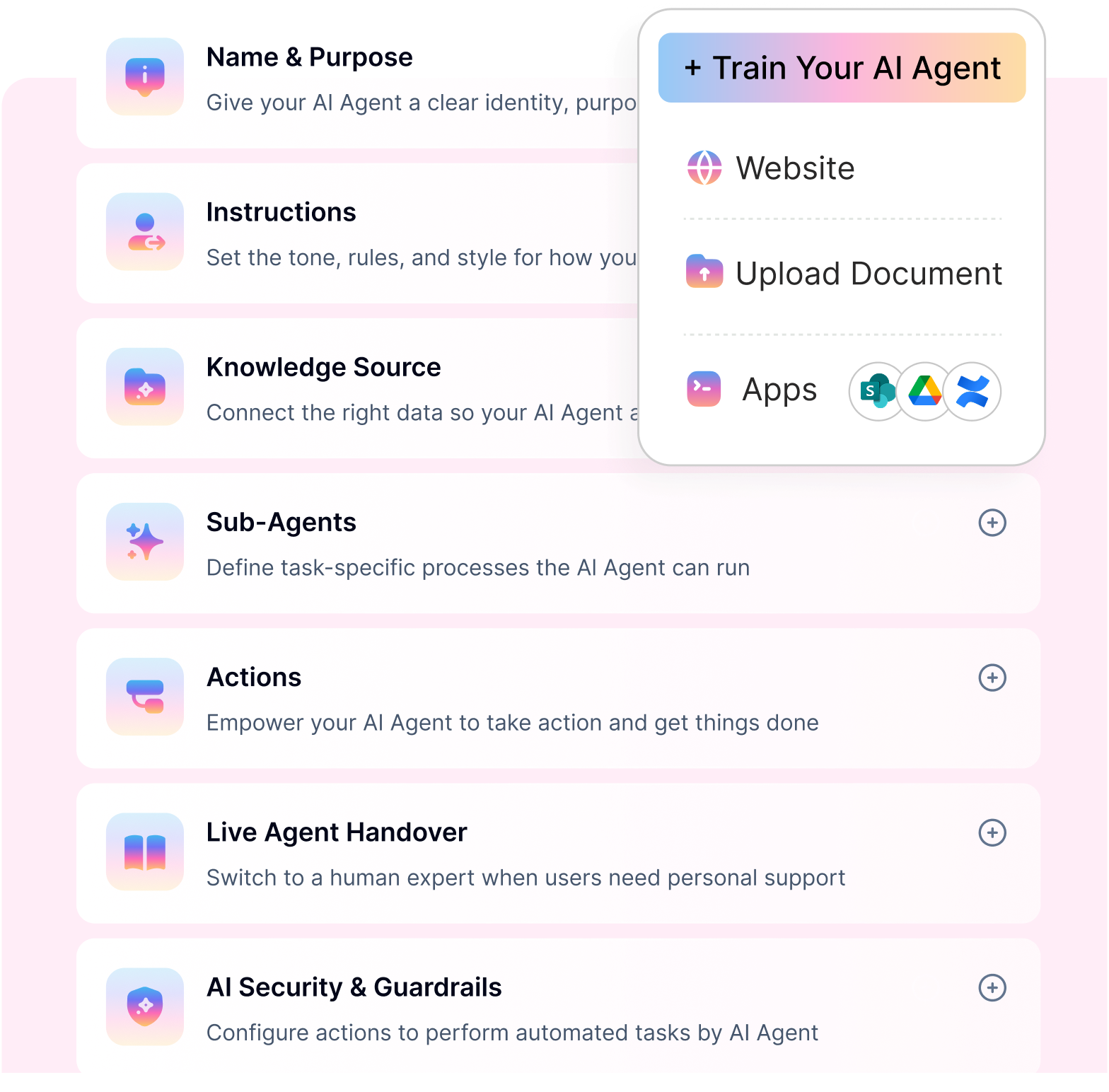
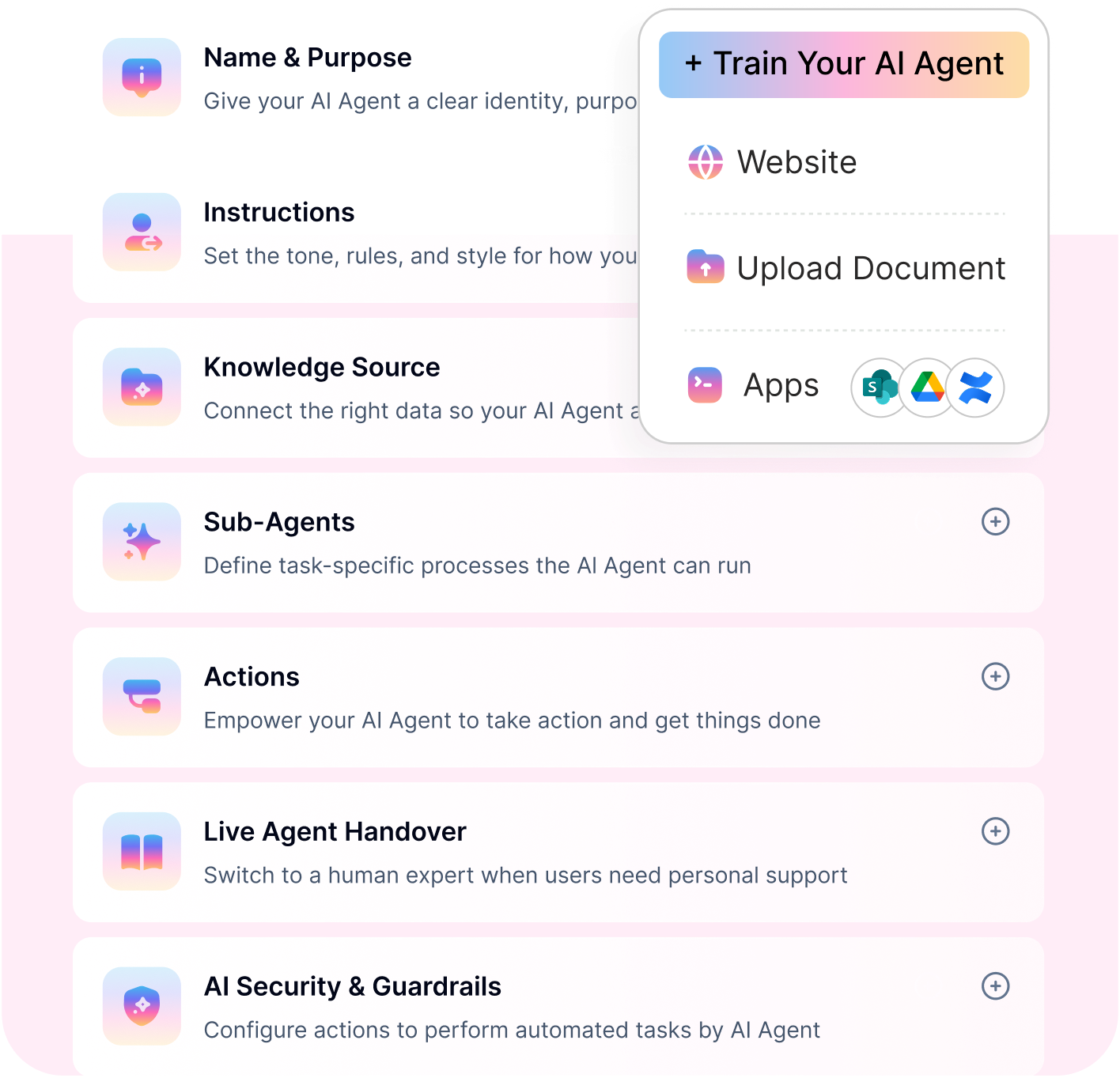
Top HR automation trends in 2026
The biggest shift in HR automation trends 2026 is clear. HR is moving from task-level automation to systems that can actually execute work.
Here are the key AI HR trends leading that change.
1. Rise of agentic AI in HR workflows
One of the biggest shifts in HR automation trends 2026 is the rise of agentic AI.
HR is built on structured, repeatable workflows, but these often consume time that could be spent on more strategic work. This makes HR a strong fit for AI-driven automation.
Agentic AI goes beyond chatbots. Instead of just answering queries, AI agents can take action. They can think, decide, act, and learn, executing multi-step workflows and interacting with different systems with minimal human input.
This is a key part of AI HR trends.
For example, in onboarding, an AI agent can handle the entire process—trigger workflows, assign training, initiate access requests, send reminders, and track progress—without manual coordination.
The value here is clear. Not just faster processes, but complete workflows handled end-to-end.
As adoption grows, AI agents will take on more operational work, allowing HR teams to focus on strategy, experience, and workforce planning.
Checkout the AI HR Use Cases here
2. Shift from AI productivity to business outcomes
Early AI HR trends focused on improving individual productivity—helping employees respond faster, find information more quickly, and reduce manual effort.
But that phase is maturing.
Organizations are now asking a different question: Is AI actually driving business outcomes?
Recent patterns across enterprises show that while productivity gains are visible, they rarely translate into measurable impact unless AI is embedded into workflows. This is why many AI initiatives still struggle to show ROI.
This shift is shaping HR automation trends 2026.
Instead of standalone tools, organizations are focusing on:
reducing onboarding time
improving ticket resolution rates
enabling faster workforce decisions
The priority is no longer speed alone, but outcomes tied to business metrics.
This is also where agentic and workflow-driven AI becomes critical. When AI is integrated into HR systems and processes, it moves from assisting individuals to driving results across the organization.
At GoTo, Workativ helps automatically resolve 84% of in-scope employee requests, showing how AI value can be measured through completed outcomes rather than usage alone.
That’s the real transition from productivity to impact.
3. Deep integration across HR systems and workflows
One of the most critical shifts in HR automation trends 2026 is integration.
Most organizations already have multiple systems in place—HRIS, IT tools, knowledge bases—but they operate in silos. This limits what AI can actually do.
When systems are disconnected, automation stays shallow. It can respond, but it cannot complete workflows end-to-end.
This is why organizations are now prioritizing deep integration.
By connecting HR systems with IT and knowledge platforms, AI gains the context it needs to take meaningful action. It can understand requests, access the right data, and execute tasks across systems without friction.
This is a key part of evolving AI HR trends.
The focus is no longer on adding more tools, but on making existing systems work together—so automation becomes truly effective, not just functional.
4. Employee self-service powered by AI chatbots
Employee expectations have changed. They no longer want to raise tickets or wait for HR responses.
This is why HR automation trends 2026 are strongly moving toward AI-driven self-service.
AI chatbots are becoming the first point of interaction for employees. Whether it’s checking leave policies, understanding payroll details, or getting onboarding guidance, employees can get instant answers without involving HR teams.
But the shift is not just about answering questions.
Modern chatbots are becoming more action-oriented. They can guide employees through processes, trigger workflows, and help complete tasks in real time.
This is a key evolution in AI HR trends.
As self-service improves, HR teams spend less time on repetitive queries and more time on strategic work, while employees get faster and more consistent support.
At NMDC Group, Workativ supports 13,000 employees through Microsoft Teams and connected HR systems, contributing to an 81% employee-support automation rate.
5. Data-driven HR decision making
Data-driven HR in 2026 is becoming less about generating more dashboards and more about understanding whether automation is actually improving HR operations.
As HR workflow automation expands across employee support, onboarding, approvals, and service delivery, HR teams need clearer operational metrics to understand what is working, where employees still need human support, and which workflows need improvement.
Key measures increasingly include:
Automation rate: The percentage of employee requests or workflows completed without manual intervention.
Escalation rate: How often AI-assisted requests still need to be handed over to HR or another team.
Resolution time: How quickly employee requests are completed from initial interaction to final outcome.
Workflow completion rate: Whether multi-step processes such as onboarding, approvals, or employee changes are completed successfully.
Employee adoption: How consistently employees use AI-powered HR self-service instead of reverting to email, tickets, or manual support channels.
These metrics give HR teams a more practical view of automation performance. Instead of measuring AI adoption by conversations or usage alone, they can identify where automation is delivering measurable outcomes and where workflows still create friction.
This also creates a continuous improvement loop. If escalation rates increase or a workflow repeatedly stalls at the same step, HR teams can investigate the underlying process, knowledge, or integration issue and improve it.
In this way, data-driven HR decision making becomes part of how automation is managed, not a separate analytics exercise.
WORKATIV OPERATIONALIZES ALL 11 TRENDS
Agentic AI, self-service, deep integrations, analytics and compliance from one no-code platform.
No-code setup · HRIS + IT integrations · Live in days
Go live in days6. Enhanced employee experience and well-being
Employee experience is becoming a core focus in HR automation trends 2026.
In most organizations, frustration doesn’t come from big issues. It comes from everyday moments—waiting for answers, searching across systems, or not knowing where to go for help.
This is where automation is making a real difference.
With AI embedded into HR workflows, employees get instant access to information, quicker resolutions, and a more consistent experience across touchpoints. Whether it’s a simple policy query or a process like onboarding, things move faster and with less effort.
This shift is central to AI HR trends.
Over time, these small improvements add up. Less friction means better engagement, higher satisfaction, and a workplace where employees can focus more on meaningful work instead of navigating systems.
7. Closing workforce skill gaps with AI-driven learning
Skill gaps are becoming harder to ignore in HR automation trends 2026.
Roles are evolving quickly, and traditional training programs are struggling to keep up. Static courses and one-size-fits-all learning are no longer effective.
AI is changing how organizations approach this.
By connecting learning platforms with HR systems, companies can identify the skills employees need for their roles, performance, and career paths. Instead of assigning generic training, AI can recommend learning that is relevant and timely.
The experience becomes more practical.
An employee moving into a new role can automatically get the right set of courses. Someone falling behind on a skill can be nudged with targeted learning. Managers get visibility into how teams are progressing.
Learning is no longer a separate activity. It becomes part of everyday work. Knowledge AI integrated with an HR automation platform makes reskilling and upskilling super easy and convenient.
8. Interconnectivity between HR and IT systems
One of the more practical shifts in HR automation trends 2026 is the growing interconnectivity between HR and IT.
Earlier, these functions operated separately. HR handled employee data and processes, while IT managed systems and access. But in reality, most employee journeys—onboarding, role changes, offboarding—depend on both.
This is why organizations are now treating HR and IT as connected workflows rather than separate functions.
In this trend, systems are being integrated so actions in one automatically trigger outcomes in the other. A new hire in HRIS can instantly initiate access provisioning. A role change can update permissions without manual requests. Offboarding can revoke access in real time.
This level of coordination reduces delays, eliminates manual follow-ups, and improves overall efficiency.
It also reflects a broader shift in AI HR trends—moving from siloed operations to connected, cross-functional automation.
As organizations scale, this interconnectivity becomes essential. Without it, even the best automation remains incomplete.
Through employee onboarding automation, GoTo automated 1,748 onboarding workflows, with each workflow coordinating 10 steps across 11 connected systems.
9. Rise of full-stack HR platforms
One of the more practical HR automation trends in 2026 is the move toward platforms that connect existing HR and workplace systems rather than replace them.
Most organizations already rely on a mix of HRIS, payroll, ITSM, identity, knowledge, and collaboration tools. Replacing that entire stack is rarely realistic. The bigger need is to make those systems work together as part of one connected employee experience.
This is where a full-stack HR automation platform acts as an orchestration layer.
Instead of becoming another system of record, it connects applications such as HRIS, payroll, service management, identity, and communication tools so AI can access the right context, trigger actions, and coordinate workflows across them.
For example, a single onboarding workflow may need to:
Retrieve employee information from the HRIS.
Provision access through identity systems.
Create IT service requests.
Add the employee to collaboration tools.
Send onboarding communications.
Track whether every step is complete.
The value comes from coordinating these actions across systems, not forcing HR teams to move everything into one platform.
This model also supports broader HR workflow automation and makes it easier to deliver AI-powered HR self-servicewithout asking employees to navigate multiple applications.
In 2026, the emerging full-stack model is therefore less about owning every HR function and more about connecting knowledge, systems, workflows, and employee channels into one operational layer.
10. Governance, compliance, and AI guardrails
As AI adoption grows, so does the need for control.
One of the key concerns in HR automation trends 2026 is how employee data is handled. HR systems deal with sensitive information, and any misuse or lack of oversight can create serious risks.
This is why organizations are putting more focus on governance.
It’s not just about using AI, but using it responsibly. That means having clear rules around data access, ensuring compliance with regulations, and maintaining visibility into how decisions are made.
AI guardrails are becoming a standard part of this setup.
They help ensure that systems operate within defined boundaries, data is protected, and actions are auditable. This becomes especially important as automation starts handling more workflows end-to-end.
The goal is simple—scale AI without losing control.
11. Cultural transformation and AI-human collaboration
The shift in HR automation trends 2026 is not just technological. It’s cultural.
As AI becomes part of everyday workflows, the way people work is changing. Employees are no longer working alone. They are working alongside AI systems that assist, recommend, and increasingly take action.
This is where the idea of an AI-human hybrid workforce comes in.
AI agents handle repetitive, structured work. Employees focus on decisions, collaboration, and problem-solving. The balance shifts, but the goal stays the same—getting better outcomes with less friction.
What matters here is how organizations adapt.
Teams need to trust these systems, understand how to use them, and see them as support rather than replacement. HR plays a key role in enabling this shift, from training employees to redesigning workflows around AI.
Over time, this collaboration becomes natural.
Work is no longer divided between humans and systems. It becomes a shared process where both contribute in different ways.
HR automation benchmarks from real-world deployments
The shift toward AI-powered HR automation is already visible in organizations using AI agents across employee support, HR systems, and workplace applications. Workativ customer deployments show how several of the leading HR automation trends in 2026 translate into measurable operational results.
Organization | Workforce | HR automation environment | Result |
|---|---|---|---|
NMDC Group | 13,000 employees | Microsoft Teams, Oracle HCM, SharePoint, and employee support across HR and IT | 81% employee-support automation |
GoTo | 5,000 employees | Slack and 50+ connected applications across employee support | 84% of in-scope requests auto-resolved |
GoTo | 5,000 employees | Automated onboarding spanning 10 steps and 11 connected systems | 1,748 onboarding workflows automated |
These results show an important change behind HR automation trends in 2026. The value of automation increasingly comes from connecting knowledge, employee channels, HR applications, IT systems, and workflows rather than automating individual tasks in isolation.
At NMDC Group, Workativ supports a workforce of 13,000 employees through Microsoft Teams while connecting with systems including Oracle HCM and SharePoint. Employees can access leave balances, payroll information, allowances, HR policies, and other employee services through the same conversational experience. Across its employee-support environment, NMDC achieved an 81% automation rate.
At GoTo, the approach extends across a workplace environment with more than 50 connected applications. Employees can access support through Slack while AI handles repeatable requests across connected systems, helping the organization auto-resolve 84% of in-scope requests without requiring manual intervention.
Automation is also moving deeper into employee lifecycle processes. Through employee onboarding automation, GoTo automated 1,748 onboarding workflows, with each workflow coordinating 10 steps across 11 systems. This shows how HR automation is evolving from isolated actions and notifications toward connected, end-to-end workflows.
This pattern also reflects the broader move toward AI agents for HR self-service, where employees can move beyond simply finding information to completing requests and triggering workflows through a conversational interface.
Together, these deployments reflect several of the most important AI HR trends for 2026: AI-powered employee self-service, deeper HR-IT integration, connected workflows, agentic automation, and a shift from individual productivity gains toward measurable operational outcomes.
Built for every HR trend that matters
Workativ delivers every trend on this list, agentic AI, integration, self-service and analytics.
Challenges organizations face in adopting HR automation trends
While HR automation trends 2026 are gaining momentum, most organizations struggle to translate adoption into real impact.
The challenges are not about technology alone. They come from how systems are implemented, connected, and used in everyday workflows.
Lack of integration across systems : Most organizations already have the tools they need. The problem is they don’t work together. HRIS, IT systems, and knowledge platforms often operate in silos. As a result, automation stays limited to individual tasks instead of complete workflows. This is also one of the main reasons many AI initiatives fail to deliver meaningful outcomes .
Unclear ROI from AI investments : AI can improve speed and efficiency, but that doesn’t always translate into business impact. Without clear alignment to outcomes—like faster onboarding or better employee experience—it becomes difficult to measure ROI. This is why many organizations struggle to justify continued investment in AI.
Fragmented employee experience : Employees often have to navigate multiple tools to get simple things done. Different systems for policies, requests, and support create a disconnected experience. Even with automation in place, the journey still feels complex. This reduces the overall effectiveness of HR automation.
Resistance to change and adoption gaps : Adopting AI is not just a technical change. It’s an organizational one. Teams may hesitate to trust new systems, workflows may not be redesigned properly, and adoption can remain low without proper enablement. Without addressing this, even the best tools fail to deliver their full value.
How to successfully implement HR automation in 2026
Adopting HR automation trends 2026 is not just about adding AI tools. It’s about how those tools are applied within real workflows. Organizations that see results focus on execution, not just adoption.
Focus on workflow automation, not just tools : Most organizations start by adding tools. But tools alone don’t solve problems. The real value comes from automating complete workflows—onboarding, employee support, approvals—end to end. This is what reduces manual effort and improves consistency.
Integrate AI deeply into HR systems : AI works best when it has context. By integrating AI with HRIS, IT systems, and knowledge platforms, it can access the right data and take meaningful action. Without integration, automation remains limited.
Prioritize employee self-service : Employees expect quick and simple access to HR support. Enabling self-service through AI reduces dependency on HR teams and speeds up resolution. It also creates a more consistent experience across the organization.
Measure outcomes, not activity : Tracking usage is not enough. What matters is impact—how quickly onboarding is completed, how many queries are resolved, how employee experience improves. These are the metrics that define success.
Adopt agentic AI for end-to-end automation : Agentic AI brings everything together. By enabling systems to execute workflows autonomously, organizations can scale HR operations without increasing manual effort. This is what turns automation into real operational efficiency.
How Workativ helps organizations operationalize HR automation trends
The most important HR automation trends in 2026 all point in the same direction: organizations need AI that can work across existing systems, complete workflows, support employees directly, and operate within defined governance controls.
Workativ brings these capabilities together in one AI agent platform for HR, helping organizations move from isolated automation toward connected, outcome-driven HR operations.
Connect HR, IT, knowledge, and workplace systems
Workativ connects HRIS, ITSM, knowledge platforms, identity systems, and collaboration tools so AI can work with the context needed to complete employee requests.
Instead of replacing systems of record, it acts as an orchestration layer across the existing technology stack. This supports broader HR workflow automation without forcing organizations to rebuild their HR environment.
Execute workflows instead of stopping at answers
Modern HR automation needs to go beyond conversational support.
Workativ AI agents can trigger actions, coordinate multi-step processes, and execute workflows across connected applications. This allows organizations to automate processes such as onboarding, employee support, approvals, ticketing, and other repeatable HR operations.
For example, employee onboarding automation can coordinate activities across HR, identity, IT, and collaboration systems rather than relying on manual follow-ups between teams.
Deliver employee self-service where people already work
Employees should not need to understand which HR system holds the information or which team owns a request.
With AI-powered HR self-service, Workativ gives employees a conversational way to access information, initiate requests, and complete permitted actions through channels such as Microsoft Teams, Slack, and web experiences.
This creates a simpler employee experience while reducing repetitive work for HR teams.
Keep AI automation controlled and auditable
As AI takes on more operational work, governance becomes part of the automation architecture.
Workativ supports enterprise controls such as access management, AI guardrails, PII protection, auditability, and defined workflow boundaries so organizations can scale automation without losing visibility or control.
This is especially important when AI agents interact with sensitive employee information or perform actions across multiple enterprise systems.
Measure outcomes, not just AI usage
The value of HR automation should be visible in operational results.
Workativ provides analytics that help teams evaluate measures such as automation rate, resolution performance, workflow completion, escalation patterns, and employee adoption.
These insights help organizations identify where automation is working, where processes still create friction, and where workflows can be improved further.
Turn HR automation trends into measurable results
The goal is not simply to deploy more AI.
It is to create an environment where knowledge, applications, workflows, employee channels, and governance work together. That is what allows organizations to move from isolated automation toward end-to-end execution and measurable HR outcomes.
Customer deployments already demonstrate this shift, with organizations such as NMDC Group achieving high levels of employee-support automation and other enterprises extending automation across connected HR and workplace systems. Transform your HR operations with Workativ’s AI-powered automation. Start your free trial or book a demo today.
Future of HR automation beyond 2026
The direction of HR automation trends 2026 is already pointing toward what comes next.
AI agents are not going to remain an add-on. They will become a standard part of enterprise systems, embedded directly into HR, IT, and business applications. Instead of switching between tools, employees will interact with systems that can understand, act, and complete tasks within the same environment.
This changes how work gets done.
HR will spend less time managing operations and more time shaping outcomes. The focus will shift toward workforce planning, employee experience, and organizational design.
As AI HR trends continue to evolve, the role of HR becomes more strategic.
designing better employee journeys
enabling AI-human collaboration
aligning workforce capabilities with business goals
Automation handles execution. HR drives direction.
That’s what defines the future beyond 2026.
READY TO LEAD THE NEXT PHASE OF HR AUTOMATION?
See how Workativ brings agentic AI, connected workflows and real outcomes together live demo.
Personalized demo · No commitment · Deploy in Mins
See a Quick DemoHR automation in 2026 is moving toward connected outcomes
HR automation in 2026 is no longer about automating isolated tasks or adding more tools.
The real shift is toward connected systems that bring together knowledge, employee channels, HR applications, IT systems, and workflows so AI can complete outcomes end to end.
Organizations that make this transition will be better positioned to reduce manual coordination, improve employee support, and measure automation through real operational results rather than activity alone.
That is the direction HR automation is heading: from individual tasks to connected execution, and from efficiency gains to measurable business outcomes.
FAQs
What are the biggest HR automation trends in 2026?
The biggest HR automation trends in 2026 are agentic AI, employee self-service, connected HR and IT workflows, operational analytics, AI governance, and end-to-end workflow orchestration.
The broader shift is from automating isolated tasks to using AI systems that can work across applications, access the right context, and complete employee requests with less manual coordination.
How is agentic AI changing HR automation?
Agentic AI is moving HR automation beyond chatbots and simple workflow triggers.
Instead of only answering questions, AI agents can retrieve information, make decisions within defined rules, trigger actions, coordinate multi-step workflows, and interact with connected HR and IT systems. This makes processes such as onboarding, employee support, approvals, and service requests more autonomous while still operating within governance controls.
What HR processes will be most automated in 2026?
The HR processes most likely to see deeper automation in 2026 are employee support, onboarding, leave and attendance requests, HR ticket handling, approvals, employee data updates, offboarding, and routine HR-IT coordination.
These processes are strong automation candidates because they are repetitive, rules-based, and often require actions across multiple systems. The biggest gains come when automation can complete the full workflow rather than only handle one step.
'%3e%3cpath%20d='M11.5732%2031.7068L19.2977%2022.7433L11.5732%2011.5366H17.4664L22.6245%2018.942L29.0522%2011.5366H30.7788L23.4029%2020.0985L31.4127%2031.7086H25.4997L20.1231%2023.9069L13.3197%2031.7068H11.5732ZM16.6519%2012.8366H13.9536L26.354%2030.4462H28.9926L28.8265%2030.1576L16.6519%2012.8366Z'%20fill='%230C0C0C'/%3e%3c/g%3e%3cdefs%3e%3cclipPath%20id='clip0_505_14364'%3e%3crect%20width='19.7681'%20height='20.2432'%20fill='white'%20transform='translate(11.573%2011.5365)'/%3e%3c/clipPath%3e%3c/defs%3e%3c/svg%3e)

'%3e%3cpath%20d='M25.2175%2011.7557L26.9132%2011.911V15.0496C26.0135%2015.1444%2024.1746%2014.7452%2023.5821%2015.5947C23.4908%2015.726%2023.3291%2016.1592%2023.3291%2016.3091V19.002H26.7392L26.3346%2022.5281H23.3291V31.5952H19.707V22.5863L19.649%2022.5281H16.6628V19.002H19.707C19.7813%2017.4024%2019.4664%2015.7042%2020.1132%2014.1986C20.6748%2012.8902%2021.7857%2012.0974%2023.1666%2011.8435L23.7151%2011.7557H25.2183H25.2175Z'%20fill='%230C0C0C'/%3e%3c/g%3e%3cdefs%3e%3cclipPath%20id='clip0_505_14375'%3e%3crect%20width='10.2695'%20height='19.8027'%20fill='white'%20transform='translate(16.658%2011.7567)'/%3e%3c/clipPath%3e%3c/defs%3e%3c/svg%3e)
About the Author
Deepa Majumder

Senior content writer
Deepa Majumder is a writer who nails the art of crafting bespoke thought leadership articles to help business leaders tap into rich insights in their journey of organization-wide digital transformation. Over the years, she has dedicatedly engaged herself in the process of continuous learning and development across business continuity management and organizational resilience.
Her pieces intricately highlight the best ways to transform employee and customer experience. When not writing, she spends time on leisure activities.
Auto-resolve 60% of Your Employee
Queries With AI Agents & Automation
- No credit card required
- Setup in minutes
- Cancel Anytime