


A Glean alternative that resets passwords and books leave in Slack or Teams.
Glean helps people find answers. Workativ's AI agent completes IT and HR requests in your identity, ITSM and HR systems, and asks a person to approve when a decision is needed.
HR and IT teams trust Workativ to automate employee support.

Why IT and HR teams look for a Glean alternative
When IT and HR leaders compare Glean vs Workativ, these six points come up most.

Actions built around other tools
Glean's actions focus on Salesforce, Jira and GitHub. Many IT and HR changes still need a person.

A seat for every employee
Glean licenses each employee, including people who ask IT a question twice a year.

Credits on top of seats
Agent runs and premium answers use FlexCredits, so busy months cost more and are hard to forecast.

Spend rising at renewal
SpendHound's sample shows average Glean spend up 65% to 95% in a year.

A company-wide project
Glean connects and indexes sources across the company before answers are reliable.

A forced plan change
Legacy Glean Enterprise customers move to Enterprise Flex when their term ends.
Requests employees send IT and HR, completed in chat
Search returns a link. The agent finishes the request, within the rules IT and HR set.
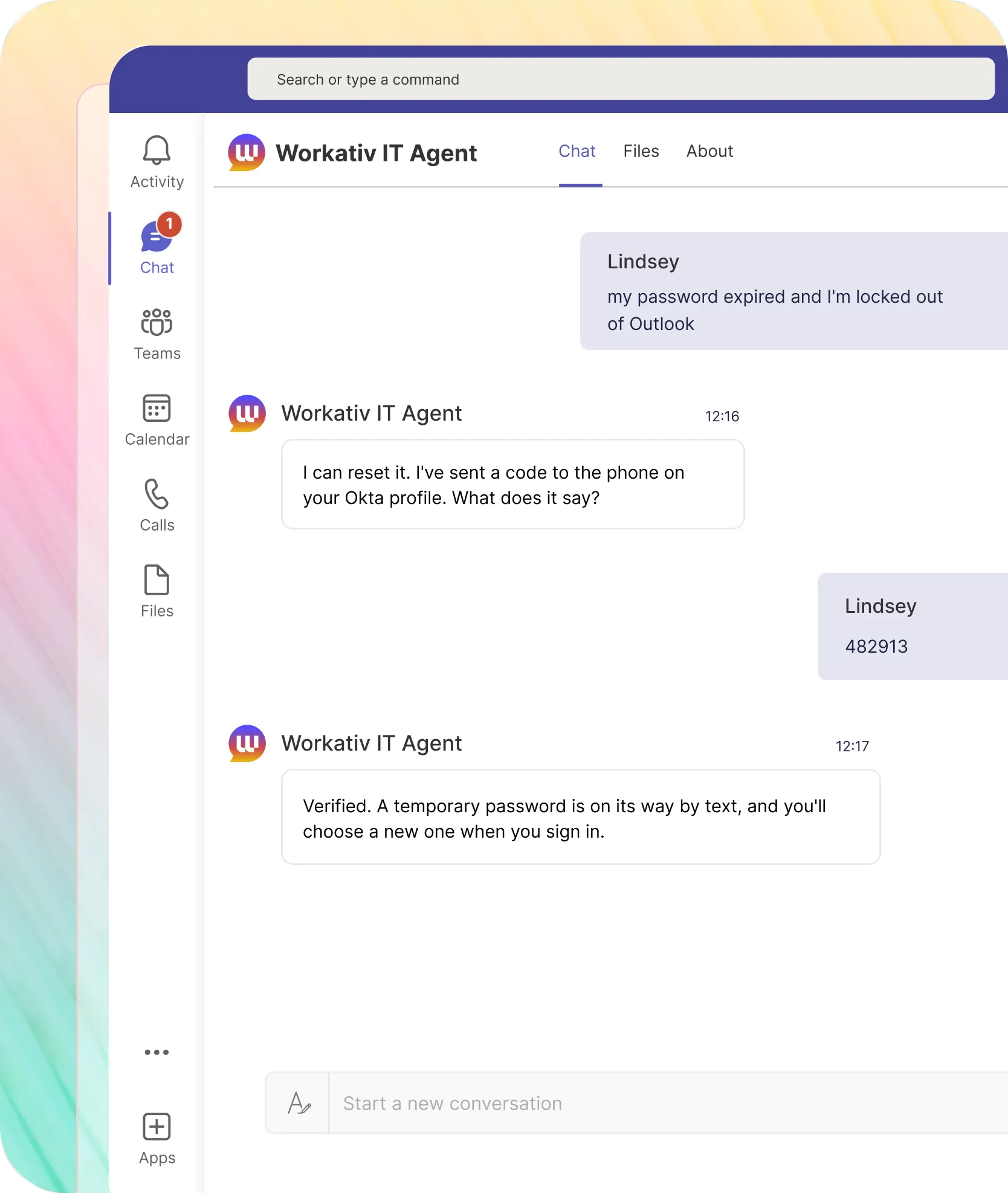
Password resets without a ticket.

The agent verifies identity before any reset
Each reset is logged with the person and the time
Workflows that run from a change in your systems
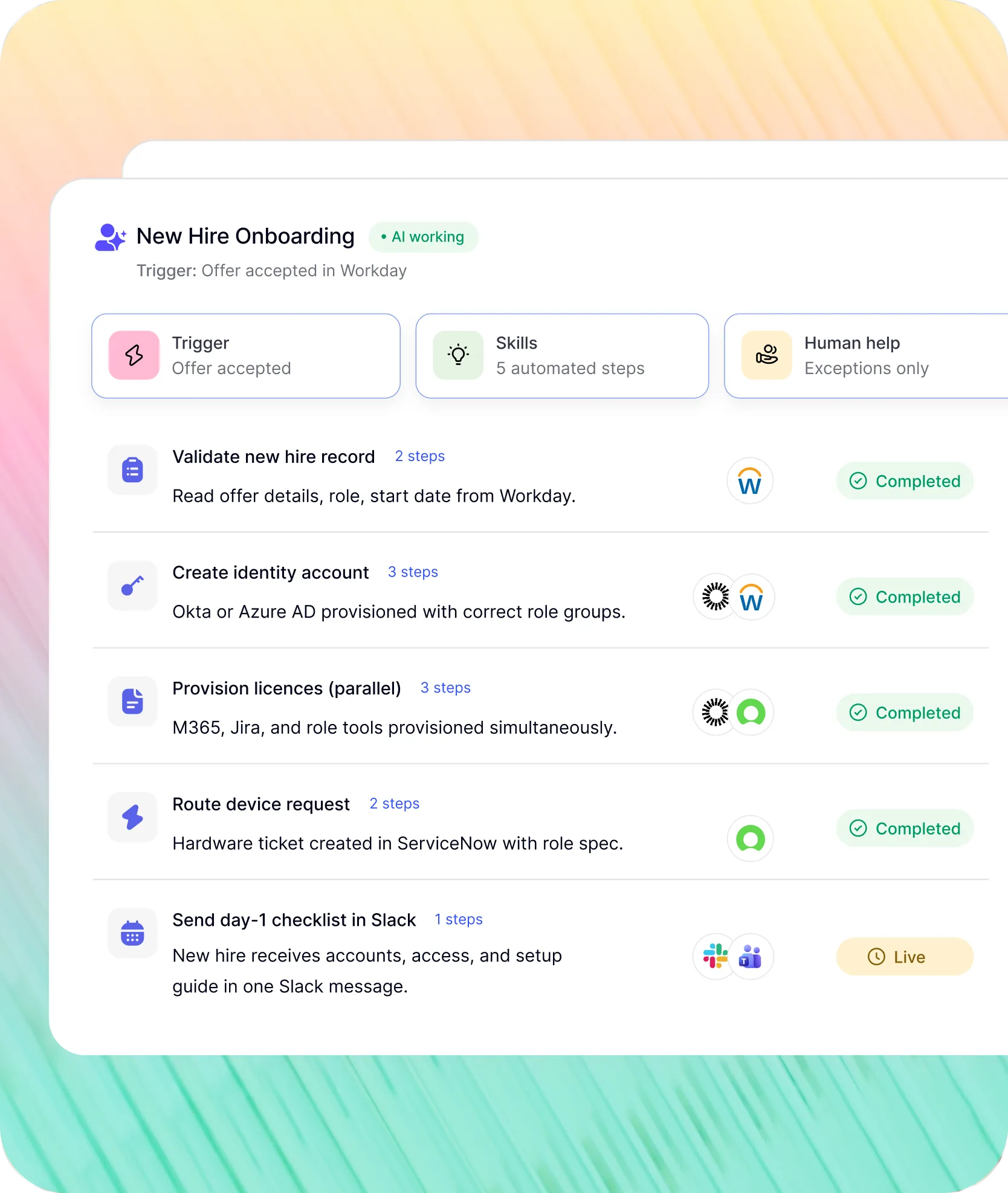
A new hire, a leaving date or an outage report starts each one. People approve where it counts.
Day-one access, set up from the HR record.
Starts when the hire is entered in Workday
The new starter gets one checklist before day one
GoTo resolved 80% of queries automatically
“ Our AI Bot Orion has become a critical enabler of employee self‑service. The quality of responses is fast, comprehensive, and highly reliable, allowing employees to find accurate answers without needing to escalate to HR or IT. What really sets Workativ apart is the visibility into question trends, resolution rates, and where AI is genuinely reducing operational workload. ”

Susan Treadway
Vice President, HR Operations

Live in a week, in three steps
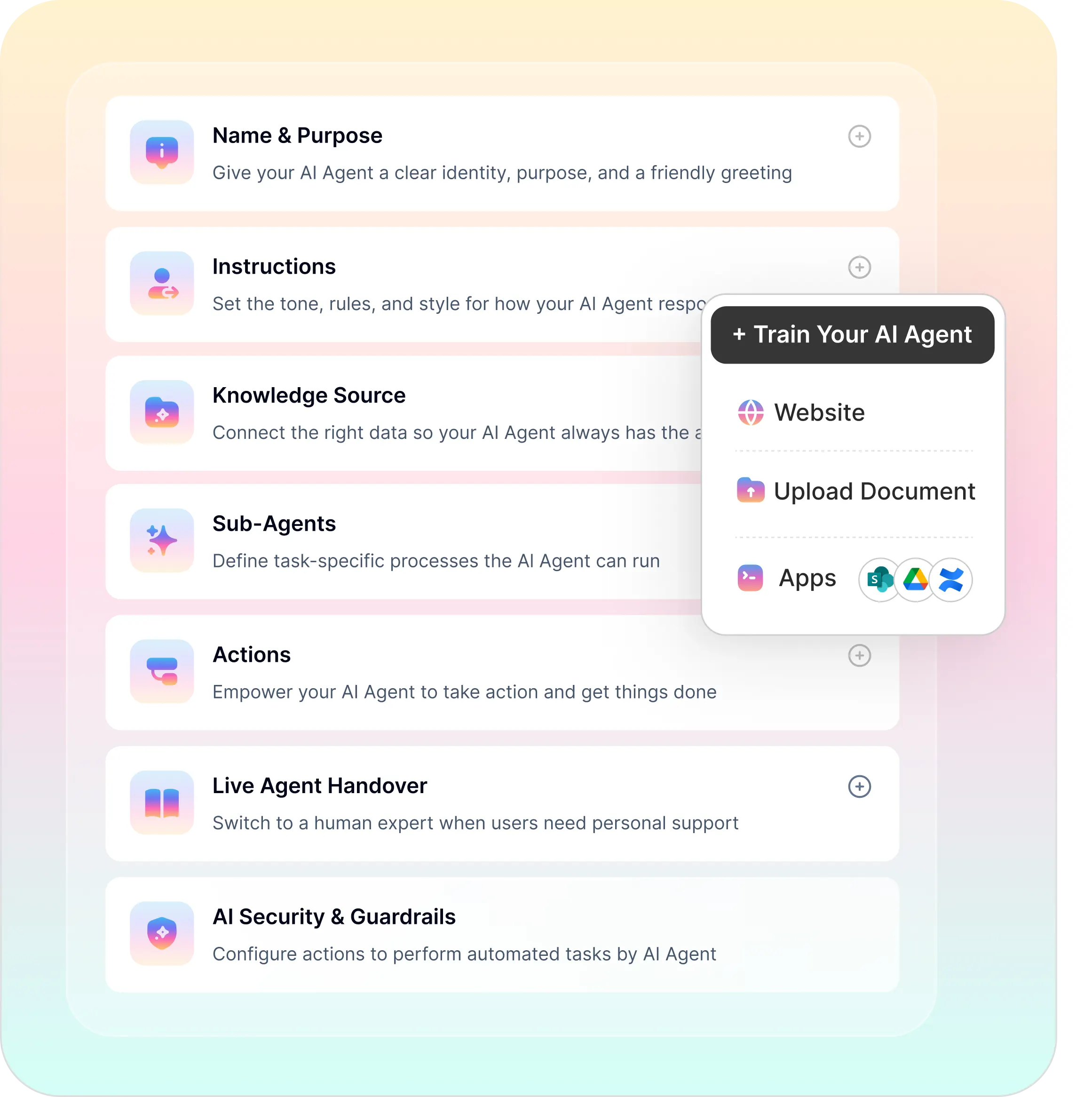
One no-code platform for IT and HR requests
Set up the agent, connect knowledge and systems, add guardrails and track results.
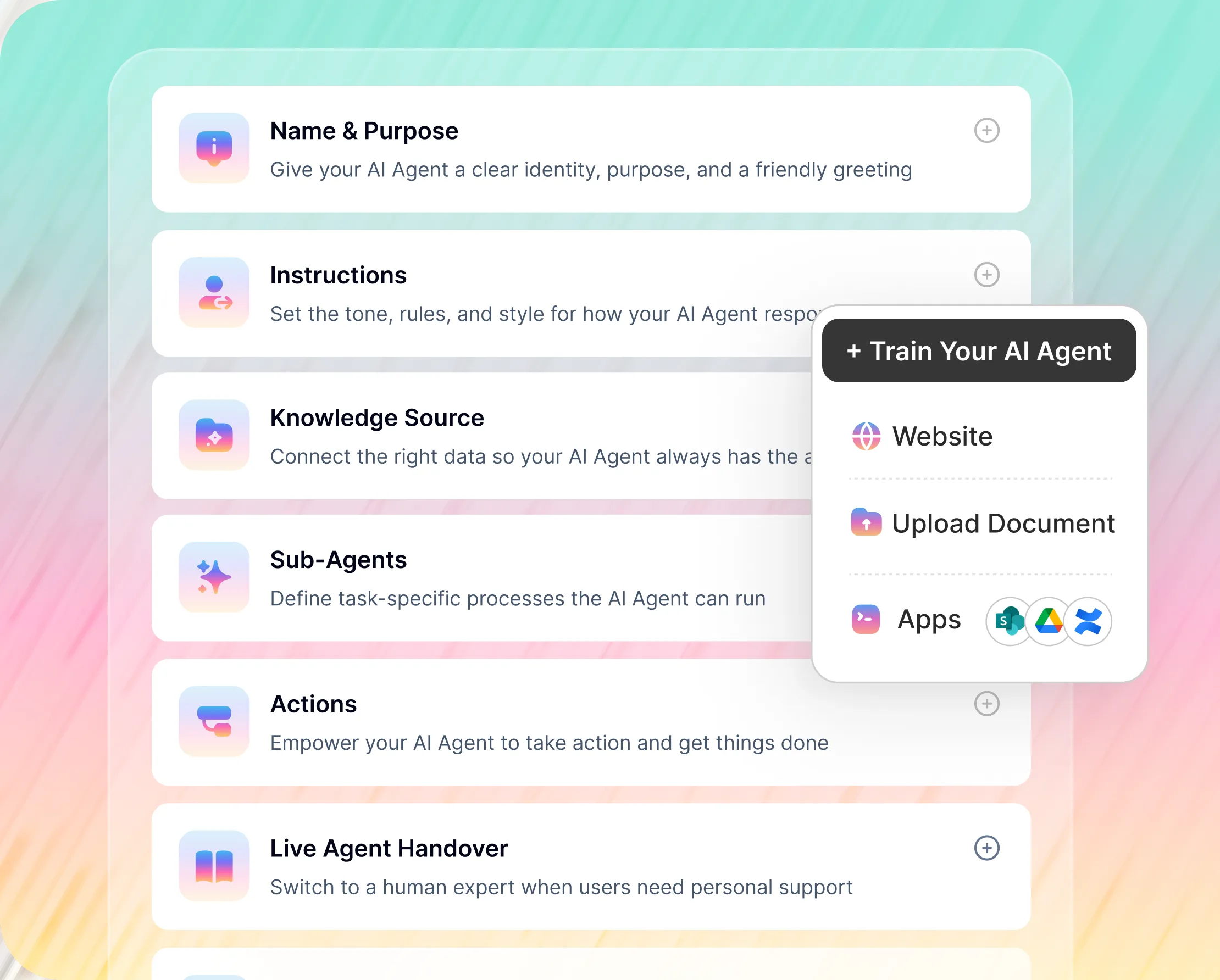
Set up by IT or HR, with no code
Pick which systems the agent touches and who approves each action
Change a flow yourself when a process changes
Hand off to a person when the agent should stop
Glean vs Workativ, side by side
What CIOs and HR leaders check first when they pick a Glean alternative.
What matters to IT |  |  |
|---|---|---|
Built for |  | Company-wide search and an AI assistant |
Completing the request | | 100+ actions, led by Salesforce, Jira, Confluence, GitHub and Google Calendar |
Humans in the loop | | Human-in-the-loop controls for agents |
Pricing model | | A seat for every employee, plus FlexCredits |
Published price | | None; quote from sales |
Time to go live | | Depends on the sources indexed; ask Glean for your size |

Last reviewed 22 October 2026. Glean details come from glean.com and its pricing docs. Feedback from users is in our Glean review.
What teams pay for Glean, and how Workativ prices
Teams looking for a Glean AI alternative often start with cost. Glean publishes no per-seat price, which makes alternatives to Glean hard to compare. Two public sources show how the bill is built and what buyers pay.
Source | What it shows | Date |
|---|---|---|
Glean pricing docs | A seat for every employee, plus pooled FlexCredits. One agent run uses about 7 to 114 credits. Seat and credit prices are not published. | Updated 20 Oct 2026 |
SpendHound, 160 customers | About $134,000 a year on average, for companies with 50 to 1,000 employees | Updated 1 Oct 2026 |
SpendHound, 160 customers | About $320,000 a year on average, for companies above 1,000 employees | Updated 1 Oct 2026 |
Workativ charges per session, so you do not buy a seat for every employee. Plans are on the pricing page and our Glean pricing guide breaks down the rest.
More on Glean
Our Glean review covers features and user feedback, and Our list of Glean alternatives puts more tools side by side. We also compare Glean competitors Moveworks, Glean, Aisera and Microsoft Copilot.
Try this Glean AI alternative on
your own IT and HR requests
A short demo with your own runbooks, handbook and systems. First queue live in 3–5 days.
Frequently asked questions
frequently asked questions about Glean alternatives
What is the best Glean alternative for IT and HR teams?
Workativ is the Glean alternative built for IT and HR requests. The AI agent works in Slack and Microsoft Teams, resets passwords, grants access and books leave in systems like Okta, ServiceNow and Workday, and sends decisions to a named approver.
Glean vs Workativ: what is the difference?
Glean is company-wide search and an AI assistant, priced per seat with FlexCredits for agent runs. Workativ is an AI agent for IT and HR requests, priced per session, and starts with one queue. In short, AI agent vs enterprise search.
How much does Glean cost?
Glean publishes no per-seat price. Its pricing docs describe a seat for every employee plus pooled FlexCredits, with one agent run using about 7 to 114 credits. SpendHound data from 160 customers puts average yearly spend at about $134,000 for 50 to 1,000 employees and about $320,000 above 1,000. Our Glean pricing guide has the detail.
How does pricing work for this Glean alternative?
Workativ charges per session, so you do not buy a seat for every employee. Plans are on the pricing page, and a demo gives a quote for your own IT or HR queue.
Can Glean take actions?
Yes. Glean announced 100+ actions in February 2026, led by Salesforce, Jira, Confluence, GitHub and Google Calendar, with human-in-the-loop controls. Check that the identity, ITSM and HR actions you need are native before you buy.
How long does setup take?
Workativ goes live in three to five days for most teams, starting with one IT or HR queue. Glean's timeline depends on how many sources you connect and index, so ask for references from companies your size.
Can we keep Glean and add Workativ?
Yes. Some teams keep Glean for company search and use Workativ for the IT and HR queue. The two do different jobs.
When is Glean the better fit?
Glean is the better fit when the goal is search and an AI assistant for every team in the company. Among alternatives to Glean, Workativ fits teams whose priority is resolving IT and HR requests.
Who are the main Glean competitors?
Glean competitors fall into two groups. Search tools such as GoSearch, Coveo and Microsoft Copilot compete on finding information. AI agents such as Workativ, Moveworks and Leena AI compete on completing employee requests.
What do Glean reviews say?
Reviewers rate Glean well for search quality and integrations. Common complaints are pricing that is hard to predict and the effort needed to set up. Our Glean review covers both.
Is this Glean alternative secure enough for IT and HR data?
Workativ is SOC 2 Type II, ISO 27001, GDPR and HIPAA compliant. The agent checks identity before a reset or record change, and every action is logged.
What results have customers seen with this Glean alternative?
At NMDC, the agent handles 78% of IT tickets in Microsoft Teams. At GoTo, the agent resolves 84% of employee requests in Slack.