
AI benefits in HR automation: improve efficiency, reduce costs, boost ROI
Explore AI benefits in HR automation, AI chatbot benefits for HR, and the ROI of AI in HR support. Improve efficiency and scale HR operations.


TL;DR
AI transforms HR from a reactive support function into a proactive, scalable operation by automating repetitive tasks and workflows end to end.

The biggest business gains come from lower HR costs, faster resolution times, better employee experience, and stronger compliance controls.
AI chatbots and agentic workflows together create measurable ROI through ticket deflection, productivity gains, and reduced manual effort.
Platforms like Workativ make these benefits practical by combining no-code deployment, workflow automation, analytics, and secure execution.
Many HR leaders and CHROs still underestimate the true impact of AI in HR. While there’s growing awareness around automation, the benefits of AI in HR are often seen as incremental rather than transformational. As a result, many HR teams continue to rely on manual processes, fragmented systems, and reactive support models despite increasing workloads and rising employee expectations.
Recent industry insights consistently show this gap. A significant percentage of HR teams report being overwhelmed by repetitive queries, slow response times, and operational inefficiencies. At the same time, adoption of AI in HR remains limited or underutilized—often restricted to basic use cases rather than full-scale automation. This disconnect is where organizations start losing both efficiency and opportunity.
Beyond operational inefficiencies, this gap directly impacts the employee experience. Employees who wait hours—or even days—for HR responses often experience frustration that goes beyond a single interaction. Over time, these delays reduce engagement, lower satisfaction, and erode trust in HR support systems.
This is where the stakes become much higher. Poor HR experience is no longer just a service issue—it’s a retention risk. Employees who consistently face delays or lack of clarity are more likely to disengage, and disengaged employees are significantly more likely to leave. For organizations, this translates into real costs, with replacing a mid-level employee often exceeding $30K–$50K+.
This is exactly where the AI benefits in HR automation become critical. AI is not just about reducing effort—it fundamentally changes how HR operates. From automating support and workflows to enabling faster decision-making and personalized employee experiences, the value is both immediate and measurable.
The AI chatbot benefits for HR alone can drastically reduce ticket volumes and improve response times, while the broader ROI of AI in HR support comes from cost savings, productivity gains, and scalable operations without increasing headcount.
The reality is simple: organizations that continue to delay AI adoption risk falling behind. Those who embrace it unlock tangible advantages—greater efficiency, a better employee experience, and long-term operational scalability.
This guide breaks down the advantages of AI in HR automation in a practical, outcome-driven way—so you can clearly see where AI delivers real value and why now is the right time to invest.
Why employee experience is breaking in modern HR
Despite increased investment in HR technology, employee experience continues to decline in many organizations. The core issue isn’t the absence of tools—it’s how disconnected and inefficient the experience still feels for employees. Here are a few reasons,
Fragmented systems create disconnected employee journeys
Despite increased investment in HR technology, employee experience continues to decline. The issue isn’t the lack of tools—it’s how disconnected they are. HR teams operate across multiple platforms, creating a fragmented experience where employees struggle to find the right information or support.
What should be a simple interaction often turns into a time-consuming process with no clear ownership.
Delayed responses lead to frustration and disengagement
Employees frequently wait hours—or even days—for responses to routine HR queries. In today’s always-on environment, these delays feel outdated and frustrating.
Over time, repeated delays don’t just slow down processes—they reduce engagement and lower employee satisfaction.
HR teams are overloaded and unable to scale
As organizations grow, employee requests increase—but HR capacity rarely scales at the same pace. Teams are forced to prioritize and respond reactively, leading to backlogs and slower support.
This creates a gap between employee expectations and HR delivery.
Lack of personalization reduces trust
Many HR systems still rely on static portals and generic responses. Without context, such as role, location, or employment type, employees often receive incomplete or irrelevant answers. This lack of personalization reduces trust and pushes employees to seek manual support instead.
The combined effect of fragmentation, delays, and lack of personalization creates a broken employee experience. What starts as small frustrations quickly compounds into disengagement and, ultimately, attrition.
For organizations, this isn’t just an HR problem it’s a business problem. Poor employee experience directly impacts retention, productivity, and overall performance.
This is where AI plays a critical role. Improving employee experience with AI is no longer optional—it’s essential for delivering fast, personalized, and scalable HR support in modern organizations.
The hidden cost of poor HR experience
Poor HR experience is often underestimated because its impact isn’t immediately visible. But delays, inefficiencies, and lack of support quietly compound over time—affecting employee satisfaction, productivity, and ultimately, retention.
Delayed HR support creates compounding employee frustration
What often starts as a simple delay—waiting hours or days for an HR response—quickly turns into repeated follow-ups, uncertainty, and frustration. Employees are forced to chase updates, switch channels, or rely on informal workarounds just to get clarity on basic requests.
Over time, these small inefficiencies compound, creating a consistently poor experience that impacts how employees perceive HR support.
Frustration leads to disengagement and lower productivity
When employees repeatedly face delays or unclear responses, their engagement begins to decline. Instead of focusing on their work, they spend time navigating HR processes, waiting for approvals, or searching for information.
This friction doesn’t just affect experience—it directly impacts productivity. Employees lose momentum, and HR becomes a bottleneck rather than an enabler.
Poor experience increases attrition risk
Employee experience is one of the strongest predictors of retention. When HR interactions are slow, inconsistent, or frustrating, employees begin to disengage from the organization as a whole.
Disengaged employees are significantly more likely to leave—not always because of major issues, but due to repeated everyday friction.
The financial impact of attrition is significant
For organizations, this is where the real cost becomes visible. Replacing a mid-level employee can cost anywhere between $30K–$50K+, factoring in hiring, onboarding, lost productivity, and training.
When poor HR experience contributes to even a small increase in attrition, the financial impact scales quickly—making it a business-critical issue.
HR inefficiencies directly impact business performance
The connection is clear: delayed responses lead to frustration, frustration leads to disengagement, and disengagement leads to attrition and increased costs.
What begins as an HR support issue ultimately affects organizational performance, cost structures, and scalability.
Improving employee experience with AI is a business necessity
This is why improving employee experience with AI is no longer optional. Organizations need systems that deliver instant, accurate, and scalable HR support without increasing operational burden.
By reducing delays, automating workflows, and ensuring consistent responses, AI helps eliminate the root causes of employee frustration and transforms HR into a proactive, experience-driven function.
How AI improves employee experience in HR
AI is fundamentally changing how HR teams operate—making processes faster, more accurate, and significantly more scalable. The benefits of AI in HR automation extend beyond efficiency to employee experience, compliance, and overall organizational performance. Here’s how modern HR teams are benefiting from AI-driven automation:
1. Productivity gains with AI in HR automation
One of the biggest advantages of using AI in HR is the noticeable improvement in day-to-day productivity. By reducing manual effort and streamlining processes, AI enables HR teams to operate more efficiently and focus on higher-value work.
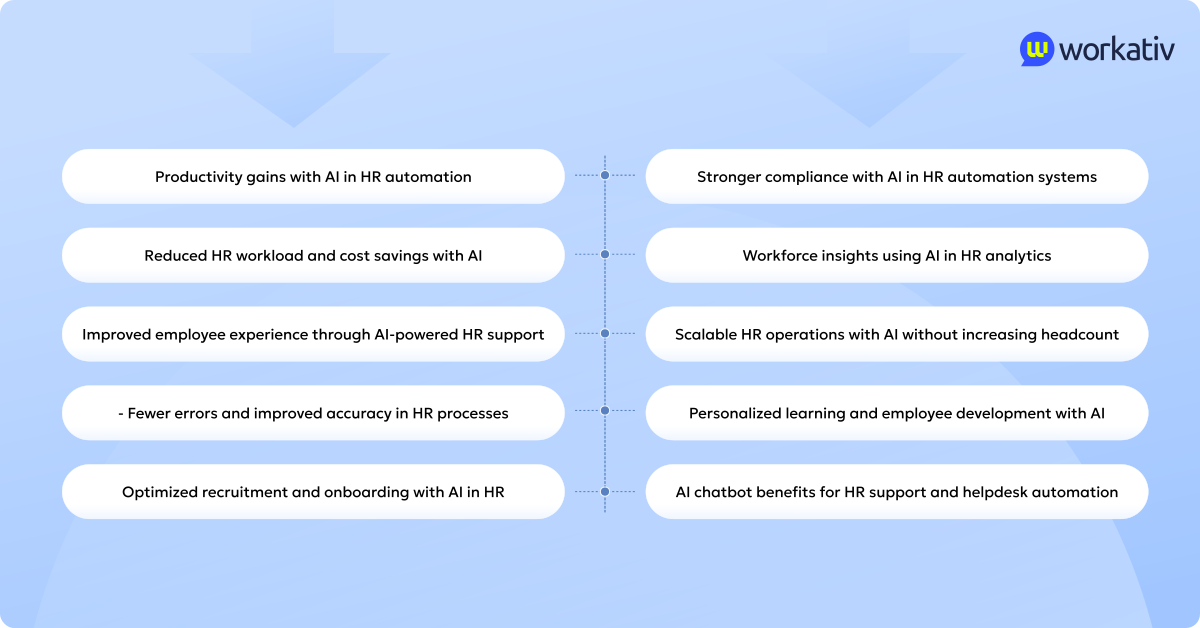
Here’s how productivity improves with AI:
Automation of repetitive HR tasks: Routine activities like answering common queries, managing requests, and handling approvals are automated, reducing manual workload.
Faster resolution of employee queries: Employees receive instant responses, minimizing delays and improving overall operational speed.
Streamlined HR workflows: End-to-end workflow automation reduces the need for constant tracking and follow-ups.
More time for strategic HR initiatives: HR teams can focus on workforce planning, employee engagement, and talent development instead of administrative tasks.
Improved operational efficiency at scale: HR functions can handle higher volumes of requests without compromising speed or quality.
These improvements highlight the broader advantages of AI in HR automation, where productivity is enhanced not just by speed but by smarter, more efficient ways of working.
2. Reduced HR workload and cost savings with AI
Another major advantage of adopting AI in HR is the ability to significantly reduce workload while driving meaningful cost efficiencies. By automating high-volume, repetitive tasks, organizations can optimize HR operations without increasing team size—making the cost benefits of AI in HR clearly visible.
Here’s how AI contributes to HR automation savings:
Reduction in HR support tickets: AI systems handle a large share of employee queries, reducing the volume of tickets requiring human intervention.
Lower cost per HR interaction: Automated responses and workflows reduce the cost associated with handling each employee request.
Minimized manual effort and operational overhead: Tasks that previously required hours of HR time are completed instantly, reducing resource dependency.
Optimized use of HR team capacity: HR professionals spend less time on repetitive work and more time on strategic initiatives, improving overall resource utilization.
Scalable operations without additional hiring: As organizations grow, AI enables HR teams to manage increased demand without expanding headcount.
These outcomes clearly demonstrate how HR automation savings go beyond short-term efficiency. They create long-term cost advantages while allowing HR teams to operate more strategically and effectively.
3. Reducing employee frustration with HR processes
AI directly addresses the most common sources of employee frustration delays, lack of updates, and unclear ownership. Employees can track request status in real time, receive instant responses, and complete actions without repeated follow-ups.
By reducing uncertainty and delays, AI creates a smoother, more predictable HR experience
4. Fewer errors and improved accuracy in HR processes
Manual HR processes often leave room for errors—whether it’s incorrect information, inconsistent responses, or missed steps in workflows. One of the key benefits of AI in HR automation is how it brings consistency and accuracy into everyday HR operations.
With AI handling repetitive and rule-based tasks, the chances of human error drop significantly.
Here’s how accuracy improves with AI:
Standardized HR responses: Employees receive the same correct information every time, reducing confusion and miscommunication.
Elimination of manual data entry errors: Automated workflows reduce the need for repetitive data entry, minimizing errors.
Consistent policy enforcement: AI ensures that HR policies are applied uniformly across all employees and scenarios.
Accurate workflow execution: Tasks follow predefined logic, ensuring no steps are skipped or incorrectly handled.
Reliable data handling and record management: Employee data is processed and stored more accurately, improving overall data integrity.
With Workativ, this accuracy is built into both support and workflows—ensuring that every interaction and process follows the right logic, every time. The result is a more dependable HR system that teams and employees can trust.
5. Optimized recruitment and onboarding with AI in HR
Hiring and onboarding are two of the most time-sensitive HR functions—and also the most prone to delays when handled manually. With AI, you can realize tangible value as both processes become faster, more structured, and far more efficient.
Let’s see how AI improves recruitment and onboarding:
Faster candidate screening and shortlisting: AI can quickly analyze resumes, identify relevant candidates, and reduce the time spent on initial screening.
Automated candidate engagement: Applicants can get instant responses to queries, schedule interviews, and stay informed throughout the hiring process.
Reduced time-to-hire: By removing bottlenecks in early-stage hiring, organizations can move candidates through the pipeline faster.
Structured and guided onboarding journeys: New hires are automatically guided through documentation, training, and initial tasks without delays.
Consistent onboarding experience: Every employee follows the same standardized process, ensuring nothing is missed.
Faster time-to-productivity for new hires: With clear guidance and instant access to information, employees can start contributing sooner.
Workativ HR AI agents fully automate these processes —from answering candidate queries to guiding new hires through onboarding workflows. This ensures a smoother experience for both HR teams and employees, while significantly reducing manual effort.
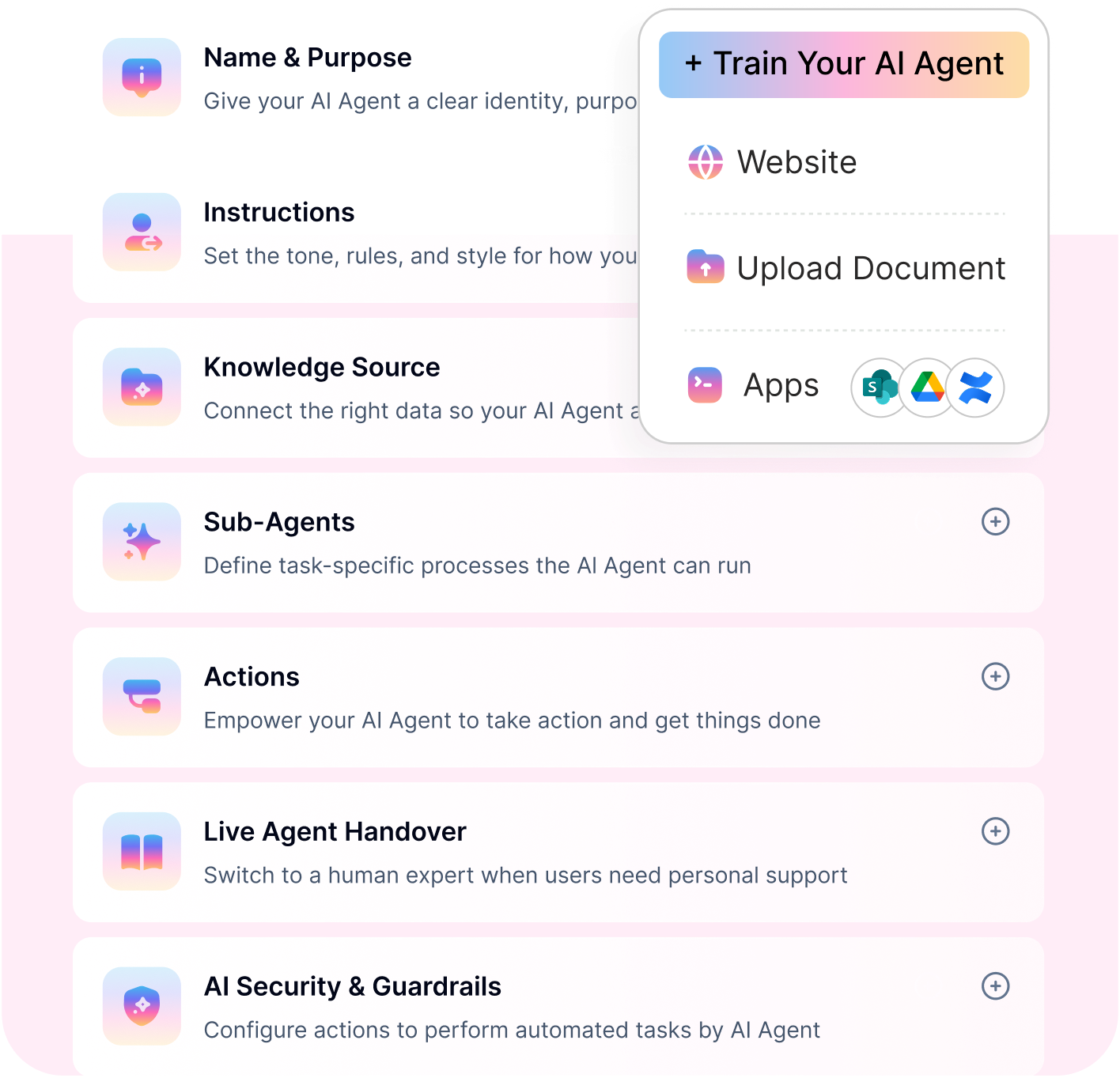
WORKATIV DELIVERS ALL 10 OF THESE BENEFITS
Productivity, cost savings, compliance, experience and scalability from one agentic AI platform.
No-code setup · HRIS integrations · Live in days
See a Quick Demo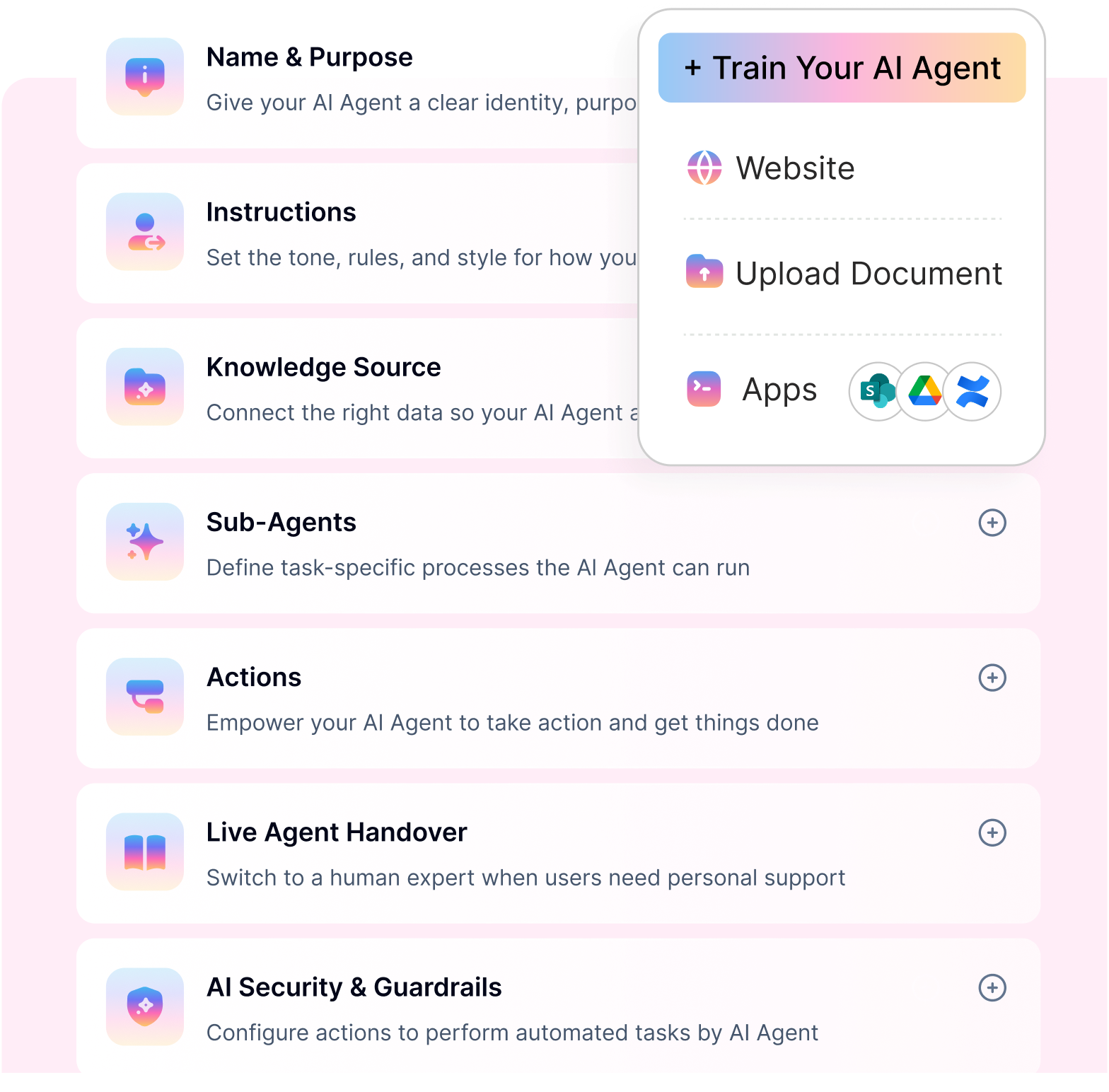
6. Stronger compliance with AI in HR automation systems
Compliance is a critical part of HR, especially when dealing with sensitive employee data, financial information, and regulatory requirements. One of the key advantages of AI is how it simplifies and strengthens compliance through consistent, automated processes. This is where AI compliance in HR and HR data security automation play a major role.
Here’s how AI improves compliance in HR:
Automated policy enforcement: AI ensures that HR policies are applied consistently across all employees, reducing the risk of non-compliance.
Secure handling of sensitive employee data: From personal details to payroll information, AI systems manage data with strict controls and reduced manual exposure.
Built-in audit trails and documentation: Every action and interaction is logged, making it easier to track, review, and audit HR activities.
Reduced risk of human error in compliance processes: Automated workflows minimize mistakes that could lead to compliance issues.
Real-time monitoring and alerts: AI can detect anomalies or potential risks early, helping teams take proactive action.
Platforms like Workativ are designed with compliance at the core. With enterprise-grade standards such as GDPR and SOC 2 compliance, Workativ ensures that employee data is handled securely and responsibly. Its automation workflows are built to protect sensitive information, enforce access controls, and maintain data privacy across all HR interactions.
This means HR teams can confidently scale their operations while staying compliant—without adding complexity or risk.
7. Workforce insights using AI in HR analytics
Beyond automation, AI offers HR a powerful advantage—visibility. With the ability to analyze large volumes of employee interactions and HR data, teams can uncover patterns, identify issues early, and make more informed decisions. This is where HR analytics benefits from AI and workforce insights; AI HR becomes especially valuable.
Here’s how AI-driven HR analytics improves decision-making:
Visibility into employee query trends: Understand what employees are asking most frequently and identify recurring issues.
Early detection of workforce challenges: Spot patterns related to dissatisfaction, policy confusion, or process gaps before they escalate.
Data-driven HR decision-making: Replace assumptions with real insights when planning HR initiatives or improving workflows.
Performance tracking of HR operations: Measure metrics like response times, resolution rates, and workload distribution.
Continuous improvement of HR processes: Use insights to refine workflows, update knowledge bases, and enhance employee support.
Workativ’s HR analytics dashboard provides real-time visibility into employee interactions, automation performance, and support trends—helping HR teams understand what’s working and where improvements are needed.
Instead of operating reactively, HR teams can take a proactive approach—using data to drive better outcomes across the organization.
8. Scalable HR operations with AI without increasing headcount
As organizations grow, HR teams often struggle to keep up with increasing employee demands. Hiring more HR staff isn’t always sustainable—or cost-effective. This is where scalable HR automation and AI-driven HR scalability make a real difference.
AI allows HR teams to handle higher volumes of requests, processes, and interactions without needing to expand their team.
Here’s how scalability improves with AI:
Handles increasing employee queries effortlessly: AI can manage thousands of interactions simultaneously without delays or performance drops.
Supports organizational growth without adding HR headcount: Teams can scale operations without a proportional increase in costs.
Consistent support across global teams: AI enables multilingual, always-on support for distributed workforces.
Maintains service quality at scale: Every employee receives the same accurate and timely support, regardless of volume.
Adapts to changing business needs quickly: New workflows, policies, and processes can be updated without operational disruption.
Whether it's handling employee queries, automating workflows, or supporting global teams, Workativ enables HR operations to grow seamlessly—without increasing complexity or workload.
9. Personalized learning and employee development with AI
Employee growth is no longer a one-size-fits-all process. With AI, HR teams can deliver more relevant, timely, and personalized development experiences that actually align with individual roles and goals. This is where AI-driven employee development creates real value.
Instead of generic training programs, AI helps tailor learning journeys based on employee needs, performance, and skill gaps.
Here’s how AI enhances employee development:
Personalized learning paths for each employee Training recommendations are based on role, experience level, and career goals.
Continuous skill gap identification: AI analyzes performance and interaction data to highlight areas for improvement.
On-demand learning support: Employees can access training resources and guidance whenever they need them.
Faster onboarding and upskilling: New hires and existing employees can ramp up quickly with guided learning workflows.
Improved engagement with learning programs: Relevant and timely recommendations increase participation and effectiveness.
With Workativ, employees can access training resources, receive guidance, and complete learning tasks directly within their work environment—making development more accessible and impactful.
10. AI chatbot benefits for HR support and helpdesk automation
When it comes to day-to-day HR operations, support and helpdesk functions often take up a significant amount of time. This is where the AI chatbot benefits for HR become immediately visible—helping teams deliver faster support while reducing manual workload.
AI chatbots act as the first line of support, handling a large portion of employee queries instantly and accurately. These HR chatbot advantages not only improve response times but also streamline the entire helpdesk experience.
Here’s how AI chatbots transform HR support:
Instant HR support for employees: Employees get real-time answers to queries without waiting for HR availability.
Significant reduction in HR tickets: A large percentage of repetitive queries are resolved automatically, leading to a noticeable reduction in tickets.
24/7 availability across channels: Support is accessible anytime via Slack, Teams, or internal portals.
Intelligent escalation for complex issues: Queries that require human intervention are routed to the right HR team efficiently.
Consistent and accurate responses: Employees receive reliable information every time, reducing confusion and follow-ups.
Seamless integration with HR systems: Chatbots can connect with HRIS, payroll, and knowledge bases to provide contextual responses.
11. Improving HR NPS with automation
HR NPS or Net Promoter Score reflects how employees perceive the quality, speed, and reliability of HR support. Poor experiences—delays, inconsistent answers, and fragmented processes—directly lower NPS and employee trust.
How AI improves HR NPS:
Faster response times : Instant answers eliminate waiting and reduce follow-ups
Consistent and accurate information : Centralized knowledge ensures reliable responses every time
Reduced effort for employees : Automation removes unnecessary steps and system switching
Real-time updates and transparency : Employees always know the status of their requests
Predictable and reliable experience : Consistency builds trust and improves overall perception of HR
Impact on HR NPS:
Higher employee satisfaction
Increased trust in HR systems
Reduced frustration and repeat queries
Stronger employee engagement and retention
AI-driven automation doesn’t just improve efficiency—it creates a smoother, more reliable experience that directly translates into higher HR NPS and better employee sentiment.
Workativ, AI chatbots go beyond answering questions—they can trigger workflows, complete tasks, and resolve requests end-to-end. This is where the real value of AI chatbot benefits for HR comes into play: faster support, reduced workload, and a more efficient HR helpdesk.
ROI of AI in HR support and HR automation investment
Investing in AI for HR is no longer just about efficiency—it’s about measurable business impact. The ROI of AI in HR support shows up across cost savings, faster operations, and better employee experience.
Cost savings and reduced HR support expenses : AI reduces the cost of HR support by automating repetitive queries and workflows. This lowers the cost per interaction and removes the need to scale HR teams with growth. With Workativ, both conversations and backend processes are automated, driving consistent cost efficiency.
Productivity gains and faster resolution times : AI enables instant query resolution and faster task completion. Employees spend less time waiting, while HR teams spend less time on repetitive work. Workativ ensures queries are not just answered but resolved through automated workflows, improving overall productivity.
Improved employee retention and engagement : Faster and more reliable HR support leads to better employee experiences. This directly impacts satisfaction and engagement, and over time, supports higher retention. Workativ delivers consistent and personalized support, making HR interactions smoother across the employee lifecycle.
Measurable ROI metrics for HR automation : The impact of AI can be tracked through HR automation ROI metrics such as reduced ticket volume, faster resolution time, lower cost per interaction, and improved employee satisfaction. Workativ provides real-time analytics to help teams measure and optimize these outcomes.
Long-term ROI of HR workflow automation investment : The long-term ROI of HR workflow automation investment comes from scalability and continuous improvement. As demand grows, AI handles increasing workloads without added costs. With Workativ’s agentic AI, organizations build systems that evolve over time, delivering sustained value.
READY TO BUILD YOUR HR AUTOMATION ROI CASE?
See how Workativ delivers measurable AI benefits in HR live, with your own workflows and systems.
Personalized demo · No commitment · No per-seat fees
Go live in daysHow to improve employee experience with AI
Improving employee experience with AI requires more than introducing automation it requires rethinking how HR support is delivered. Organizations need to focus on speed, personalization, and seamless execution to eliminate the friction employees face in everyday interactions.
Deliver instant support instead of delayed responses : AI enables employees to get immediate answers to their queries without waiting for HR availability. This reduces frustration and ensures employees can move forward without delays.
Personalize every interaction : AI systems use employee context such as role, location, and history to deliver relevant and accurate responses. This ensures employees receive information that is tailored to their needs.
Ensure consistent and reliable information : By connecting to centralized knowledge sources, AI eliminates conflicting responses and ensures employees always receive accurate information.
Automate workflows, not just answers : Improving employee experience with AI means enabling employees to complete tasks—such as leave requests or approvals within a single interaction, without switching systems.
Provide seamless support across channels : AI allows HR support to be accessible across platforms like Slack, Teams, and web portals, ensuring employees can interact through the tools they already use.
What are the AI tools to improve employee satisfaction scores?
Improving employee satisfaction today requires more than faster responses it requires consistent, personalized, and frictionless experiences across every HR interaction. This is where AI tools play a critical role, helping organizations move from reactive support to proactive, experience-driven HR operations.
AI HR assistants enable instant, reliable support
AI HR assistants act as the first point of contact for employees, providing immediate answers to common queries such as policies, benefits, payroll, and leave.
By eliminating wait times and reducing dependency on HR availability, these assistants significantly improve employee satisfaction scores through faster resolution and consistent support.
Employee self-service agents reduce effort and dependency
Employee self-service agents go beyond answering questions—they enable employees to complete tasks independently. Whether it’s submitting requests, tracking approvals, or accessing information, employees can resolve their needs without multiple follow-ups.
This reduction in effort and dependency creates a smoother experience, directly contributing to higher satisfaction and engagement.
Digital employee experience platforms unify interactions
A digital employee experience platform brings together multiple HR touchpoints into a single, seamless interface. Instead of navigating fragmented systems, employees interact through one unified layer that connects knowledge, workflows, and support channels.
This unified experience reduces confusion, improves accessibility, and ensures employees get what they need without friction.
AI tools drive measurable improvements in HR satisfaction metrics
The impact of these AI tools goes beyond convenience—they directly influence key HR metrics. Faster response times, consistent information, and reduced process friction lead to improved employee sentiment, higher engagement, and stronger HR NPS.
Organizations that invest in employee experience AI tools, especially in the mid-market segment, see measurable gains in satisfaction without needing to scale HR teams proportionally.
Improving employee experience with AI requires the right approach
Not all AI tools deliver the same outcomes. The most effective solutions combine instant support, workflow execution, and seamless integration across systems.
When implemented correctly, these tools don’t just automate HR they fundamentally improve how employees experience HR support, leading to higher satisfaction and long-term retention.
How Workativ delivers AI benefits in HR automation with agentic AI
Improving employee experience with AI requires more than faster responses—it requires the ability to resolve employee requests end-to-end. This is where most HR tools fall short. Let’s see the real action Workativ unleashes.
End-to-end HR workflow automation : Workativ goes beyond basic automation by enabling complete HR workflow automation. From leave requests to onboarding tasks, processes are handled automatically without manual follow-ups, reducing delays and improving efficiency.
Workflow execution, not just answers: Unlike traditional chatbots, Workativ enables employees to complete tasks within the same interaction. Instead of being redirected to systems or forms, requests are handled end-to-end.
For example:
An employee checks leave balance and submits a leave request instantly
A payroll query is resolved with real-time data retrieval
An access request is initiated and routed for approval automatically
This ability to execute workflows significantly reduces effort and improves overall experience.
Instant and accurate HR support at scale: Workativ delivers real-time responses to employee queries across HR topics such as policies, payroll, benefits, and leave. Employees receive consistent, reliable answers without waiting for HR teams. This eliminates delays and ensures a seamless support experience.
Omnichannel support across employee touchpoints : Workativ integrates with platforms like Slack, Microsoft Teams, web portals, and other communication channels. Employees can interact with HR through tools they already use, without switching systems.
This creates a consistent and accessible experience across all touchpoints.
AI chatbot benefits for HR support : Workativ’s AI chatbots act as the first line of support, delivering instant and consistent responses. These AI chatbot benefits for HR include reduced ticket volume, faster query resolution, and seamless escalation for complex cases.
Agentic AI for task execution : With agentic AI, Workativ doesn’t just provide answers—it takes action. Whether it’s updating records, triggering approvals, or completing requests, tasks are executed end-to-end, minimizing HR involvement.
Faster deployment with no-code setup : HR teams can launch automation quickly without relying on developers. Workativ’s no-code approach reduces implementation time and accelerates time to value.
Built-in compliance and data security : Workativ ensures that all HR processes are secure and compliant with standards like GDPR and SOC 2. Sensitive employee data is handled with strict controls, maintaining privacy and trust.
Scalable HR operations from day one : As organizations grow, Workativ enables HR teams to handle increasing demand without adding headcount. This makes HR operations more efficient and future-ready.
Workativ ultimately connects support, automation, and execution into a single system—helping organizations unlock the full value of AI in HR without added complexity.
👉 Transform your HR operations with Workativ’s AI-powered automation, try Workativ now .
Employee experience is now an AI problem
Employee experience today is no longer defined by policies or processes—it’s defined by how quickly, accurately, and effectively employee needs are resolved. In a world where instant support is the norm, manual HR models built on delays, follow-ups, and fragmented systems can no longer keep up with expectations.
Organizations that continue to rely on traditional HR support will see the same patterns persist: slower response times, rising employee frustration, and increasing disengagement. Over time, this directly impacts retention, productivity, and overall organizational performance.
In contrast, organizations that adopt AI-driven HR automation create a fundamentally different experience. Employees receive instant answers, complete tasks without friction, and get real-time visibility into their requests. This shift from reactive support to proactive resolution leads to higher satisfaction, stronger engagement, and better retention outcomes.
The difference is clear—employee experience is no longer an HR challenge alone. It’s an execution challenge, and AI is the only scalable way to solve it.
By combining instant support, workflow automation, and seamless integrations, Workativ transforms HR from a reactive support function into a proactive, experience-driven system.
As a digital employee experience platform, Workativ unifies support, workflows, and communication into a single, seamless layer—enabling organizations to deliver fast, consistent, and personalized HR experiences at scale.
For growing organizations in the mid-market evaluating employee experience AI tools, this approach provides the right balance of speed, flexibility, and scalability without the complexity of enterprise-heavy systems. Employees get faster resolution, reduced friction, and a more reliable HR experience—while organizations achieve greater efficiency, higher satisfaction, and stronger retention outcomes.
Improve employee experience, reduce attrition, and deliver instant HR support with Workativ—book a demo today.
FAQs
What are the key AI benefits in HR automation?
The key AI benefits in HR automation include improved productivity, reduced HR workload, cost savings, better employee experience, fewer errors, and stronger compliance. AI also enables scalable HR operations and provides valuable workforce insights through analytics.
How do AI chatbot benefits for HR improve employee support?
AI chatbots provide instant, 24/7 responses to employee queries, reducing wait times and HR ticket volume. They ensure consistent answers, personalize interactions, and escalate complex issues when needed—making HR support faster and more efficient.
What is the ROI of AI in HR support?
The ROI of AI in HR support comes from reduced operational costs, faster resolution times, improved employee productivity, and higher satisfaction levels. Over time, organizations also benefit from scalable HR operations without increasing headcount.
How does AI improve HR workflow automation?
AI improves HR workflow automation by handling repetitive tasks like leave requests, onboarding steps, and policy queries automatically. It ensures processes are completed faster, with fewer errors, and without constant manual intervention.
Is AI secure for HR data and compliance?
Yes, modern AI platforms are designed with strong security and compliance standards such as GDPR and SOC 2. They ensure sensitive employee data is handled securely, with proper access controls and audit trails in place.
How quickly can HR teams implement AI automation?
With no-code platforms like Workativ, HR teams can deploy AI automation quickly—often within days. This allows organizations to start seeing benefits such as reduced workload and faster support almost immediately.
Can AI replace HR teams?
AI is not meant to replace HR teams but to support them. It automates repetitive tasks and improves efficiency, allowing HR professionals to focus on strategic initiatives like employee engagement, culture, and talent development.
Which HR functions show the fastest ROI from AI adoption?
Functions like employee support, leave management, onboarding, and payroll queries usually show ROI first because they involve repetitive, high-volume requests. Automating these areas quickly reduces manual workload and improves service speed.
How does AI improve HR’s strategic impact beyond efficiency?
AI frees HR from repetitive operations and gives leaders visibility into workforce trends, employee sentiment, and service bottlenecks. This allows HR to focus more on retention, culture, and workforce planning.
'%3e%3cpath%20d='M11.5732%2031.7068L19.2977%2022.7433L11.5732%2011.5366H17.4664L22.6245%2018.942L29.0522%2011.5366H30.7788L23.4029%2020.0985L31.4127%2031.7086H25.4997L20.1231%2023.9069L13.3197%2031.7068H11.5732ZM16.6519%2012.8366H13.9536L26.354%2030.4462H28.9926L28.8265%2030.1576L16.6519%2012.8366Z'%20fill='%230C0C0C'/%3e%3c/g%3e%3cdefs%3e%3cclipPath%20id='clip0_505_14364'%3e%3crect%20width='19.7681'%20height='20.2432'%20fill='white'%20transform='translate(11.573%2011.5365)'/%3e%3c/clipPath%3e%3c/defs%3e%3c/svg%3e)

'%3e%3cpath%20d='M25.2175%2011.7557L26.9132%2011.911V15.0496C26.0135%2015.1444%2024.1746%2014.7452%2023.5821%2015.5947C23.4908%2015.726%2023.3291%2016.1592%2023.3291%2016.3091V19.002H26.7392L26.3346%2022.5281H23.3291V31.5952H19.707V22.5863L19.649%2022.5281H16.6628V19.002H19.707C19.7813%2017.4024%2019.4664%2015.7042%2020.1132%2014.1986C20.6748%2012.8902%2021.7857%2012.0974%2023.1666%2011.8435L23.7151%2011.7557H25.2183H25.2175Z'%20fill='%230C0C0C'/%3e%3c/g%3e%3cdefs%3e%3cclipPath%20id='clip0_505_14375'%3e%3crect%20width='10.2695'%20height='19.8027'%20fill='white'%20transform='translate(16.658%2011.7567)'/%3e%3c/clipPath%3e%3c/defs%3e%3c/svg%3e)
About the Author
Deepa Majumder

Senior content writer
Deepa Majumder is a writer who nails the art of crafting bespoke thought leadership articles to help business leaders tap into rich insights in their journey of organization-wide digital transformation. Over the years, she has dedicatedly engaged herself in the process of continuous learning and development across business continuity management and organizational resilience.
Her pieces intricately highlight the best ways to transform employee and customer experience. When not writing, she spends time on leisure activities.
Auto-resolve 60% of Your Employee
Queries With AI Agents & Automation
- No credit card required
- Setup in minutes
- Cancel Anytime