


HaloITSM AI agent for your IT help desk.
Password resets, access requests, incident triage, and ticket status handled in Slack from live HaloITSM data. No developer. No portal. No ticket queue.
IT Teams of all sizes trusts Workativ AI to automate IT Operations & Support

Halo AI is bundled and real. Three things its own marketing overstates.

Halo's Slack presence is notifications only
Halo markets conversational Slack support. What's documented is notifications employees still can't act from there.

The Teams bot runs on commands, not conversation
Find a ticket. Follow a ticket. That's the documented scope not open self-service dialogue.

Outside Halo, a human still coordinates
Halo handles its own modules well. Jira, Okta, and non-Halo tools still need manual handoff.
Every HaloITSM request resolved in Slack real conversation, not commands.
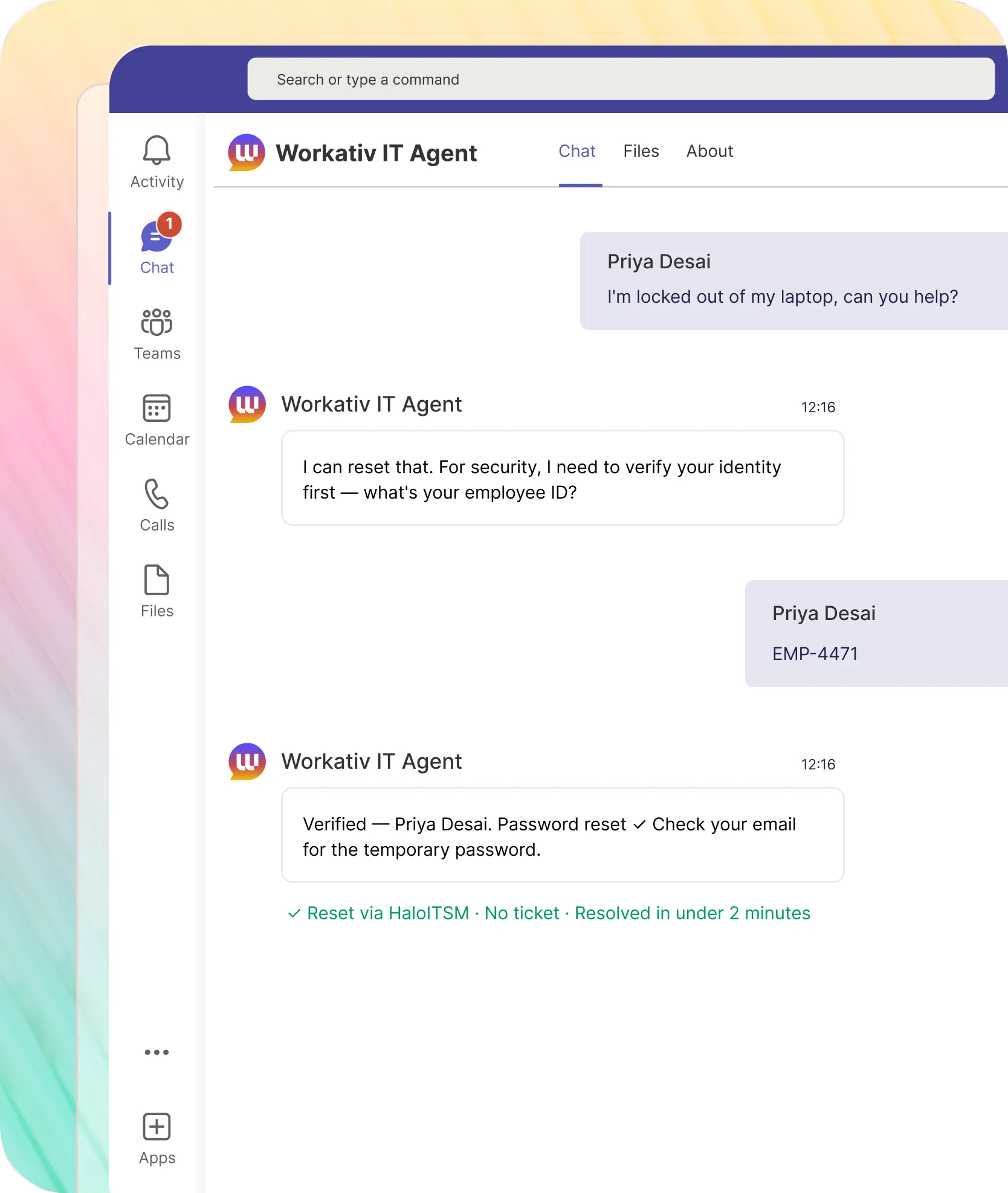
Employee asks in Slack. Workativ reads from HaloITSM, takes the action, and confirms in the same thread.
Employee asks in plain language. Workativ verifies identity and resets no ticket, no command syntax.

Identity verified before any HaloITSM or identity-provider action
Password reset through HaloITSM or connected identity provider
No ticket created for a routine, in-policy reset
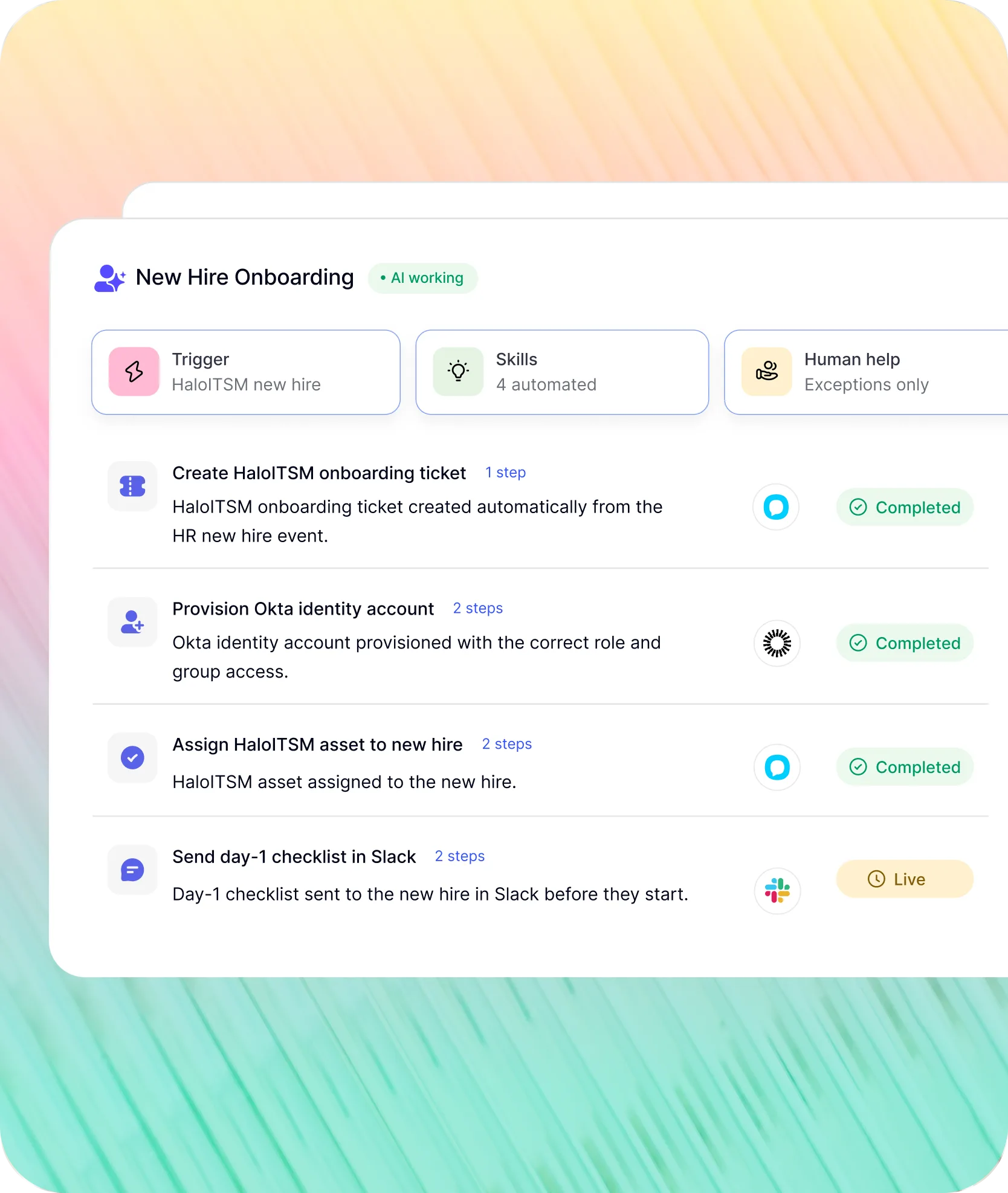
HaloITSM events trigger workflows across every connected system. No one coordinates manually.
HaloITSM fires the event a new hire, an incident, a termination. Workativ extends the action into Jira, Okta, and Slack.
New hire triggers a HaloITSM ticket. Workativ provisions identity and sends the day-1 checklist.
HaloITSM ticket created automatically from the HR trigger
Okta identity account provisioned with correct role and groups
The checklist reaches the new hire's Slack inbox before day one
How NMDC Group deflected 78% of IT tickets real conversation in Slack, not a notification bot.
"Workativ has been with us every step of the way. From our first IT support use case to HR, and soon Procurement. The platform grows with us, and so does the team behind it. It's rare to find a solution that's both powerful and genuinely easy to manage."

Imran Abid
IT Operations Leader · NMDC Group

Connect HaloITSM to Slack in three steps.
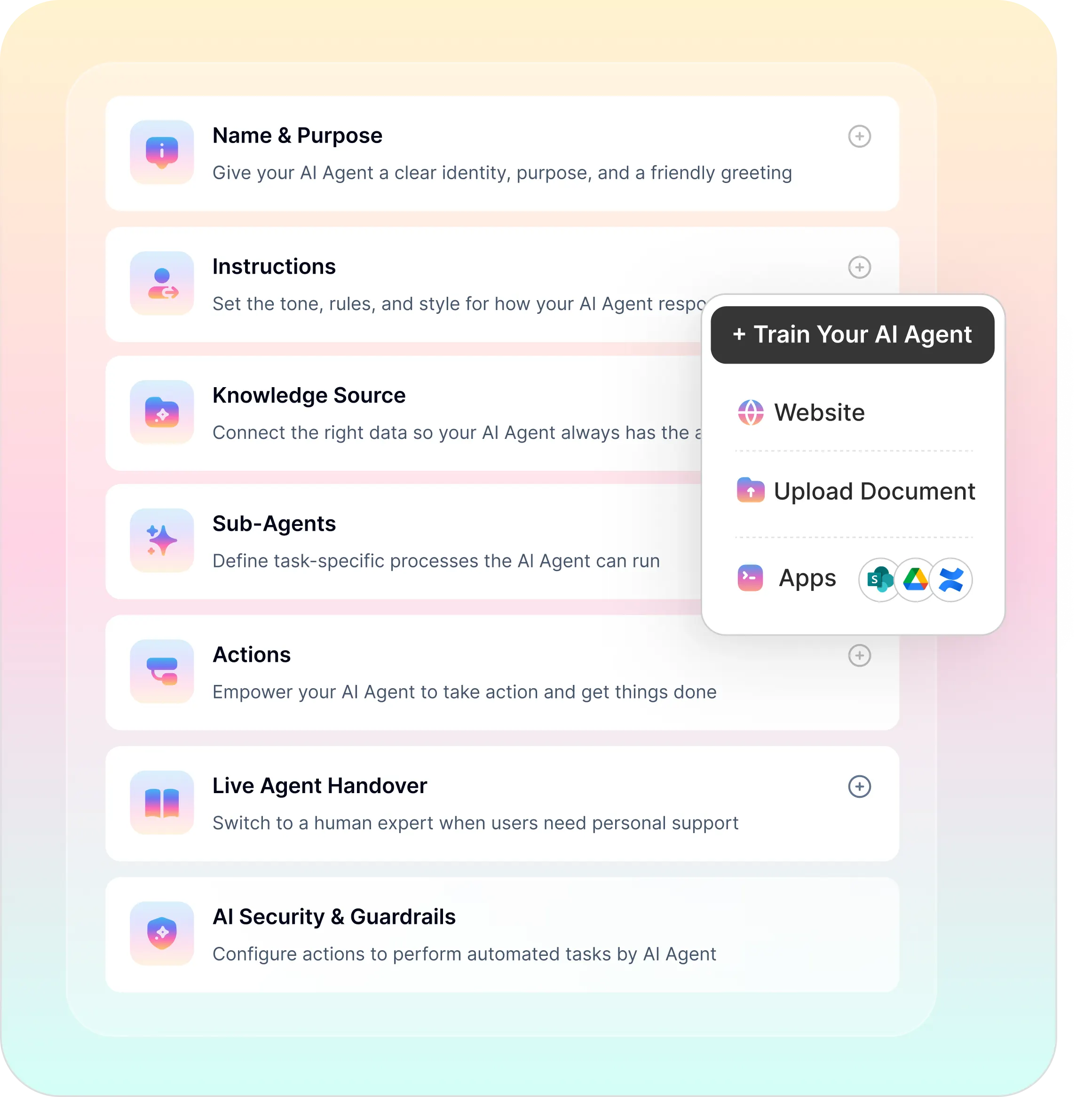
Built to extend HaloITSM, not replace it. HaloITSM stays your system of record.
No-code builder, agentic RAG, cross-system workflows, security, and analytics without a Halo implementation project.
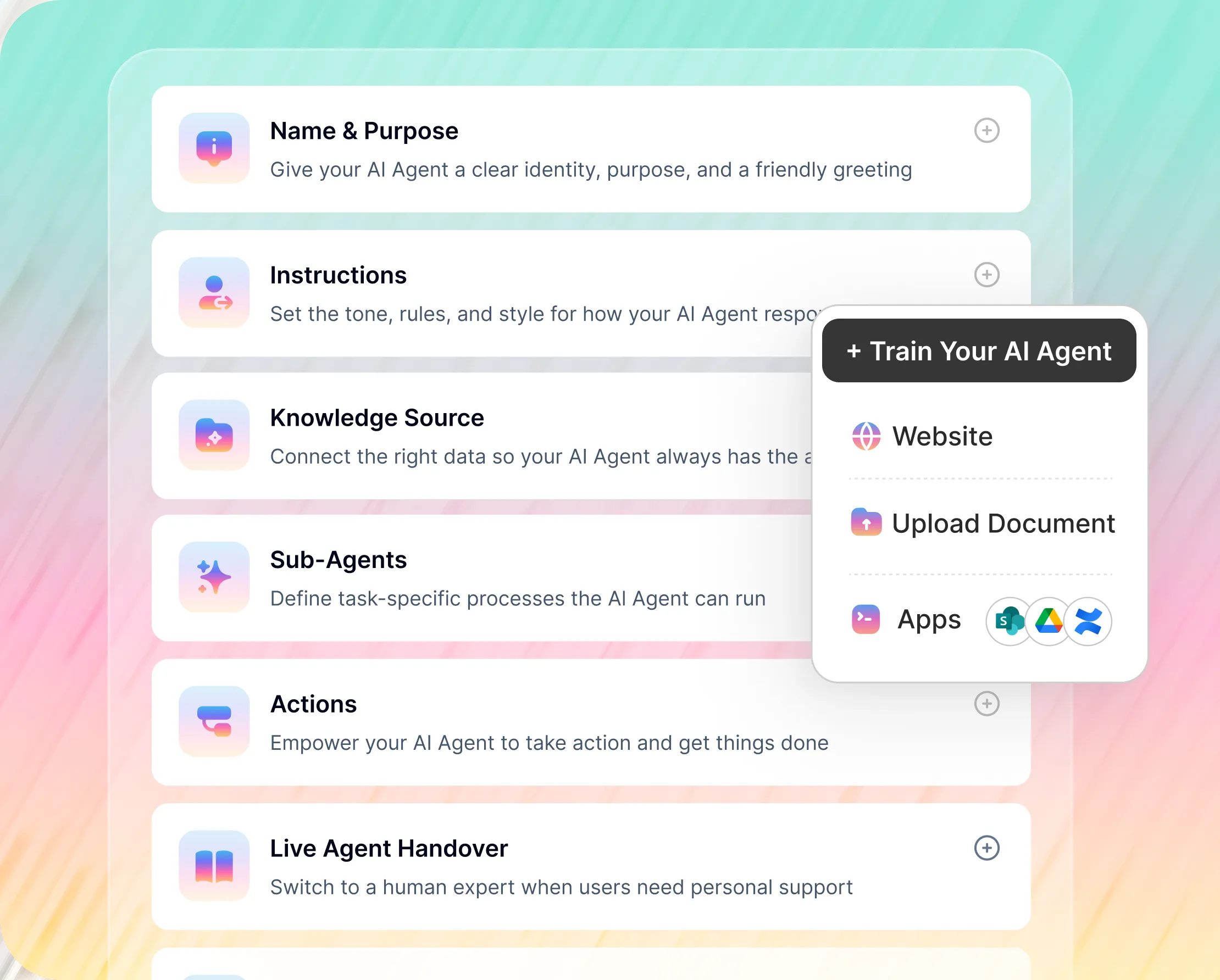
No-Code HaloITSM AI Agent Builder
HaloITSM password resets, access requests, and ticket status configured point-and-click
Non-Halo systems added the same way no separate integration project
Routes to a live agent the instant a request outgrows the AI
Halo AI is a real, bundled platform. Here's where Workativ fits.
Halo AI handles ticket triage, clustering, and knowledge generation well, inside HaloITSM itself. Workativ brings real conversational self-service into Slack not notifications, not Teams commands.
What matters to HR |  |  |
|---|---|---|
Slack experience |  | Notifications only (documented) |
Microsoft Teams experience | | Command-based bot (documented) |
Ticket triage, clustering, KB generation | Not applicable | |
Password resets in chat | |  |
Creates tickets in Jira | | |
Cross-system automation outside Halo | | |

When Halo AI is enough: Your agents work inside HaloITSM's own portal and web chat, and triage, clustering, and knowledge generation cover what you need.
When to evaluate Workativ instead: Employees are in Slack and expect to resolve things there, not get a notification and switch apps, or a request needs a ticket outside HaloITSM entirely. Both can run alongside each other HaloITSM stays your system of record either way.
HaloITSM plus every system outside Halo's own ecosystem.


'/%3e%3cpath%20d='M7.53747%209.7499L4.18595%209.72912C3.89511%209.72912%203.66314%209.49022%203.66314%209.20285C3.66314%209.08859%203.70122%208.98126%203.76701%208.89124L8.69389%202.30244C10.2589%203.46925%2010.5809%205.68513%209.41059%207.2501L7.53747%209.7499Z'%20fill='url(%23paint1_linear_217_318)'/%3e%3cdefs%3e%3clinearGradient%20id='paint0_linear_217_318'%20x1='7.3717'%20y1='1.41211'%20x2='9.07645'%20y2='11.0799'%20gradientUnits='userSpaceOnUse'%3e%3cstop%20stop-color='%239DC9FC'/%3e%3cstop%20offset='0.6866'%20stop-color='white'/%3e%3c/linearGradient%3e%3clinearGradient%20id='paint1_linear_217_318'%20x1='9.68512'%20y1='1.62241'%20x2='6.91576'%20y2='7.45173'%20gradientUnits='userSpaceOnUse'%3e%3cstop%20stop-color='%239DC9FC'/%3e%3cstop%20offset='0.7152'%20stop-color='white'/%3e%3c/linearGradient%3e%3c/defs%3e%3c/svg%3e)


%20--%3e%3csvg%20version='1.1'%20id='Layer_1'%20xmlns='http://www.w3.org/2000/svg'%20xmlns:xlink='http://www.w3.org/1999/xlink'%20x='0px'%20y='0px'%20viewBox='0%200%20512%20512'%20style='enable-background:new%200%200%20512%20512;'%20xml:space='preserve'%3e%3cstyle%20type='text/css'%3e%20.st0{fill:%23F7F7F7;}%20.st1{fill:%2328E4C3;}%20.st2{fill:url(%23SVGID_1_);}%20.st3{fill:url(%23SVGID_2_);}%20%3c/style%3e%3ccircle%20class='st0'%20cx='256'%20cy='256'%20r='245.5'/%3e%3cg%3e%3cg%3e%3cpath%20class='st1'%20d='M304.7,405.6'/%3e%3c/g%3e%3c/g%3e%3cg%3e%3cg%3e%3cpath%20class='st1'%20d='M305.8,353'/%3e%3c/g%3e%3c/g%3e%3clinearGradient%20id='SVGID_1_'%20gradientUnits='userSpaceOnUse'%20x1='388.1461'%20y1='99.0534'%20x2='204.4846'%20y2='204.5899'%20gradientTransform='matrix(1%200%200%20-1%200%20514)'%3e%3cstop%20offset='0.18'%20style='stop-color:%230052CC'/%3e%3cstop%20offset='1'%20style='stop-color:%232684FF'/%3e%3c/linearGradient%3e%3cpath%20class='st2'%20d='M119.9,330.3c-3,4.9-6.4,10.7-9.3,15.3c-2.6,4.4-1.2,10,3.1,12.7l60.7,37.4c4.4,2.7,10.1,1.3,12.9-3%20c0,0,0.1-0.1,0.1-0.1c2.4-4.1,5.6-9.3,9-15c24-39.7,48.2-34.8,91.9-14l60.2,28.6c4.7,2.2,10.2,0.2,12.4-4.4c0-0.1,0.1-0.2,0.1-0.3%20l28.9-65.4c2-4.7,0-10.1-4.7-12.2c-12.7-6-38-17.9-60.7-28.9C242.6,241.2,173.1,243.7,119.9,330.3z'/%3e%3clinearGradient%20id='SVGID_2_'%20gradientUnits='userSpaceOnUse'%20x1='613.0198'%20y1='1773.9866'%20x2='429.3116'%20y2='1879.5697'%20gradientTransform='matrix(-1%200%200%201%20736.83%20-1676.71)'%3e%3cstop%20offset='0.18'%20style='stop-color:%230052CC'/%3e%3cstop%20offset='1'%20style='stop-color:%232684FF'/%3e%3c/linearGradient%3e%3cpath%20class='st3'%20d='M392.1,181.9c3-4.9,6.4-10.7,9.3-15.3c2.6-4.4,1.2-10-3.1-12.7l-60.7-37.4c-4.3-2.9-10.1-1.7-13,2.5%20c-0.1,0.2-0.2,0.4-0.3,0.6c-2.4,4.1-5.6,9.3-9,15c-24,39.7-48.2,34.8-91.9,14l-60-28.5c-4.7-2.2-10.2-0.2-12.4,4.4%20c0,0.1-0.1,0.2-0.1,0.3L122,190.2c-2,4.7,0,10.1,4.7,12.2c12.7,6,38,17.9,60.7,28.9C269.4,271,338.9,268.4,392.1,181.9z'/%3e%3c/svg%3e)



%20--%3e%3csvg%20version='1.1'%20id='Layer_1'%20xmlns='http://www.w3.org/2000/svg'%20xmlns:xlink='http://www.w3.org/1999/xlink'%20x='0px'%20y='0px'%20viewBox='0%200%20512%20512'%20style='enable-background:new%200%200%20512%20512;'%20xml:space='preserve'%3e%3cstyle%20type='text/css'%3e%20.st0{fill:%23EB3C00;}%20.st1{fill:%23FFFFFF;}%20%3c/style%3e%3ccircle%20class='st0'%20cx='256'%20cy='256'%20r='245.5'/%3e%3cpath%20class='st1'%20d='M152.2,332.7v-152L286.7,131l73.1,23.4V359l-73.1,22L152.2,332.7l134.4,16.2V171.9L199,192.4v119.8L152.2,332.7%20z'/%3e%3c/svg%3e)

'%3e%3cpath%20d='M1.86774%200H2.41284C2.55325%200.0357914%202.8438%200.0814543%202.96023%200.144319C3.57556%200.476574%204.24389%200.994086%204.78094%201.44029C4.90785%201.49857%205.14031%201.69076%205.26616%201.78501L6.30254%202.56565L9.23874%204.76784L9.98605%205.32579C10.1165%205.42327%2010.3896%205.61784%2010.4874%205.73305C10.5933%205.62723%2010.7819%205.49083%2010.9035%205.39513C11.2293%205.13895%2011.5711%204.89897%2011.9015%204.64888L14.841%202.43616C15.2641%202.11793%2015.808%201.74101%2016.2059%201.4114C16.7548%201.01773%2017.2984%200.503308%2017.8952%200.193124C18.0888%200.0925009%2018.3311%200.0707975%2018.4996%200.00453492L18.511%200H19.1089C19.2716%200.0419345%2019.4446%200.0664859%2019.6017%200.126337C20.3949%200.428494%2020.8251%201.03647%2020.9795%201.84719V4.05546L17.6977%206.51872L16.7256%207.24655C16.6175%207.32813%2016.3229%207.56223%2016.2176%207.62326L16.2116%207.64067C16.0556%207.74125%2015.7554%207.98423%2015.5914%208.10717L14.2347%209.12565C12.9949%2010.0567%2011.7226%2010.9908%2010.4942%2011.9326C10.3311%2011.8196%2010.1521%2011.6753%209.99028%2011.5543L8.91562%2010.7499L6.14505%208.67116C5.6887%208.32244%205.22946%207.97753%204.76737%207.63644L4.76105%207.62385C4.64747%207.54843%204.4662%207.40207%204.35254%207.31617L3.58531%206.74057L0.993507%204.79937C0.666643%204.55579%200.329975%204.28777%200%204.0539V1.89895C0.0211067%201.8406%200.034732%201.7287%200.0477586%201.66355C0.195443%200.924862%200.778193%200.297181%201.50398%200.095359C1.61897%200.0633797%201.74239%200.0411929%201.85419%200.00451034L1.86774%200Z'%20fill='%23EB4337'/%3e%3cpath%20d='M18.5112%200H19.109C19.2718%200.0419345%2019.4448%200.0664859%2019.6018%200.126337C20.395%200.428494%2020.8252%201.03647%2020.9797%201.8472V4.05546L17.6978%206.51872L16.7258%207.24655C16.6176%207.32813%2016.3231%207.56223%2016.2177%207.62326C16.2065%207.10816%2016.2151%206.56484%2016.215%206.04638L16.2148%203.13227L16.2154%201.98927C16.2154%201.85241%2016.2236%201.52684%2016.2061%201.4114C16.755%201.01773%2017.2986%200.503308%2017.8953%200.193124C18.089%200.0925009%2018.3312%200.0707975%2018.4998%200.00453492L18.5112%200Z'%20fill='%23FCBC03'/%3e%3cpath%20d='M1.86774%200H2.41284C2.55325%200.0357914%202.8438%200.0814543%202.96023%200.144319C3.57556%200.476574%204.24389%200.994086%204.78094%201.44029C4.75802%201.55136%204.76536%201.81314%204.76577%201.93571L4.7683%202.76769L4.76727%206.06197L4.76854%207.06889C4.76879%207.22294%204.77708%207.48131%204.76105%207.62385C4.64746%207.54843%204.4662%207.40207%204.35254%207.31617L3.58531%206.74057L0.993506%204.79937C0.666643%204.5558%200.329975%204.28777%200%204.0539V1.89895C0.0211067%201.8406%200.034732%201.7287%200.0477586%201.66355C0.195443%200.924862%200.778193%200.297181%201.50398%200.095359C1.61897%200.0633798%201.74239%200.0411929%201.85419%200.00451034L1.86774%200Z'%20fill='%23C62220'/%3e%3cpath%20d='M0%204.05371C0.329975%204.28758%200.666643%204.5556%200.993507%204.79918L3.58531%206.74038L4.35254%207.31598C4.4662%207.40188%204.64747%207.54824%204.76105%207.62365L4.76737%207.63625C4.79294%207.81891%204.78411%208.19988%204.78406%208.39833L4.78312%209.71796L4.78339%2014.2476C4.7834%2014.4489%204.8101%2015.6601%204.76016%2015.7263C4.75851%2015.7284%204.75656%2015.7304%204.75498%2015.7326C4.75244%2015.7361%204.75024%2015.74%204.74778%2015.7435C4.7463%2015.7457%204.74469%2015.7477%204.74315%2015.7498H1.23433C1.02953%2015.6658%200.870008%2015.6564%200.656526%2015.5145C0.258114%2015.2497%200.102217%2014.9456%200%2014.4978V4.05371Z'%20fill='%234185F5'/%3e%3cpath%20d='M20.9794%204.05566V14.5025C20.828%2015.1172%2020.5387%2015.5356%2019.8875%2015.6981C19.8377%2015.7104%2019.7443%2015.7302%2019.7008%2015.7502H16.235C16.1758%2015.6436%2016.1987%2013.9178%2016.1987%2013.683L16.199%2010.2145L16.1984%208.51668C16.1982%208.31838%2016.1872%207.81396%2016.2115%207.64088L16.2175%207.62347C16.3228%207.56244%2016.6174%207.32834%2016.7255%207.24676L17.6976%206.51892L20.9794%204.05566Z'%20fill='%2333A953'/%3e%3c/g%3e%3cdefs%3e%3cclipPath%20id='clip0_1380_1288'%3e%3crect%20width='20.9795'%20height='15.75'%20fill='white'/%3e%3c/clipPath%3e%3c/defs%3e%3c/svg%3e)
%20--%3e%3csvg%20version='1.1'%20id='Layer_1'%20xmlns='http://www.w3.org/2000/svg'%20xmlns:xlink='http://www.w3.org/1999/xlink'%20x='0px'%20y='0px'%20viewBox='0%200%20512%20512'%20style='enable-background:new%200%200%20512%20512;'%20xml:space='preserve'%3e%3cstyle%20type='text/css'%3e%20.st0{fill:%230062FF;}%20.st1{fill:%23FFFFFF;}%20%3c/style%3e%3ccircle%20class='st0'%20cx='256'%20cy='256'%20r='245.5'/%3e%3cpath%20class='st1'%20d='M256,162.5l-91,58.2l91,58.2l-91,58.2l-91-59.1l91-58.2l-91-57.3l91-58.2L256,162.5z%20M164.1,355.5l91-58.2%20l91,58.2l-91,58.2L164.1,355.5z%20M256,278.1l91-58.2l-91-57.3l91-58.2l91,58.2l-91,58.2l91,58.2l-91,58.2L256,278.1z'/%3e%3c/svg%3e)


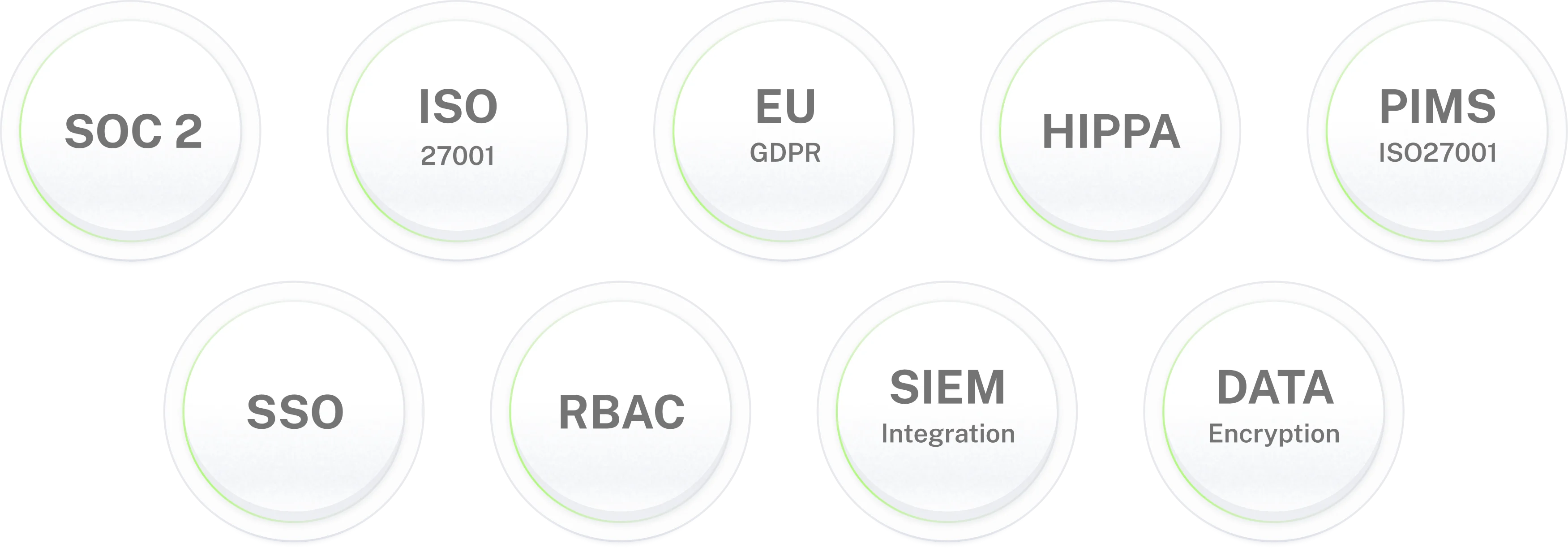
Enterprise-grade security for IT environments where data protection is non-negotiable.
HaloITSM AI agent
for your IT help desk.
80% of IT and HR queries resolved in Slack real conversation, not Teams commands.
Frequently asked questions
HaloITSM AI agent frequently asked questions
What is a HaloITSM AI agent?
A HaloITSM AI agent connects to your HaloITSM instance and lets employees reset passwords, request software access, check ticket status, and get IT policy answers all in Slack, without logging into the HaloITSM portal. Halo AI is genuinely bundled into every HaloITSM licence at no extra cost, handling ticket triage, clustering, and knowledge article generation well. Its documented Slack presence, however, is notifications only, and its Microsoft Teams bot runs on specific commands rather than open conversation. Workativ's HaloITSM AI agent delivers real conversational self-service in Slack and takes action creating tickets, requesting access, and escalating with full context.
Does Halo AI work in Slack?
Partially. Halo's own marketing describes its Conversational Agent as working across web chat, Teams, Slack, and the self-service portal. An independent, sourced comparison of what's actually documented found the Teams bot is command-based (find a ticket, follow a ticket) and Slack's integration delivers notifications, not open conversational self-service. Genuine conversational, action-taking employee AI for Halo customers has typically come from third-party tools. Workativ deploys a HaloITSM-connected AI agent natively in Slack that answers questions and takes action directly in conversation.
How is Workativ different from Halo AI?
Halo AI is bundled into every HaloITSM licence at no extra cost and does real work inside the platform auto-classification, ticket clustering, knowledge article drafting, and a Process Agent layer that can auto-resolve known issues on a schedule. Its Conversational Agent is strongest inside HaloITSM's own self-service portal and web chat; in Slack, the documented experience is notifications, and in Teams it runs on specific commands. Workativ connects to HaloITSM and delivers full conversational self-service in Slack password resets, access requests, ticket creation plus extends workflows into Jira, Okta, and 100+ other apps outside Halo's own ecosystem. Workativ and Halo AI are complementary HaloITSM stays your system of record.
How does Workativ integrate with HaloITSM?
Workativ connects to HaloITSM via its public REST API, using OAuth2 authentication and role-based access controls that respect your existing HaloITSM permission structure. Workativ reads live HaloITSM data ticket status, asset records, knowledge base content and writes back where permitted: creating tickets, submitting access requests, and triggering workflows into Jira, Okta, and other systems outside HaloITSM.
What IT workflows can Workativ automate with HaloITSM?
Workativ automates workflows that start in HaloITSM and extend into systems Halo's own AI doesn't reach: new hire onboarding (a HaloITSM ticket triggers Okta provisioning and a day-1 Slack checklist), access request approval (employee requests in Slack, manager approves in Slack, HaloITSM ticket updated), asset provisioning from HaloITSM's CMDB when a new hire needs equipment, and offboarding (an HR trigger creates a HaloITSM ticket and revokes access across connected systems).
Can the HaloITSM AI agent reset passwords in Slack?
Yes. Employee asks in Slack. Workativ verifies identity, resets the password through HaloITSM's workflow or the connected identity provider, and confirms in the same thread no ticket required for a routine reset. For anything outside policy, the agent creates a HaloITSM ticket with full context rather than guessing.
Is Workativ suitable for the mid-market and enterprise teams that typically use HaloITSM?
Yes. HaloITSM's customer base skews mid-market to enterprise, with the largest single tier in the 1,000 to 4,999 employee range and strong representation from 51 to 1,000 employees. Workativ fits that same range: a no-code setup IT can configure directly, published pricing with no 250-agent minimum to see a number, and deployment in 3 to 5 days.
Can the HaloITSM AI agent handle employee onboarding?
Yes. When HR triggers a new hire, Workativ creates the relevant HaloITSM ticket, provisions the Okta identity account with correct role and groups, and delivers a day-1 checklist to the new hire in Slack before they start. HaloITSM remains the system of record for the ticket. IT sets the workflow up once it runs for every new hire without manual steps.
Can employees check ticket status in Slack?
Yes. Employees ask in Slack and Workativ returns live status from HaloITSM open, in progress, resolved, along with the assigned technician and last update. No portal login, no email to IT, no waiting on a notification that may or may not arrive.
Is HaloITSM data secure with Workativ?
Yes. Workativ connects to HaloITSM using OAuth2 authentication with role-based access controls. The AI agent only reads and writes what it has been explicitly permitted to access. HaloITSM data is never used to train models. PII is masked in all conversation logs. Every HaloITSM action is logged to an immutable audit trail. Workativ is SOC 2 Type II, ISO 27001, GDPR, and HIPAA compliant.
How long does HaloITSM AI agent deployment take?
3 to 5 days for standard IT self-service password resets, access requests, ticket status, and policy Q&A. No developer required. No implementation project. Workativ's no-code platform connects HaloITSM, configures the AI agent, and deploys it to Slack. Cross-system workflows into Jira or Okta typically add a small configuration step.
Does Workativ replace Halo AI?
No. Halo AI remains genuinely useful for the in-platform work it does well ticket triage, clustering, knowledge article generation, and scheduled Process Agent automation. Workativ extends real conversational self-service into Slack, where the documented Halo experience is notifications rather than conversation, and connects HaloITSM events to Jira, Okta, and systems outside Halo's own ecosystem. The two run side by side, with HaloITSM staying your system of record.