
Top 10 Moveworks Alternatives in 2026 Compared
Top 10 Moveworks alternatives 2026 compared. Explore pricing, features, pros, cons & find the best AI employee support platform for your IT service desk.


TL;DR
The best Moveworks alternatives stand out through faster deployment, no-code workflow ownership, and broader automation across HR, IT, and internal operations.

Key evaluation factors include pricing predictability, ecosystem flexibility, action-based automation, modular workflows, and enterprise-grade governance.
Platforms like Workativ deliver stronger cross-department scalability by combining AI agents, advanced RAG, shared live inbox, and multichannel support.
The right choice depends on your ITSM environment, internal ownership needs, implementation speed, and how broadly you plan to scale automation.
If you are evaluating Moveworks alternatives for your organization, you are likely comparing AI agent platforms that can automate employee support across IT, HR, and internal operations. Moveworks is a well-known enterprise AI platform, especially after its acquisition by ServiceNow.
While Moveworks is a strong option, selecting an AI employee support platform is a long-term strategic decision. It goes beyond headlines and brand recognition. Enterprises need to evaluate the depth of automation, integration maturity, governance controls, total cost of ownership, and the ability to scale across departments.
Before making a decision, ask:
Can the platform support all enterprise use cases across IT, HR, and operations?
Is the pricing predictable as adoption expands?
How complex is the implementation process?
Will the product roadmap continue to evolve in the right direction?
Does the platform allow internal teams to manage and improve automation over time?
For many enterprises, these questions lead to a deeper comparison of alternatives to Moveworks. In this guide, we break down the top Moveworks competitors to help you evaluate features, pricing models, and long-term value, so you can choose the platform that best aligns with your AI strategy.
Why look for Moveworks alternatives in 2026?
Moveworks is powerful. But it may not be right for every organization. Here are the most common reasons you might start exploring alternatives to Moveworks.
Integration complexity outside ServiceNow : If you operate outside a core ServiceNow environment, you may experience longer implementation cycles with Moveworks. Deep integrations and tuning often require significant time and coordination, especially in mixed IT stacks. This added complexity can slow time-to-value and increase reliance on technical resources during rollout.
Concerns around the ServiceNow ecosystem dependency and innovation pace : Now that Moveworks is part of ServiceNow, you should expect deeper alignment with the ServiceNow ecosystem. If your organization runs fully on ServiceNow, this may strengthen integration and workflow continuity. But if you rely on platforms like Jira, Freshservice, or other ITSM tools, you may need to evaluate how future optimization priorities affect your environment. Over time, a greater focus on ServiceNow integration could influence the direction of innovation and the roadmap's flexibility for non-ServiceNow customers.
Common limitations reported with Moveworks : Moveworks can be expensive for smaller organizations, especially when enterprise pricing tiers are applied. Deep customization may require significant configuration effort and is not always straightforward. Performance is often dependent on the quality and depth of system integrations. Some users also report occasional AI context or language interpretation gaps in complex scenarios.
Limited flexibility for customization and feature control : Some users report that Moveworks has limitations that can slow down operational workflows. Editing, modifying, or extending features may not always be straightforward, especially without vendor involvement. This can restrict how quickly teams adapt automation to evolving business needs.
Effective overall, but complex edge cases require effort : Moveworks is effective in handling the most common employee support scenarios. However, rare or highly complex IT issues may still require direct human intervention. Initial configuration and ongoing adjustments can be time-consuming and often require deep platform and IT environment knowledge. While these drawbacks exist, many users still recognize the overall value the platform delivers.
Performance limitations in complex scenarios : While Moveworks offers strong automation capabilities, its performance may decline in rare or highly complex cases that fall outside standard workflows. These situations often require human intervention, which can slow resolution times. Initial setup and customization can also be time-intensive, especially when aligning the platform with organization-specific processes and requirements.
Limited flexibility for major customization : Some users find that significant customization of core functionality can be restrictive. While workarounds may be possible with vendor support, extending the platform beyond its standard capabilities can require additional effort and coordination.
What modern Moveworks alternatives do better in 2026
Modern Moveworks alternatives are not winning because they offer more features. They stand out because they reduce friction, improve agility, and give you more control over automation.
Below are the key areas where newer AI employee support platforms are evolving faster.
No-code or low-code AI agent building : You can build, update, and expand AI agents without heavy technical involvement. This allows your internal IT and HR teams to move faster without relying on vendor-led configuration.
Modular automation architecture : Workflows are built in flexible modules, so changes to one step do not disrupt the entire automation chain. This makes it easier to adapt to evolving processes.
Action-first automation beyond ticket routing : Instead of stopping at ticket creation, modern platforms focus on completing requests end to end, including approvals, access provisioning, and system updates.
Faster rollout timelines : Many alternatives emphasize quicker implementation cycles, helping you move from pilot to production in weeks rather than months.
Clear ROI analytics : You can measure resolution rates, time saved, cost impact, and automation success, not just ticket deflection. This gives leadership clearer visibility into value delivered.
Greater internal ownership : Your teams can manage and optimize workflows independently, reducing long-term dependency on external services.
Predictable pricing models : Transparent and scalable pricing structures make it easier to forecast costs as automation expands across departments.
Modern Moveworks alternatives reduce vendor dependency while accelerating cross-department automation.
PLATFORM-AGNOSTIC. NO SERVICENOW DEPENDENCY.
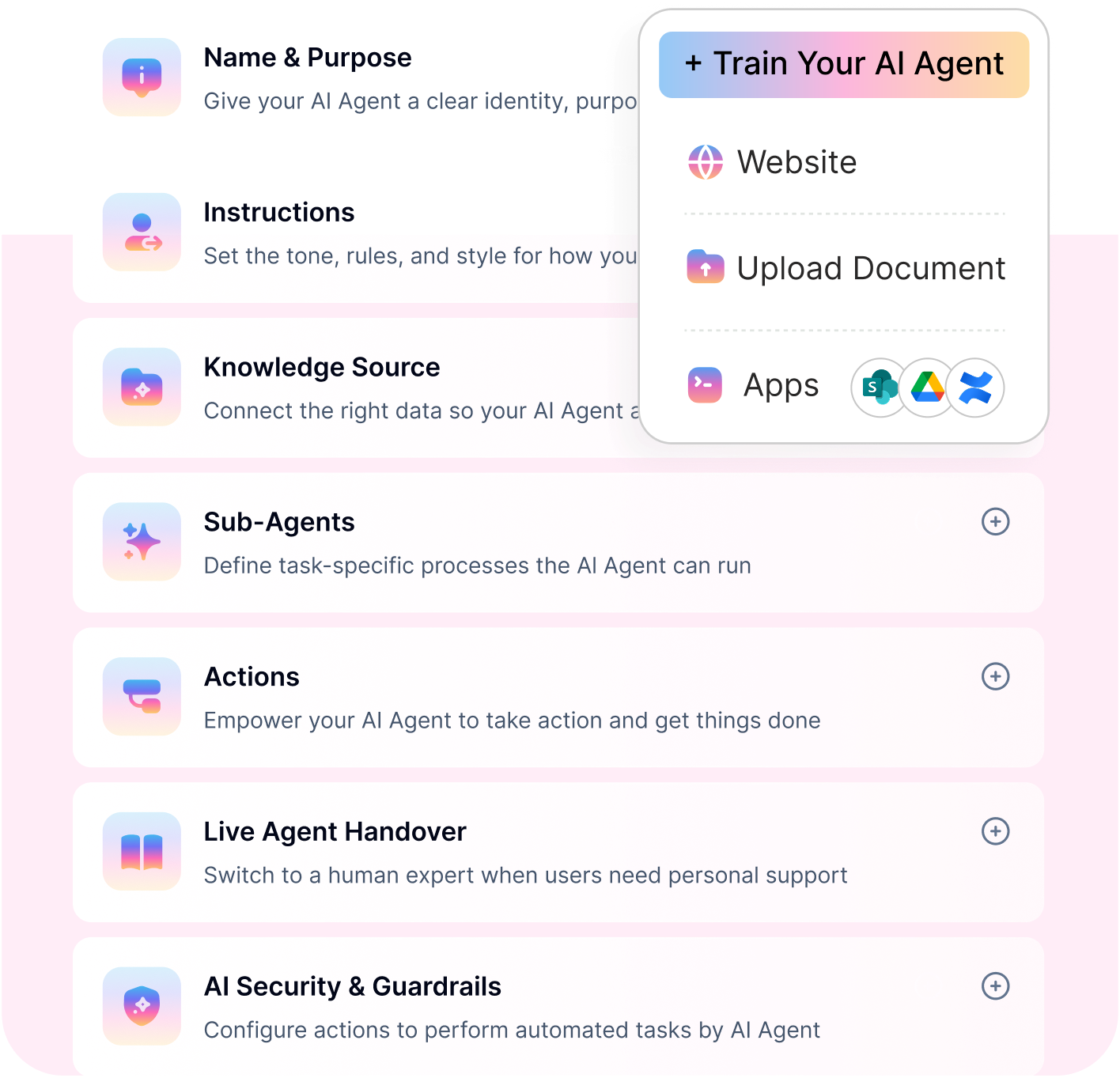
Workativ automates IT and HR workflows end-to-end across any ITSM stack - no ecosystem lock-in.
No-code · Modular architecture · Live in weeks
Go live in days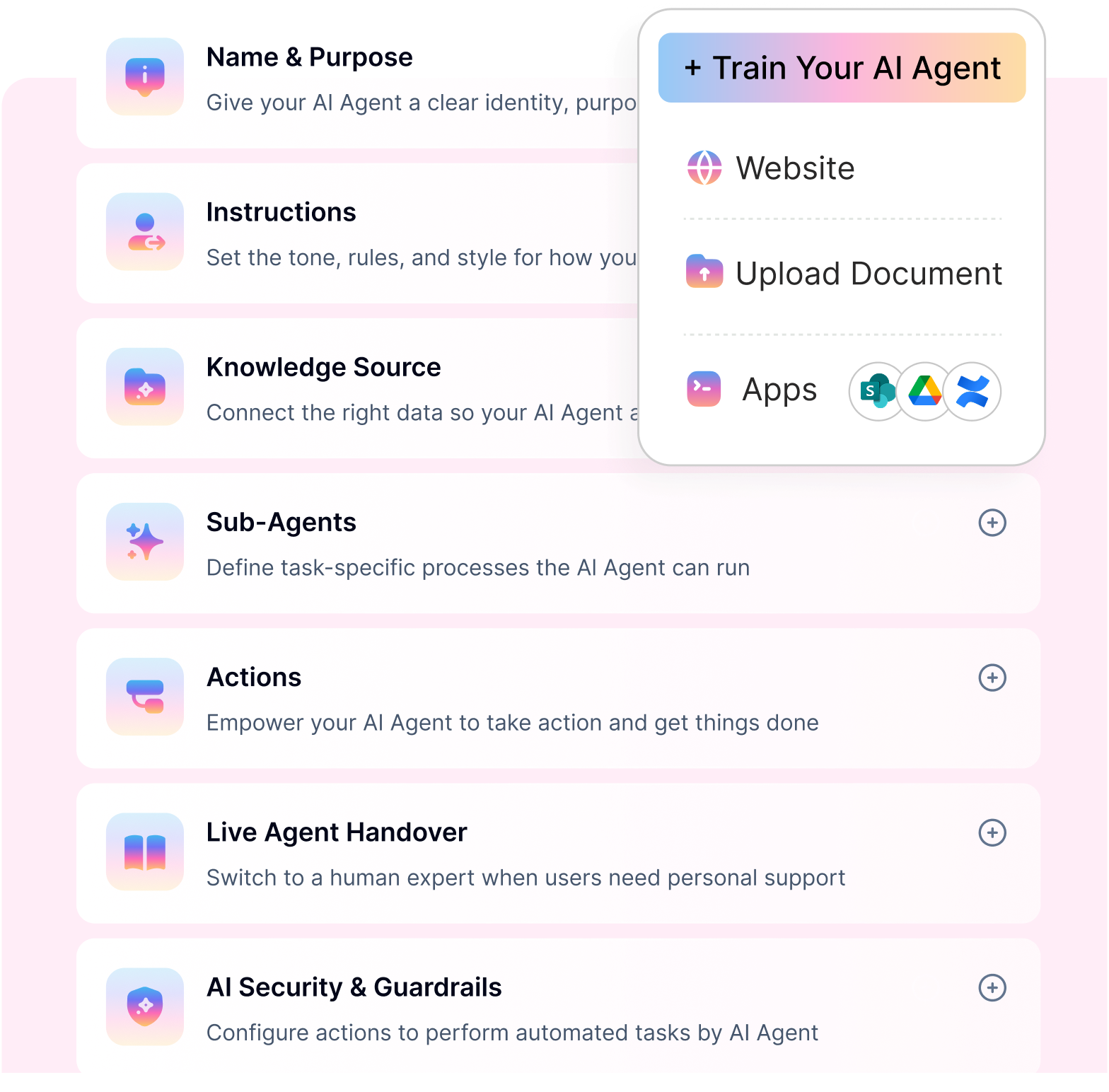
TL;DR: Moveworks alternatives at a glance
Instead of marketing claims, the table below helps you compare what actually matters when evaluating alternatives to Moveworks: key capabilities, strengths, limitations, pricing approach, and market perception. This makes it easier to quickly narrow your shortlist before diving deeper into individual platforms.
Platform | Key features | Pros | Cons | Pricing |
Workativ | No-code AI agent studio, action-based automation, HR + IT workflows, modular architecture | Faster deployment, strong cross-department automation | Requires clear workflow planning | Tiered, transparent pricing |
Espressive | IT-focused conversational AI, structured workflows, service desk automation | Strong IT use cases, enterprise reliability | Limited cross-functional flexibility | Enterprise pricing |
Aisera | AI service desk automation, predictive analytics, ITSM integrations | Strong ITSM depth, data-driven insights | Complex implementation | Enterprise pricing |
Leena AI | HR helpdesk automation, onboarding workflows, employee engagement | Strong HR specialization | Limited IT automation | Custom pricing |
Microsoft Copilot | Microsoft 365 integration, contextual assistance, AI summaries | Seamless Microsoft adoption | Not built for end-to-end automation | Per-user add-on pricing |
Best Moveworks alternatives in 2026
The platforms below follow a consistent structure so you can compare them quickly and confidently. Each Moveworks alternative is evaluated on automation depth, flexibility, pricing transparency, and implementation effort.
Workativ
Workativ is an enterprise AI Agent platform built to automate employee support across IT, HR, finance, and internal operations. Unlike traditional IT chatbots or helpdesk automation tools, Workativ enables you to deploy autonomous, LLM-powered AI agents that can understand intent, take actions, and complete workflows end to end.
If you are evaluating Moveworks alternatives, Workativ positions itself as a flexible, faster-to-deploy option for organizations seeking action-driven automation rather than just ticket routing or conversational assistance. It supports multichannel deployment across Slack, Microsoft Teams, web portals, and employee intranets, enabling you to centralize automation within a single AI layer.
Workativ is best suited for:
Mid-market and enterprise organizations that want to automate both IT and HR workflows
Teams seeking a no-code AI agent builder with internal ownership
Companies looking for a scalable alternative to Moveworks with predictable pricing
Organizations that want to reduce vendor dependency and accelerate time to value
Most important features and who they benefit
When you evaluate a serious alternative to Moveworks, you are not just comparing features. You are evaluating who in your organization benefits from them and how quickly they can create impact.
Here are the standout capabilities in Workativ and the teams that gain the most value.
AI Agent Studio with no-code control : This benefits IT and HR leaders who want to build and modify automation without waiting on vendor services. Your internal teams can experiment, iterate, and scale AI agents independently.
Action-first automation across IT and HR : This benefits service desk teams that want real resolution, not just ticket routing. Requests such as access provisioning, approvals, onboarding steps, and updates can be completed directly inside conversations.
Modular workflow architecture : This benefits growing enterprises where policies and tools frequently change. You can update one step in a workflow without breaking the entire automation chain.
Advanced RAG with multi-knowledge sourcing : This benefits knowledge-heavy organizations. Your AI agents can pull from multiple sources, reducing inaccuracies and improving response confidence.
Shared live inbox with AI summaries : This benefits hybrid support teams. Human agents receive AI summaries and suggested responses, which speeds up handling time when escalation is required.
Multichannel deployment across Slack, Teams, and web : This benefits distributed and global workforces. Employees get consistent AI support across the tools they already use.
If you are comparing Moveworks competitors, these capabilities directly impact time-to-value, internal ownership, and long-term scalability.
Value proposition
When you compare Moveworks alternatives, the real question is not who has the most features. It is who gives you more control, faster execution, and clearer long-term value.
Workativ stands out for combining autonomous AI agents with internal ownership. Instead of depending heavily on vendor-led configuration and tuning, your teams can build, update, and scale automation using a no-code AI Agent Studio. This reduces operational dependency and accelerates innovation inside your organization.
Another key differentiator is action-first automation. Workativ focuses on completing workflows end-to-end, not just creating or routing tickets. From access provisioning and approvals to onboarding tasks and system updates, automation is designed to resolve requests fully.
Workativ also emphasizes modular architecture and predictable pricing. As your automation expands across IT, HR, and operations, you can scale without unexpected cost spikes or workflow disruption.
If you are looking for a practical, scalable, and more agile alternative to Moveworks, Workativ offers faster time-to-value, broader cross-department automation, and stronger internal control over your AI strategy.
Key features of Workativ:
No-code AI agent studio: Build, test, and manage autonomous AI agents using a no-code interface designed for HR, IT, and internal operations teams.
Shared live inbox: Centralized inbox where human agents can monitor conversations, collaborate, and seamlessly take over when needed.
Multichannel integration: Deploy AI agents across Slack, Microsoft Teams, web chat, and internal portals from a single platform using multichannel integrations. .
Advanced RAG: Uses retrieval-augmented generation to deliver accurate responses grounded in enterprise knowledge sources.
Multi-knowledge sourcing: Train AI agents using content from documents, websites, helpdesks, and internal systems simultaneously.
Multilingual support with 90+ languages: Support a global workforce with native multilingual conversations across regions and teams.
AI summaries and AI suggestions: Automatically generate conversation summaries and assist agents with response suggestions for faster resolution.
AI guardrails: Built-in controls for PII masking, prompt protection, content filtering, and safe response boundaries.
Chat channels: Support real-time and asynchronous conversations across multiple chat environments.
Pre-built industry-ready templates: Launch faster using templates tailored for HR helpdesk, IT support, onboarding, and internal service use cases.
AI actions: Trigger real actions such as ticket creation, approvals, access provisioning, and workflow execution.
White-label flexibility: Customize branding, domain, and experience to align with internal employee-facing tools.
Industry-grade security: Enterprise security standards including SOC 2 Type II, GDPR compliance, RBAC, and secure data handling.
Pros:
Integrated AI-driven automation: Workativ automates repetitive HR and IT support queries, resolving a large share of employee requests without human intervention from a single platform.
Easy to adopt and use: Designed with an intuitive interface that requires minimal learning, enabling faster adoption across business and support teams.
Extensive enterprise integrations: Workativ integrates with 100+ enterprise tools across ITSM, HRMS, access management, email, and expense systems to automate workflows end-to-end.
Multi-agent architecture for complex workflows: Workativ uses a multi-agent reasoning engine to break down and execute multi-step processes reliably, reducing errors and hallucinations.
AI reasoning visibility (AI Thoughts): Workativ AI agents provide transparent reasoning and traceability behind AI responses, improving observability and trust in automated decisions.
Advanced insights and analytics: Get customizable dashboards for tracking AI performance, query trends, topic analysis, and optimization opportunities.
Enterprise-grade security and compliance: Built with ISO 27001, SOC 2, GDPR, and enterprise security controls to safeguard sensitive internal data.
Cost-effective for enterprise use cases: Workativ delivers high-performance AI automation at a more affordable price point than many enterprise platforms, with a free plan available to evaluate core capabilities.
Cons:
May be perceived as “SMB product” by some enterprises: Workativ’s affordable pricing and free entry plan can sometimes be perceived as a budget-tier solution by enterprise buyers who associate higher price points with premium positioning.
Advanced AI analytics available in higher tiers: While core AI capabilities are included across plans, more advanced analytics, deeper insights, and enhanced AI performance dashboards are available only in the Business and Enterprise tiers.
Ratings
Workativ is consistently rated highly by users for its depth of automation, ease of integration, and ability to handle both HR and IT support use cases from a single platform.
G2: ⭐⭐⭐⭐⭐ (4.7/5)
Capterra: ⭐⭐⭐⭐☆ (4.6/5)
Gartner Peer Insights: Positive feedback for AI-driven service automation and workflow execution
Pricing:
Workativ offers transparent, tiered pricing that scales from pilots to enterprise deployments.
Starter Plan — $99/month : Free plan for evaluation, including 1 AI agent, up to 200 chat sessions, with analytics, shared live inbox, and security guardrails.
Business Plan — $349/month : Designed for growing teams with higher chat limits, multiple AI agents, workflow actions, advanced analytics, and branding removal.
Enterprise Plan — Custom pricing : Built for large organizations requiring higher scale, advanced security, custom integrations, RBAC, MFA, and dedicated support.
When evaluating alternatives to Moveworks, pricing flexibility becomes important. Following its merger into the ServiceNow ecosystem, there is potential for tighter bundle alignment and pricing concentration within larger enterprise contracts. Customization, integrations, and ecosystem alignment can influence long-term cost structure.
If pricing predictability and modular expansion are important to you, Workativ offers greater flexibility compared to Moveworks, especially if you operate outside a pure ServiceNow stack or want to avoid bundled ecosystem dependencies.
Why choose Workativ over Moveworks
When you compare Workativ with Moveworks, the decision usually comes down to flexibility, cost control, and long-term ownership of automation.
More flexible customization without heavy complexity : Moveworks is powerful, but customization and workflow adjustments can require significant configuration effort. Routine tweaks may depend on deeper system alignment and structured tuning. Workativ is built with modular workflows and no-code controls, allowing your internal teams to modify and expand automation without long configuration cycles. This makes ongoing changes faster and more manageable.
Faster implementation and lower learning curve : Moveworks is often optimized for large enterprise environments with complex IT stacks. Implementation can take months and may require specialist involvement. Workativ focuses on quicker rollout with guided workflow building. Teams can move from pilot to production in weeks, reducing time to value.
Broader cross-department automation : Moveworks has historically been strong in IT automation. Expanding into HR, finance, or operations can require additional configuration. Workativ is designed as a unified AI layer across IT, HR, and internal operations from the start. This allows you to scale automation across departments without adding separate systems.
Reduced ecosystem dependency : With Moveworks now aligned within the ServiceNow ecosystem, integration depth may increasingly favor ServiceNow-based environments. Organizations operating on mixed ITSM stacks may need to evaluate long-term roadmap alignment. Workativ remains platform-agnostic, giving you flexibility across ServiceNow, Jira, Freshservice, and other systems without ecosystem lock-in.
More predictable pricing structure : Moveworks is positioned at premium enterprise pricing levels. As automation expands and customization increases, total cost of ownership can grow significantly. Workativ follows a tiered, usage-aligned pricing model designed to scale predictably as adoption grows, helping you plan long-term automation budgets with greater confidence.
If you are evaluating alternatives to Moveworks due to customization complexity, enterprise-focused optimization, ecosystem concentration, or cost concerns, Workativ offers a more agile, flexible path forward. It is built to help you scale AI employee support without increasing operational friction.
Workativ vs Moveworks: feature-level comparison
When you compare Workativ and Moveworks at the feature level, the differences become clearer around flexibility, ownership, ecosystem alignment, and implementation effort. Below is a practical breakdown to help you evaluate which platform better fits your automation strategy.
Capability | Workativ | Moveworks |
AI agent building | No-code AI Agent Studio allows internal teams to build and modify agents independently | Enterprise-configured automation often requires deeper setup and vendor tuning |
Workflow architecture | Modular workflows that can be updated step-by-step without disruption | Structured workflows that may require coordinated changes across systems |
Action-based automation | Completes end-to-end workflows including approvals, provisioning, and updates | Strong IT automation with heavy focus on ticket handling and routing |
Cross-department coverage | Designed for IT, HR, finance, and internal operations from day one | Historically strongest in IT environments |
Multichannel deployment | Slack, Microsoft Teams, web portals, intranet, and more | Strong chat integrations, especially in enterprise collaboration tools |
Espressive
Espressive is an AI-powered employee virtual support agent designed primarily for IT service desk automation. It helps enterprises reduce ticket volume using conversational AI and structured workflows. As a Moveworks alternative, Espressive is typically evaluated by organizations with IT-first support environments. The platform focuses heavily on intent recognition and IT service efficiency rather than broad cross-department automation.
Key features:
Virtual Support Agent (VSA) – Provides conversational IT support to automate repetitive service desk requests.
Intent detection engine – Identifies employee issues and routes requests accurately within IT systems.
ITSM integrations – Connects with major IT service management platforms for ticket creation and tracking.
Service desk analytics – Offers visibility into ticket reduction, response times, and automation performance.
Pros:
Strong IT specialization – Performs well in structured enterprise IT environments.
Enterprise-ready deployment – Built to support large-scale service desk operations.
Cons
Limited cross-functional coverage – Expansion beyond IT into HR or operations can require additional effort.
Premium pricing positioning – Typically suited for mid-market and large enterprises.
Pricing:
Enterprise plan — Custom pricing based on deployment scope and integrations.
Rating
G2: ⭐⭐⭐⭐☆ (4.3/5)
Aisera
Aisera is an AI service management platform built to automate employee support across IT, HR, and customer service environments. It combines conversational AI with predictive intelligence to reduce ticket volume and improve resolution efficiency. As a Moveworks alternative, Aisera is commonly evaluated by enterprises with mature ITSM processes. The platform is positioned around structured service automation and analytics-driven optimization.
Key features:
AI service desk automation – Automates common IT and HR requests such as password resets, access provisioning, and policy queries.
Predictive intelligence engine – Uses historical service data and machine learning to improve intent accuracy and forecast support trends.
ITSM and enterprise integrations – Integrates with major platforms like ServiceNow and other ITSM tools to execute workflows within existing systems.
Analytics and reporting dashboards – Provides visibility into resolution rates, automation impact, and service performance.
Pros:
Strong enterprise IT focus – Well suited for structured IT service environments with repeatable workflows.
Data-driven optimization – Robust analytics support continuous improvement.
Cons:
Complex implementation effort – Deployment and tuning can require significant configuration and expertise.
Limited flexibility beyond service desks – Expansion outside IT and HR may require additional customization.
Ratings
G2: ⭐⭐⭐⭐☆ (4.4/5)
Pricing
Enterprise plan - Custom pricing
Aisera does not publish standard pricing and follows a demo-led enterprise sales model. Pricing varies based on organization size, number of automated use cases, integrations, and support scope. It is generally positioned for mid-market and large enterprises, with costs scaling as AI automation depth increases.
TRANSPARENT PRICING. FASTER DEPLOYMENT.
Workativ deploys in weeks - not months - with no-code workflows your team owns and controls.
Tiered pricing · No vendor lock-in · Live in weeks
See a Quick DemoLeena AI
Leena AI is an AI-powered employee experience platform focused primarily on HR automation and employee engagement. It helps organizations automate HR helpdesk queries, onboarding workflows, and internal policy support using conversational AI. As a Moveworks alternative, Leena AI is typically evaluated by HR-led enterprises looking to improve employee experience rather than deep IT automation. The platform is positioned more toward people operations than structured IT service desk transformation.
Key features
HR helpdesk automation – Automates leave requests, benefits queries, payroll questions, and policy-related support.
Employee engagement workflows – Supports surveys, feedback loops, and experience monitoring.
Onboarding automation – Guides employees through documentation, approvals, and HR processes.
Knowledge management integration – Uses AI to deliver contextual HR answers from internal systems.
Pros
Strong HR specialization – Well suited for organizations prioritizing HR self-service automation.
User-friendly interface – Conversational design encourages employee adoption.
Cons:
Limited IT automation depth – Not designed for complex IT service desk workflows.
Narrow cross-department coverage – Expansion into finance or operations may require additional tools.
Pricing
Leena AI offers custom pricing, typically based on the number of employees and HR use cases supported.
Rating
G2: ⭐⭐⭐⭐☆ (4.4/5)
Microsoft Copilot
Microsoft Copilot is an AI assistant embedded within the Microsoft 365 ecosystem, designed to enhance productivity across documents, emails, meetings, and collaboration tools. It leverages organizational data within Microsoft apps to provide contextual insights and content generation. As a Moveworks alternative, Copilot is typically evaluated by Microsoft-first enterprises seeking AI assistance within their existing productivity stack. However, it is not built as a dedicated employee service desk automation platform.
Key features:
Microsoft 365 integration – Operates natively across Teams, Outlook, Word, Excel, and other Microsoft applications.
Context-aware AI assistance – Generates summaries, drafts, and insights using enterprise data within Microsoft tools.
Meeting and email intelligence – Provides AI-generated recaps, action items, and communication suggestions.
Security and compliance alignment – Inherits Microsoft enterprise security and governance controls.
Pros:
Seamless Microsoft adoption – Easy rollout for organizations already invested in Microsoft 365.
Rapid deployment – Minimal setup compared to full service desk automation platforms.
Cons:
Limited service workflow automation – Does not execute IT or HR requests end-to-end.
Ecosystem dependency – Value is tightly tied to Microsoft environments.
Pricing:
Microsoft Copilot is offered as an add-on to Microsoft 365 plans, with pricing based on per-user licensing.
Rating
G2: ⭐⭐⭐⭐☆ (4.3/5)
Rezolve AI
Rezolve AI is a conversational AI platform focused on automating IT service desk operations. It is designed to reduce repetitive IT tickets by resolving common employee requests through chat-based interactions. As a Moveworks alternative, Rezolve AI is typically evaluated by organizations prioritizing IT automation within structured ITSM environments. The platform is positioned more narrowly around IT support rather than broad cross-department automation.
Key features:
IT ticket automation – Automates common IT requests such as password resets, access provisioning, and incident reporting.
ITSM integrations – Connects with platforms like ServiceNow and other ITSM tools to create and manage tickets.
Conversational troubleshooting – Guides employees through issue resolution using AI-driven responses.
Service desk analytics – Tracks automation impact and ticket reduction metrics.
Pros:
Focused IT service desk capability – Effective in reducing repetitive IT support workload.
Strong ITSM compatibility – Integrates well within enterprise IT environments.
Cons:
Limited HR and operations coverage – Not built for broad employee experience automation.
Moderate customization depth – Advanced automation may require additional configuration effort.
Pricing:
Rezolve AI offers custom pricing based on ITSM integrations, automation volume, and organization size.
Rating:
G2: ⭐⭐⭐⭐☆ (4.8/5)
Langdock
Langdock is a secure enterprise AI workspace designed for governed internal AI usage and knowledge access. It helps employees query internal documents and company knowledge using LLMs in a controlled environment. As a Moveworks alternative, Langdock is typically evaluated by teams prioritizing secure AI adoption and internal productivity over service desk automation. It is better suited for knowledge assistance than end-to-end IT or HR workflow execution.
Key features:
Secure AI workspace – Provides controlled access to AI with governance and enterprise security controls.
Internal knowledge querying – Enables AI-powered search and Q&A across documents and internal content.
Governance and access controls – Supports role-based permissions, usage monitoring, and compliance needs.
Enterprise LLM flexibility – Allows organizations to use AI safely while maintaining data protection.
Pros:
Strong governance for enterprise AI – Works well for organizations with strict security and compliance requirements.
Fast internal AI enablement – Helps teams roll out AI knowledge assistance quickly.
Cons:
No workflow automation – Does not execute IT or HR service workflows end to end.
Limited service desk coverage – Not designed for ticketing or request resolution
Pricing:
Langdock offers per-user and enterprise plans, depending on security and deployment requirements.
Free trial: 7-day trial with no credit card required
Business plan: ~€20–€25 per user per month, including secure AI chat, assistants, SSO, and knowledge access
Enterprise plan: Custom pricing for large-scale deployments and advanced controls
Workflow automation: Priced separately per workspace, with AI model usage billed based on consumption
Rating:
G2: ⭐⭐⭐⭐☆ (4.4/5)
Yellow AI
Yellow AI is a conversational AI platform built to automate interactions across both employee support and customer experience use cases. It offers omnichannel deployment and multilingual capabilities for large enterprises. As a Moveworks alternative, Yellow AI is typically evaluated by organizations seeking broad conversational automation beyond IT service desks. The platform is positioned around scalable AI engagement rather than deep ITSM specialization.
Key features:
Omnichannel automation – Supports AI conversations across web, messaging apps, voice, and enterprise collaboration tools.
Multilingual AI engine – Enables employee and customer interactions in multiple global languages.
Workflow automation builder – Executes structured workflows across integrated enterprise systems.
Analytics and performance tracking – Provides visibility into engagement, automation rates, and resolution metrics.
Pros:
Broad automation coverage – Suitable for organizations needing both employee and customer AI support.
Strong language capabilities – Ideal for global enterprises with multilingual workforces.
Cons:
Complex configuration – Setup and optimization can require detailed planning and tuning.
Less IT-specialized – Not primarily designed as a deep IT service desk automation platform.
Pricing:
Enterprise plan - Custom pricing
Yellow AI follows a quote-based enterprise pricing model, with costs depending on channels, usage volume, and integrations.
Rating:
G2: ⭐⭐⭐⭐☆ (4.4/5)
ONE PLATFORM. ANY STACK.
Most alternatives are IT-first or ecosystem-heavy. Workativ automates IT and HR - across any stack.
Kore AI
Kore AI is an enterprise conversational AI platform designed to build highly customizable virtual assistants across IT, HR, and customer support. It provides a robust bot development framework and advanced NLP capabilities. As a Moveworks alternative, Kore AI is typically evaluated by organizations with strong technical teams seeking deep customization and control. The platform is positioned for enterprises that prioritize flexibility and scalability over rapid no-code deployment.
Key features
Enterprise bot development framework – Enables creation of complex, customized AI assistants for multiple departments.
Advanced NLP and dialog management – Supports multi-turn conversations and sophisticated intent recognition.
Multi-channel deployment – Deploys bots across web, mobile, messaging platforms, and enterprise tools.
Custom workflow orchestration – Allows tailored automation flows integrated with enterprise systems.
Pros:
High customization potential: Kore AI enables enterprises to build tailored solutions for complex, unique requirements.
Enterprise-grade scalability: The platform supports large-scale deployments with high interaction volumes.
Cons:
Steep learning curve: Building and maintaining bots requires technical expertise and ongoing effort.
Longer time to value: Implementation and optimization can take longer compared to no-code platforms.
Pricing:
Enterprise plan - Custom pricing
Kore AI follows a quote-based enterprise pricing model, with costs depending on deployment size, channels, integrations, and AI capabilities. It is typically positioned for mid-market and large enterprises.
Rating
G2: ⭐⭐⭐⭐☆ (4.6/5)
BMC Helix
BMC Helix is an enterprise IT service management platform with AI-driven operations and automation capabilities. It supports incident, problem, and change management across large IT environments. As a Moveworks alternative, BMC Helix is typically evaluated by organizations with mature ITSM processes seeking structured service management. The platform is IT-focused and designed for large-scale enterprise deployments.
Key features:
Enterprise IT service management – Manages incidents, changes, and service requests within a centralized IT framework.
AI-driven operations – Uses predictive analytics to detect and prevent service disruptions.
Workflow automation engine – Automates structured IT processes across systems.
Enterprise integrations – Connects with IT infrastructure and service management tools.
Pros:
Strong ITSM foundation – Well suited for organizations with complex IT service environments.
Enterprise-grade scalability – Designed to handle high volumes and infrastructure complexity.
Cons:
Steep learning curve – Requires training and expertise for effective implementation.
Limited cross-department focus – Primarily centered on IT rather than HR or operations.
Pricing:
Enterprise pricing — Custom
BMC Helix follows a quote-based pricing model based on modules, scale, and deployment requirements. Pricing is typically aligned with large enterprise IT budgets.
Rating:
G2: ⭐⭐⭐⭐☆ (4.0/5)
Glean
Glean is an enterprise AI search and knowledge platform that helps employees find information across internal systems. It connects tools like Google Workspace, Slack, Jira, and other SaaS platforms into a unified search experience. As a Moveworks alternative, Glean is typically evaluated by organizations prioritizing knowledge discovery rather than service desk automation. It focuses on contextual answers and productivity enablement, not workflow execution.
Key features:
Enterprise AI search – Indexes data across multiple tools to deliver contextual, permission-aware search results.
Knowledge connectors – Integrates with major SaaS platforms to centralize enterprise information.
Contextual AI answers – Uses LLMs to generate summaries and answers grounded in company data.
Access control alignment – Respects existing user permissions across connected systems.
Pros:
Strong knowledge discovery capabilities – Improves employee productivity through faster information retrieval.
Accurate contextual responses – Delivers relevant answers based on user permissions and data context.
Cons:
No action-based automation – Does not execute IT or HR workflows end to end.
Enterprise pricing model – Designed primarily for mid-market and large organizations.
Essential features to consider when choosing alternatives to Moveworks
When you evaluate Moveworks alternatives, you should look beyond brand reputation and focus on the capabilities that directly impact agility, cost control, and long-term scalability. These features determine whether your AI employee support platform will reduce operational complexity or add to it.
No-code workflow ownership : Choose a platform that allows your internal IT and HR teams to build and modify workflows without heavy vendor dependency. This gives you faster iteration and greater long-term control.
Advanced RAG architecture : Strong retrieval-augmented generation ensures AI responses are grounded in multiple knowledge sources. This improves accuracy and reduces manual correction.
Action-based automation : The platform should complete workflows end to end, including approvals, access provisioning, and system updates, not just create or route tickets.
Modular architecture : Workflows should be built in flexible components so changes do not disrupt the entire automation chain.
Clear ROI analytics : Look for dashboards that measure resolution rates, time saved, and cost impact, not just ticket deflection.
Enterprise guardrails : Role-based access, audit logs, and compliance controls are essential for secure automation.
Multi-channel deployment : Support across Slack, Microsoft Teams, web portals, and intranets ensures consistent employee experience.
Pricing transparency : Predictable pricing models help you scale automation without unexpected cost increases.
REASSESSING MOVEWORKS AFTER THE ACQUISITION?
See how Workativ gives you more agility, internal ownership and predictable pricing - live walkthrough.
Personalized demo · No commitment · Setup in Mins
See Workativ AI in actionChoosing the right Moveworks alternative in 2026
Moveworks remains a powerful enterprise AI employee support platform. It has helped many large organizations modernize their IT service desks and reduce ticket volumes at scale.
At the same time, acquisitions and evolving ecosystem alignment naturally introduce new variables. Pricing structures, product roadmaps, and integration priorities can shift over time. For many organizations, this creates a need to reassess long-term strategy rather than rely on brand familiarity alone.
When you evaluate Moveworks alternatives, the real question becomes this: how much agility, internal ownership, and pricing predictability do you want over the next three to five years?
This is where Workativ plays a meaningful role. Instead of heavy configuration cycles and ecosystem concentration, Workativ focuses on modular automation, no-code workflow ownership, and cross-department scalability. It is designed to help you automate IT and HR workflows end-to-end while keeping governance, security, and cost visibility intact. You gain flexibility without sacrificing enterprise-grade control.
If your organization is reassessing Moveworks, now is the right time to evaluate platforms that combine innovation, operational control, and predictable growth.
Want to see how Workativ compares in your environment?
Start with a free Starter Plan or book a personalized walkthrough to see how Workativ can automate employee support across HR and IT—end-to-end.
FAQs
What are the best Moveworks alternatives in 2026?
The best Moveworks alternatives include Workativ, Espressive, Aisera, Leena AI, Microsoft Copilot, Rezolve AI, Yellow AI, Kore AI, ServiceNow, BMC Helix, Langdock, and Glean. The right choice depends on whether you prioritize IT automation, HR workflows, knowledge search, or cross-department scalability.
Why do organizations look for alternatives to Moveworks?
Organizations typically explore alternatives due to enterprise pricing, long implementation timelines, vendor dependency, ecosystem alignment after acquisition, or the need for broader cross-functional automation.
Is Moveworks only suitable for IT automation?
Moveworks is strongest in IT service desk automation. While it can expand into other departments, organizations sometimes evaluate alternatives for more balanced HR and operations coverage.
How does acquisition impact Moveworks customers?
After acquisition, product roadmaps and integration priorities may align more closely with the parent ecosystem. Some enterprises reassess long-term flexibility and pricing predictability as a result.
Which Moveworks alternative supports both HR and IT workflows?
Platforms like Workativ are designed to support IT, HR, and internal operations within a single AI layer, making them suitable for organizations seeking unified automation.
Are Moveworks alternatives more cost-effective?
Some alternatives offer tiered or usage-aligned pricing models, which can provide more predictable cost scaling compared to enterprise-only contracts.
Do Moveworks competitors offer action-based automation?
Yes. Many modern alternatives focus on completing workflows end to end, including approvals, access provisioning, and system updates, rather than just ticket routing.
How do you choose the right Moveworks alternative?
You should evaluate implementation speed, internal ownership, modular architecture, pricing transparency, enterprise guardrails, and long-term scalability before making a decision.
Which Moveworks alternative is best for mixed ITSM environments?
Organizations using Jira, Freshservice, ServiceDesk Plus, or hybrid stacks often benefit from platform-agnostic alternatives. These platforms reduce ecosystem lock-in and make it easier to automate workflows across diverse systems.
What should enterprises compare beyond pricing when evaluating Moveworks alternatives?
Look at implementation timelines, no-code workflow ownership, analytics depth, cross-department use cases, and governance controls. These factors influence long-term scalability more than contract pricing alone.
'%3e%3cpath%20d='M11.5732%2031.7068L19.2977%2022.7433L11.5732%2011.5366H17.4664L22.6245%2018.942L29.0522%2011.5366H30.7788L23.4029%2020.0985L31.4127%2031.7086H25.4997L20.1231%2023.9069L13.3197%2031.7068H11.5732ZM16.6519%2012.8366H13.9536L26.354%2030.4462H28.9926L28.8265%2030.1576L16.6519%2012.8366Z'%20fill='%230C0C0C'/%3e%3c/g%3e%3cdefs%3e%3cclipPath%20id='clip0_505_14364'%3e%3crect%20width='19.7681'%20height='20.2432'%20fill='white'%20transform='translate(11.573%2011.5365)'/%3e%3c/clipPath%3e%3c/defs%3e%3c/svg%3e)

'%3e%3cpath%20d='M25.2175%2011.7557L26.9132%2011.911V15.0496C26.0135%2015.1444%2024.1746%2014.7452%2023.5821%2015.5947C23.4908%2015.726%2023.3291%2016.1592%2023.3291%2016.3091V19.002H26.7392L26.3346%2022.5281H23.3291V31.5952H19.707V22.5863L19.649%2022.5281H16.6628V19.002H19.707C19.7813%2017.4024%2019.4664%2015.7042%2020.1132%2014.1986C20.6748%2012.8902%2021.7857%2012.0974%2023.1666%2011.8435L23.7151%2011.7557H25.2183H25.2175Z'%20fill='%230C0C0C'/%3e%3c/g%3e%3cdefs%3e%3cclipPath%20id='clip0_505_14375'%3e%3crect%20width='10.2695'%20height='19.8027'%20fill='white'%20transform='translate(16.658%2011.7567)'/%3e%3c/clipPath%3e%3c/defs%3e%3c/svg%3e)
About the Author
Deepa Majumder

Senior content writer
Deepa Majumder is a writer who nails the art of crafting bespoke thought leadership articles to help business leaders tap into rich insights in their journey of organization-wide digital transformation. Over the years, she has dedicatedly engaged herself in the process of continuous learning and development across business continuity management and organizational resilience.
Her pieces intricately highlight the best ways to transform employee and customer experience. When not writing, she spends time on leisure activities.
Auto-resolve 60% of Your Employee
Queries With AI Agents & Automation
- No credit card required
- Setup in minutes
- Cancel Anytime