
Solutions
Features
Integrations
Pricing
Resources
HR chatbot use cases: 15+ examples for HR automation (2026)
Explore top HR chatbot use cases across onboarding, payroll, benefits, and HR helpdesk automation. Learn how organizations automate HR workflows with AI.


TL;DR
Modern HR chatbot use cases now span the full employee lifecycle, from onboarding and leave approvals to payroll support and benefits automation.

The biggest value comes from chatbots that execute workflows, integrate with HRIS systems, and deliver personalized responses in real time.
High-ROI use cases include HR helpdesk automation, PTO workflows, onboarding checklists, payroll queries, and employee benefits support.
Workativ helps HR teams operationalize these use cases through no-code AI agents, deep integrations, and end-to-end workflow orchestration.
A whopping 85% of employees say they would hesitate going to HR for a work-related issue, with 86% admitting they are afraid of the department altogether, according to Vanessa Brulotte, Employee Relations Partner at BambooHR.
That highlights a critical gap.
Employees still need HR support but traditional systems feel slow, formal, and hard to approach. Simple requests like PTO queries, benefits clarification, or payroll questions often turn into tickets, delays, or uncomfortable interactions.
This is exactly why HR chatbot use cases are rapidly gaining traction.
Modern AI-powered HR chatbots make support instant, private, and accessible. Employees can ask questions, get real-time answers, and complete tasks without friction or hesitation.
And it goes far beyond FAQs.
Today, HR chatbot use cases in modern workplaces span onboarding, HR helpdesk automation, payroll, benefits, and policy management—automating entire workflows, not just conversations.
So the real question is:
What HR processes can actually be automated today?
We will explore the most impactful HR chatbot use cases, including:
HR chatbot onboarding use cases
HR helpdesk chatbot use cases
Automation across PTO, payroll, benefits, and more
If you’re looking to transform your HR operations from reactive support to intelligent, automated employee experience—this guide will show you exactly how.
What makes modern HR chatbot use cases powerful
Modern HR chatbot use cases have evolved far beyond simple question-answering tools. Today’s AI-powered HR chatbots act as intelligent assistants that not only respond to employees but also execute tasks, automate workflows, and integrate deeply with HR systems.
Beyond FAQs to workflow automation : Traditional chatbots could only answer predefined questions. Modern HR chatbots go a step further by automating end-to-end processes—such as onboarding workflows, leave approvals, and benefits enrollment—without manual intervention.
Real-time HRIS and payroll integrations : Advanced HR chatbot use cases are enabled by seamless integrations with HR systems such as Workday and BambooHR, as well as payroll platforms. This enables real-time data access, ensuring employees receive accurate and up-to-date information instantly.
Context-aware and personalized responses : AI-driven chatbots understand employee context—such as role, location, and employment status—to deliver highly personalized responses. This improves accuracy, relevance, and overall employee experience.
Ability to take actions, not just answer : The biggest shift in HR chatbot use cases is the ability to execute actions. From submitting leave requests and updating employee information to triggering approvals and provisioning systems, modern chatbots act as execution layers—not just support tools.
Core HR chatbot use cases across the employee lifecycle
HR chatbot use cases are no longer limited to answering employee queries. Today, they play a central role across the entire employee lifecycle—from the moment a new hire joins to their day-to-day interactions with HR.
By automating repetitive tasks and delivering instant support, HR chatbots help organizations reduce manual workload, improve response times, and create a more seamless employee experience.
1. HR chatbot onboarding use cases
Onboarding sets the tone for an employee’s entire journey. Yet, for many organizations, it’s still a fragmented process involving emails, spreadsheets, and multiple follow-ups.
This is where HR chatbot onboarding use cases make a significant difference—transforming onboarding into a structured, automated, and personalized experience.
Welcome and day-one checklist
Instead of sending static emails or documents, HR chatbots can deliver personalized welcome messages along with a dynamic day-one checklist tailored to each employee. New hires are guided step-by-step through tasks such as document submission, introductions, and initial setup, ensuring nothing is missed.
This eliminates the need for constant coordination between HR teams, managers, and employees—making onboarding smoother and more consistent.
System access and account setup
One of the biggest onboarding bottlenecks is delayed access to tools and systems. HR chatbots solve this by automatically triggering IT provisioning workflows as soon as a new employee is onboarded.
From creating accounts in identity platforms like Okta or Azure AD to granting access to internal tools, everything happens in the background—ensuring employees are fully equipped to start work from day one.
Policy and benefits orientation
New hires often have several questions about company policies, benefits, and workplace guidelines—but finding answers can be time-consuming.
With HR chatbots, employees can simply ask questions in natural language and get instant, accurate responses. Whether it’s understanding leave policies or exploring benefits options, chatbots provide on-demand access to information, reducing dependency on HR teams.
This leads to a more confident and informed workforce from the very beginning.
Training and compliance reminders
Ensuring that new hires complete mandatory training and compliance requirements is critical—but often overlooked.
HR chatbots automate this process by sending timely reminders, tracking completion status, and nudging employees when deadlines approach. This ensures compliance without requiring HR teams to manually follow up with every employee.
Among all HR chatbot use cases, onboarding delivers one of the fastest returns on investment. It directly impacts employee productivity, engagement, and long-term satisfaction.
By automating onboarding workflows, organizations can:
Reduce delays and manual coordination
Ensure consistency across all new hires
Improve early employee experience
Help employees become productive faster
2. PTO and leave management chatbot use cases
Managing time-off requests is one of the most frequent—and often frustrating—interactions employees have with HR. From checking leave balances to understanding policies and waiting for approvals, the process can quickly become time-consuming for both employees and HR teams.
This is where HR helpdesk chatbot use cases stand out.
By automating PTO and leave management, HR chatbots eliminate back-and-forth communication, reduce manual errors, and provide employees with instant, self-service access to everything they need.
Check PTO balance instantly
Instead of reaching out to HR or navigating multiple systems, employees can simply ask, “How many vacation days do I have left?” and get an immediate, accurate response pulled directly from the HR system. This removes delays and gives employees real-time visibility into their leave balances.
Submit leave requests
HR chatbots allow employees to submit leave requests using natural language—no forms or portals required. The system captures the request, validates it against company policies, and initiates the approval process automatically, simplifying what is traditionally a multi-step workflow.
Approval notifications
Managers are notified instantly through platforms like Slack or Microsoft Teams and can approve or reject requests with a single click. Employees are then updated in real time, ensuring transparency across the entire process.
Leave policy queries
Employees often have questions like “Can I carry forward unused PTO?” or “What’s the policy for sick leave?” HR chatbots provide instant, policy-accurate answers sourced from company documentation, reducing dependency on HR teams.
PTO and leave management is one of the most common HR helpdesk chatbot use cases, making it an ideal starting point for automation.
By streamlining leave workflows, organizations can reduce HR ticket volume, accelerate approvals, improve employee satisfaction, and ensure policy compliance with minimal effort.
3. HR chatbot use cases for employee benefits automation
Employee benefits are one of the most complex—and high-volume—areas for HR teams. From eligibility questions to enrollment deadlines and life event updates, employees often need quick, accurate guidance. However, these queries frequently turn into repetitive HR tickets, especially during peak periods like open enrollment.
This is where HR chatbot use cases for benefits automation deliver significant value.
By providing instant, personalized, and always-available support, HR chatbots help employees navigate benefits with ease while reducing the burden on HR teams.
Benefits eligibility questions
Employees often have questions like “Am I eligible for dental coverage?” or “What benefits apply to my role?” HR chatbots can instantly provide personalized answers based on employee data, eliminating confusion and reducing dependency on HR teams.
Open enrollment support
During open enrollment, HR teams are often overwhelmed with repetitive questions. HR chatbots guide employees through plan comparisons, explain coverage options, highlight deadlines, and even direct them to the correct enrollment portals—making the entire process smoother and more efficient.
Life event changes
Life events such as marriage, childbirth, or relocation often require updates to benefits. HR chatbots can guide employees through the required steps, collect necessary information, and initiate change requests, ensuring nothing is missed and reducing manual follow-ups.
Wellness and EAP queries
Employees frequently seek information about wellness programs, employee assistance programs (EAP), and mental health resources. HR chatbots provide instant access to these resources, helping organizations promote employee well-being while ensuring employees can find support when they need it most.
Benefits-related queries are continuous, repetitive, and often time-sensitive—making them ideal for automation.
By leveraging HR chatbot use cases for employee benefits, organizations can reduce HR workload during peak periods, improve employee understanding of benefits, and deliver a more seamless and supportive employee experience.
4. Payroll and compensation chatbot use cases
Payroll is one of the most sensitive and frequently accessed areas of HR. Employees expect quick, accurate answers when it comes to their salary, payslips, and deductions—but traditional processes often involve delays, tickets, or back-and-forth communication with HR teams.
This is where HR chatbot use cases for payroll and compensation become highly impactful.
By enabling instant, secure, and self-service access to payroll information, HR chatbots reduce dependency on HR while improving transparency and trust among employees.
Payslip and pay date queries
Employees often ask questions like “When will I get paid?” or “Where can I find my payslip?” HR chatbots provide immediate answers by pulling real-time data from payroll systems or directing employees to the correct resources—eliminating the need for HR intervention.
Banking detail updates
Updating bank account or direct deposit information is typically a manual and sensitive process. HR chatbots can guide employees through secure, step-by-step workflows to update their details, ensuring accuracy while reducing administrative overhead.
Tax and withholding support
Payroll-related tax questions—such as deductions, withholding changes, or form-related queries—are common and repetitive. HR chatbots can deliver policy-based, accurate responses instantly, helping employees understand their pay structure without needing to contact HR.
Compensation FAQs
Employees frequently have questions about bonus cycles, salary revisions, and compensation structures. HR chatbots provide clear, consistent answers based on company policies, ensuring transparency while reducing repetitive queries for HR teams.
Payroll queries are both high-volume and high-sensitivity, making them ideal for automation with the right safeguards in place.
By automating payroll and compensation support, organizations can reduce HR workload, improve response times, ensure accuracy in communication, and build greater employee trust through instant and reliable access to information.
5. HR helpdesk chatbot use cases
HR helpdesks are often the first point of contact for employees—but they’re also one of the most overloaded functions in HR. From policy questions to payroll issues and leave requests, a large portion of queries are repetitive, time-consuming, and slow to resolve through traditional ticketing systems.
This is where HR helpdesk chatbot use cases create immediate impact.
By automating how requests are received, categorized, and resolved, HR chatbots turn the helpdesk into a faster, more efficient, and always-available support system.
HR ticket triaging
Instead of manually sorting through incoming tickets, HR chatbots can automatically understand the intent behind each request and categorize it accordingly. Whether it’s a payroll issue, benefits query, or policy question, the chatbot ensures every request is routed to the right workflow or HR team instantly.
Auto-resolution of repetitive queries
A significant percentage of HR tickets involve repetitive questions. HR chatbots can instantly resolve these queries using pre-trained knowledge from HR documents and policies, eliminating unnecessary tickets and reducing workload for HR teams.
Smart escalation
For complex or sensitive issues, HR chatbots can intelligently escalate requests to the appropriate HR representative. The entire conversation context is passed along, ensuring employees don’t have to repeat themselves and HR teams can resolve issues faster.
SLA tracking and notifications
HR chatbots can monitor SLAs in real time, send reminders for pending tasks, and keep employees updated on the status of their requests. This improves transparency, accountability, and overall service quality.
Among all HR chatbot use cases, helpdesk automation is often the easiest place to start and the fastest to deliver value.
By automating HR helpdesk workflows, organizations can significantly reduce ticket volume, improve response times, maintain SLA compliance, and provide employees with a consistent and reliable support experience.
6. Employee engagement and internal communication use cases
Employee engagement and communication are critical to building a productive and connected workforce—but they’re often fragmented across emails, portals, and multiple tools. Important updates get missed, feedback loops are delayed, and employees struggle to find the information they need.
This is where HR chatbot use cases for employee engagement and internal communication add real value.
By centralizing communication and enabling real-time interactions, HR chatbots help organizations create a more responsive, transparent, and engaging employee experience.
Pulse surveys and feedback
HR chatbots can run continuous pulse surveys to gather employee sentiment in real time. Instead of relying on periodic surveys, organizations can collect ongoing feedback, identify concerns early, and take proactive action to improve employee experience.
Announcements and updates
Company announcements, policy changes, and important updates can be delivered directly through chat platforms like Slack or Microsoft Teams. HR chatbots ensure employees receive timely, relevant, and personalized communication—reducing the chances of missed information.
Internal knowledge search
Employees often spend significant time searching for internal information across multiple systems. HR chatbots provide a single interface where employees can ask questions and instantly retrieve accurate answers from company knowledge bases, policies, and documentation.
Employee engagement and communication are no longer just “nice-to-have”—they directly impact productivity, retention, and overall employee satisfaction.
By leveraging HR chatbot use cases for engagement and communication, organizations can improve visibility, strengthen feedback loops, and ensure employees always have access to the information and support they need.
How Workativ automates these HR chatbot use cases (end-to-end processes)
Understanding HR chatbot use cases is only half the picture—the real impact comes from how these workflows are executed seamlessly across systems.
With Workativ, HR teams can automate end-to-end processes across onboarding, payroll, benefits, and employee support using no-code AI agents and workflow automation. Instead of relying on manual coordination or multiple tools, these processes are triggered, executed, and completed automatically in the background.
Here’s how these HR use cases are operationalized step by step.
Onboarding automation
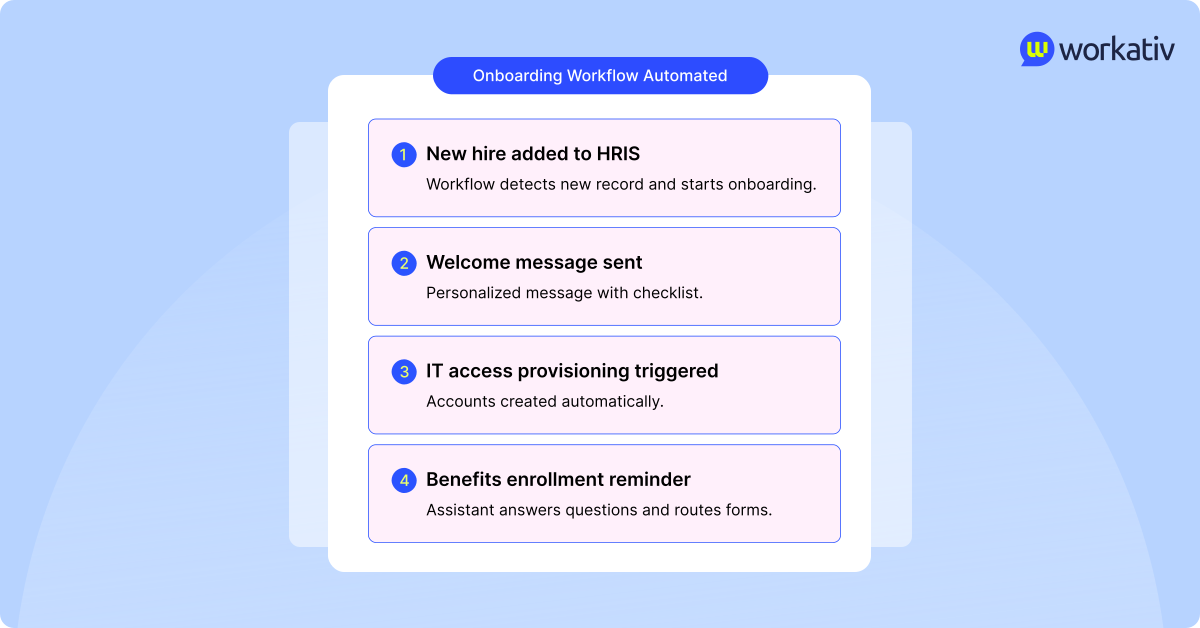
The onboarding process begins the moment a new hire is added to the HR system. This event automatically triggers a structured onboarding workflow, ensuring that every new employee receives a consistent experience.
A personalized welcome message is sent through communication platforms like Slack or Microsoft Teams, along with a guided checklist to complete onboarding tasks. At the same time, system access is provisioned automatically through identity platforms, and reminders for training and benefits enrollment are scheduled.
This ensures that employees are fully set up and productive from day one without requiring HR teams to manually coordinate each step.
PTO and leave management automation
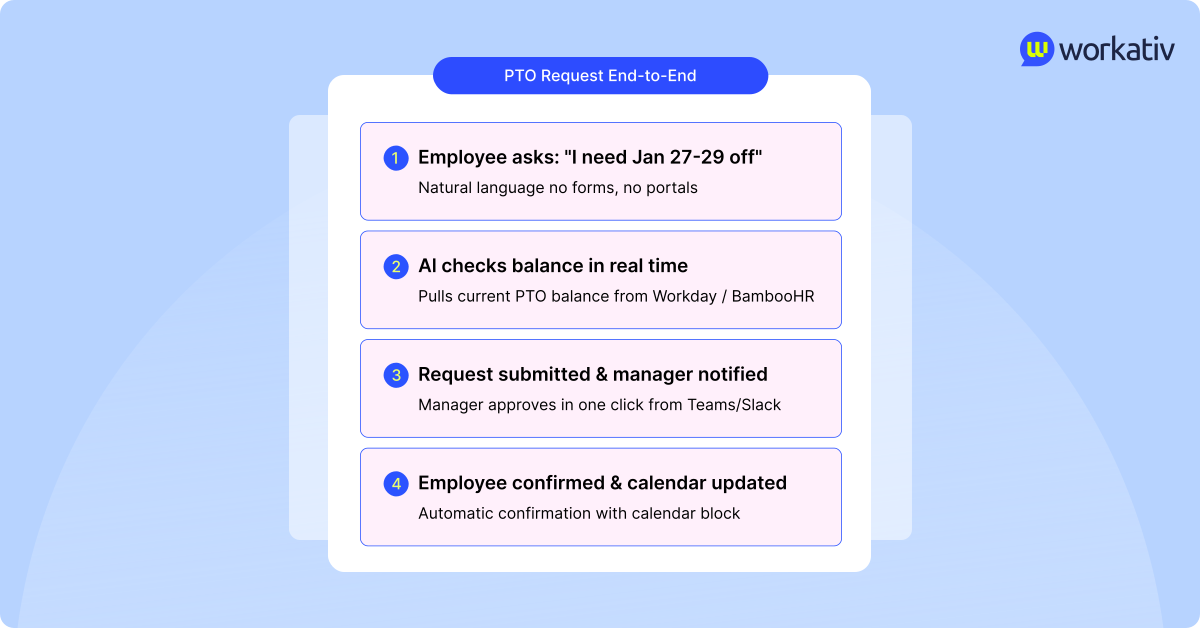
When an employee requests leave through chat, the system instantly interprets the request and converts it into an actionable workflow. It retrieves the employee’s leave balance in real time and validates the request against company policies.
The request is then routed to the manager for approval, which can be completed directly within Slack or Teams. Once approved, the leave is automatically recorded, the employee’s calendar is updated, and a confirmation is sent.
This eliminates delays, reduces errors, and removes the need for manual follow-ups.
Benefits automation
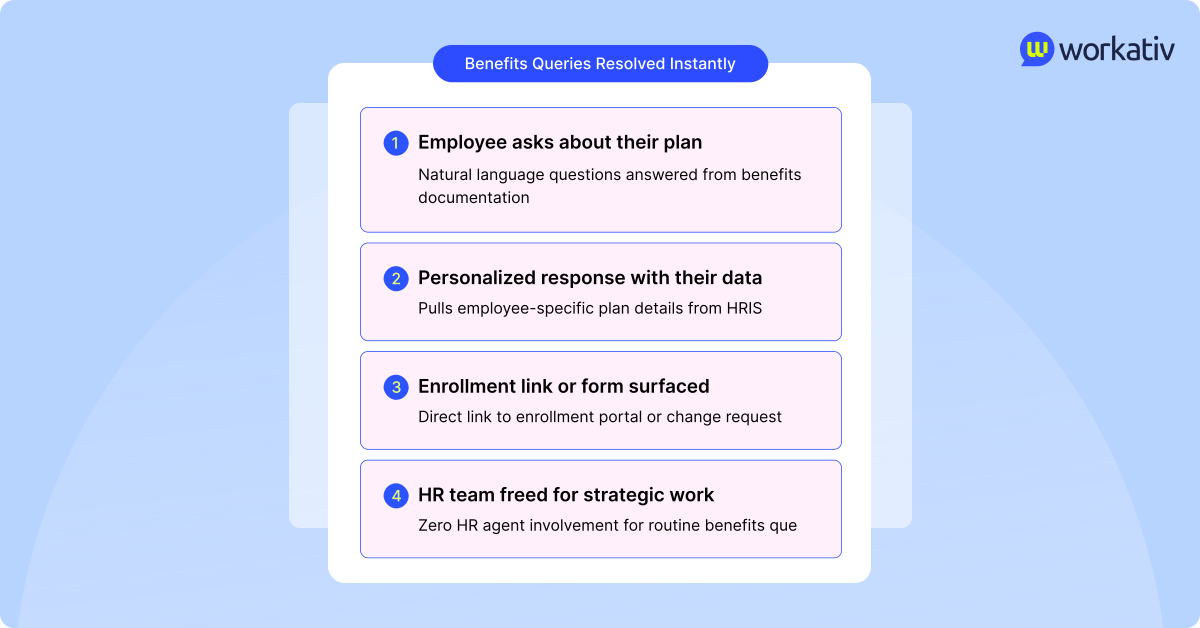
Benefits-related interactions are handled through real-time, personalized responses. When an employee asks a question, the system retrieves relevant plan details based on their profile and provides clear guidance instantly.
If updates are required—such as changes triggered by life events—the system guides the employee through the process, captures the necessary information, and initiates the appropriate workflows.
This simplifies what is typically a complex and time-consuming process for both employees and HR teams.
HR policy automation
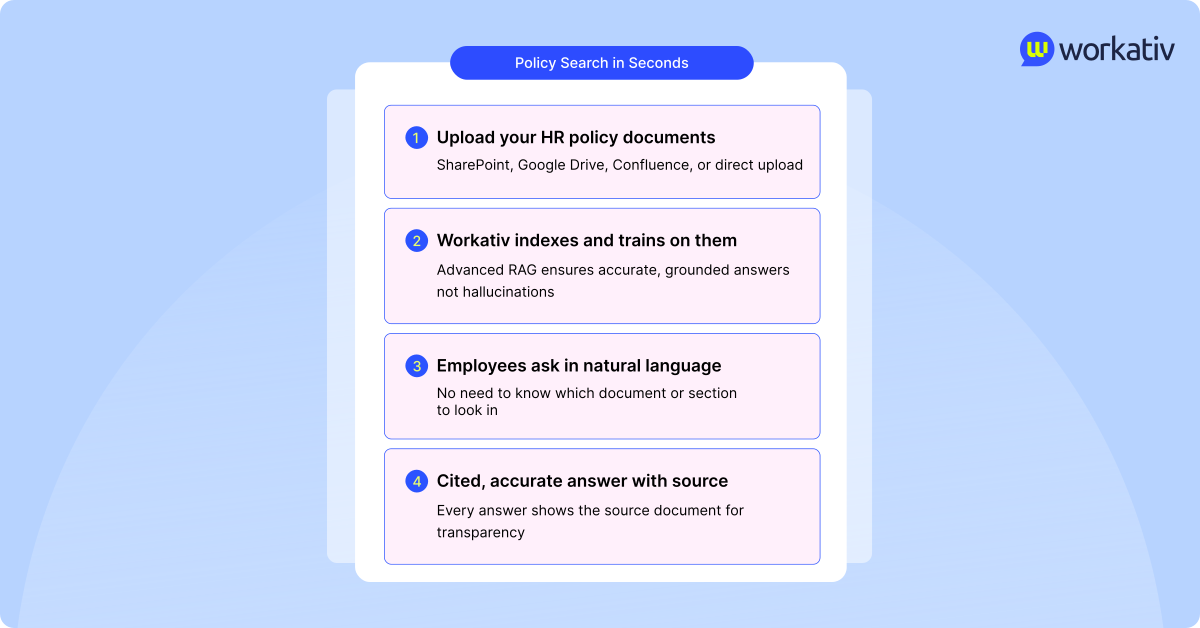
Policy automation begins by connecting and indexing HR documents from multiple sources. Once integrated, employees can ask questions in natural language and receive accurate, context-aware responses instantly.
The system retrieves relevant information and delivers it with clear references, ensuring transparency and consistency. This removes the need for employees to search through documents or depend on HR for clarification.
Payroll automation
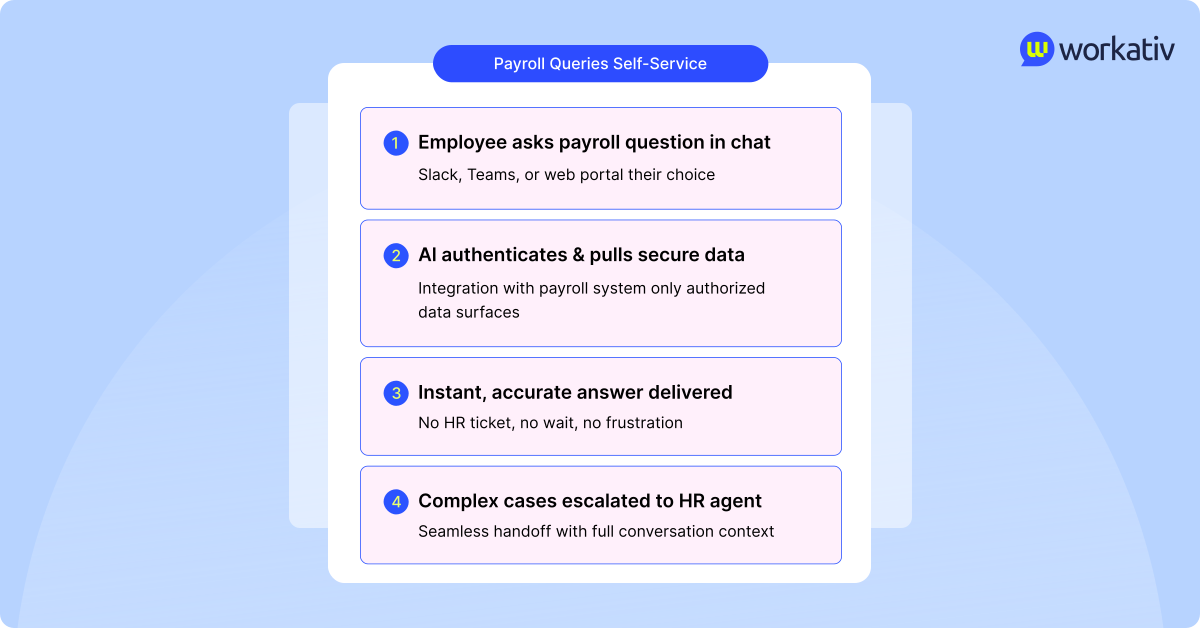
When an employee raises a payroll-related query, the system first ensures secure authentication before accessing any sensitive information. It then retrieves the required data directly from payroll systems and provides an instant response.
For more complex issues, the request is escalated to HR along with full context, ensuring faster resolution without repeated back-and-forth.
This approach improves both accuracy and employee trust in payroll-related communication.
Instead of handling HR requests manually, organizations can create a unified automation layer that delivers instant support, reduces operational overhead, and scales effortlessly as the workforce grows.
How to get started with HR chatbot use cases using Workativ
Getting started with HR chatbot use cases doesn’t require a complete overhaul of your HR systems. Instead, it’s about identifying high-impact workflows and gradually automating them using a structured, no-code approach.
Here’s how organizations typically move from idea to fully automated HR operations.
Step 1: Identify high-impact HR use cases : Start by focusing on the most repetitive and high-volume HR requests. Common starting points include onboarding, PTO and leave management, payroll queries, and HR policy support. These areas deliver quick wins and immediate ROI when automated.
Step 2: Connect your HR ecosystem : The next step is to integrate your existing systems—such as HRIS, payroll platforms, identity providers, and communication tools. This ensures that the chatbot can access real-time data and trigger actions across your HR stack.
Step 3: Build your AI HR agent (no code) : Using Workativ’s AI agent studio, HR teams can build and configure their chatbot without any coding. The agent is trained on HR documents, policies, and knowledge bases, while workflows are designed visually to automate tasks like approvals, provisioning, and request handling.
Step 4: Deploy across employee channels : Once ready, the chatbot can be deployed across channels where employees already work—such as Slack, Microsoft Teams, intranet portals, or web interfaces. This ensures easy access and higher adoption.
Step 5: Automate workflows end-to-end : With the foundation in place, organizations can automate complete workflows—from request initiation to approval and resolution. This includes leave approvals, onboarding processes, payroll queries, and more, all handled seamlessly without manual intervention.
Step 6: Monitor and optimize : After deployment, performance can be continuously monitored using AI-driven analytics and conversation insights. This helps identify gaps, improve responses, and expand automation to additional use cases over time.
Why Workativ accelerates HR chatbot deployment
What makes this approach effective is the ability to move quickly without technical complexity. A no-code AI agent builder allows HR teams to create and manage automation independently, while pre-built templates reduce setup time significantly.
With faster time to market, zero DevOps dependency, enterprise-grade security, and multilingual support, organizations can scale HR automation confidently while delivering a better employee experience from day one.
Business impact of HR chatbot use cases in enterprise
Adopting HR chatbot use cases goes beyond operational efficiency—it fundamentally transforms how HR teams deliver support and how employees experience it.
Reduced HR ticket volume : Organizations can achieve a 60–80% reduction in HR tickets by automating repetitive queries and enabling employee self-service.
Faster onboarding and productivity : Onboarding becomes more structured and efficient, helping employees reach productivity sooner without delays caused by manual coordination.
Improved employee satisfaction : Employee satisfaction improves significantly as instant, personalized, and always-available support reduces friction in accessing HR services.
Lower operational costs : Operational costs are reduced as automation minimizes manual effort across HR functions while maintaining high service quality.
Scalable HR operations : HR operations become highly scalable, allowing organizations to support growing and global workforces without increasing headcount.
Together, these outcomes make HR chatbot use cases a key driver of modern, efficient, and employee-centric HR operations.
From HR helpdesk to autonomous HR operations
HR is no longer just a support function—it is evolving into a strategic, experience-driven pillar of the organization. The shift from traditional helpdesks to AI-powered systems marks a move from reactive, ticket-based support to proactive, intelligent HR operations.
With modern HR chatbot use cases, organizations can automate repetitive workflows, deliver instant and personalized employee support, and scale HR services without increasing operational complexity.
This transformation is not just about efficiency—it’s about creating a better employee experience. Faster responses, seamless workflows, and always-available support help build trust, improve engagement, and enable employees to focus on meaningful work.
As enterprises continue to adopt AI-driven automation, HR teams that embrace this shift will be better positioned to drive productivity, retention, and long-term growth.
👉 Transform your HR operations with Workativ’s AI-powered HR chatbot — start your free trial today.
FAQs
What are the most common HR chatbot use cases?
The most common HR chatbot use cases include onboarding automation, PTO and leave management, payroll queries, benefits support, HR policy access, and HR helpdesk automation. These use cases focus on reducing repetitive HR tasks and enabling instant employee support.
What are HR chatbot onboarding use cases?
HR chatbot onboarding use cases include delivering welcome messages, guiding new hires through onboarding checklists, automating system access provisioning, answering policy questions, and sending training and compliance reminders.
What are HR helpdesk chatbot use cases?
HR helpdesk chatbot use cases include ticket triaging, auto-resolving repetitive queries, routing complex issues to HR teams, and tracking SLAs. These help reduce HR workload and improve response times.
Can HR chatbots integrate with HR systems like Workday or BambooHR?
Yes, modern HR chatbots can integrate with HR systems such as Workday, BambooHR, and other enterprise and SMB tools. These integrations allow chatbots to fetch real-time data and automate HR workflows seamlessly.
Are HR chatbots secure for handling employee data?
HR chatbots are designed with robust security measures, including authentication, role-based access control, and data encryption, to protect sensitive employee information.
How long does it take to deploy an HR chatbot?
Deployment time can vary depending on complexity, but with no-code platforms like Workativ, organizations can typically set up and launch HR chatbot use cases within days instead of months.
What is the business impact of HR chatbot use cases in enterprise?
HR chatbot use cases can reduce HR ticket volume by up to 80%, improve employee satisfaction, accelerate onboarding, lower operational costs, and enable scalable HR support across global teams.
Can HR chatbots support multilingual employees?
Yes, modern HR chatbots support multiple languages, allowing organizations to provide consistent HR support to a global workforce without language barriers.
'%3e%3cpath%20d='M11.5732%2031.7068L19.2977%2022.7433L11.5732%2011.5366H17.4664L22.6245%2018.942L29.0522%2011.5366H30.7788L23.4029%2020.0985L31.4127%2031.7086H25.4997L20.1231%2023.9069L13.3197%2031.7068H11.5732ZM16.6519%2012.8366H13.9536L26.354%2030.4462H28.9926L28.8265%2030.1576L16.6519%2012.8366Z'%20fill='%230C0C0C'/%3e%3c/g%3e%3cdefs%3e%3cclipPath%20id='clip0_505_14364'%3e%3crect%20width='19.7681'%20height='20.2432'%20fill='white'%20transform='translate(11.573%2011.5365)'/%3e%3c/clipPath%3e%3c/defs%3e%3c/svg%3e)

'%3e%3cpath%20d='M25.2175%2011.7557L26.9132%2011.911V15.0496C26.0135%2015.1444%2024.1746%2014.7452%2023.5821%2015.5947C23.4908%2015.726%2023.3291%2016.1592%2023.3291%2016.3091V19.002H26.7392L26.3346%2022.5281H23.3291V31.5952H19.707V22.5863L19.649%2022.5281H16.6628V19.002H19.707C19.7813%2017.4024%2019.4664%2015.7042%2020.1132%2014.1986C20.6748%2012.8902%2021.7857%2012.0974%2023.1666%2011.8435L23.7151%2011.7557H25.2183H25.2175Z'%20fill='%230C0C0C'/%3e%3c/g%3e%3cdefs%3e%3cclipPath%20id='clip0_505_14375'%3e%3crect%20width='10.2695'%20height='19.8027'%20fill='white'%20transform='translate(16.658%2011.7567)'/%3e%3c/clipPath%3e%3c/defs%3e%3c/svg%3e)
About the Author
Deepa Majumder

Senior content writer
Deepa Majumder is a writer who nails the art of crafting bespoke thought leadership articles to help business leaders tap into rich insights in their journey of organization-wide digital transformation. Over the years, she has dedicatedly engaged herself in the process of continuous learning and development across business continuity management and organizational resilience.
Her pieces intricately highlight the best ways to transform employee and customer experience. When not writing, she spends time on leisure activities.
Auto-resolve 60% of Your Employee
Queries With AI Agents & Automation
- No credit card required
- Setup in minutes
- Cancel Anytime