
Solutions
Features
Integrations
Pricing
Resources
HR shared services automation: benefits, challenges & AI guide
Learn how HR shared services automation reduces tickets, removes bottlenecks, and improves SLA performance with AI agents. Explore benefits, challenges, and best practices.


TL;DR
HR shared services automation reduces 60–80% of repetitive HR tickets using AI-driven query resolution and workflow execution.

AI agents enable instant responses, faster SLA adherence, and consistent employee support across channels and geographies.
Automation eliminates bottlenecks by handling approvals, onboarding, and HR workflows without manual intervention.
Scalable HR operations become possible without increasing headcount through integrations and intelligent workflow automation.
HR shared services were designed to centralize support and improve efficiency, but many teams today are still overwhelmed with repetitive employee requests, from leave queries and payroll questions to policy clarifications and onboarding support. Despite having shared service models in place, HR teams continue to face delays, rising ticket volumes, and increasing pressure to meet SLA expectations.
The core issue isn’t centralization, it’s the reliance on manual case handling. This is where HR shared services automation changes the game. By introducing AI agents and workflow automation, organizations can move from reactive, ticket-based support to autonomous HR service delivery.
In this guide, we’ll explore what HR shared services are, the common bottlenecks that limit efficiency, and how automation is transforming operations.
We’ll also cover key benefits, challenges, best practices, and ways AI agents can help HR teams reduce ticket volume, improve SLA performance, and scale support globally.
What are HR shared services?
HR shared services is a centralized model for delivering HR support across an organization, in which common HR processes and employee requests are managed through a dedicated shared services center (SSC). Instead of each department handling HR tasks independently, services such as payroll, leave management, onboarding, and policy support are standardized and delivered by a single, unified function.
This model focuses on improving efficiency, consistency, and cost control by streamlining HR operations. It typically combines structured processes, a centralized HR knowledge base, and employee self-service tools that allow employees to access information or raise requests without direct HR intervention.
In modern organizations, HR shared services are evolving beyond basic support systems into more intelligent, automated service layers that can handle both employee queries and HR workflows at scale.
Why HR shared services still struggle today
While HR shared services were designed to improve efficiency through centralization, many organizations still face persistent operational challenges. The issue is not the model itself, but the continued reliance on manual processes, fragmented systems, and limited automation. These gaps create inefficiencies that impact both HR teams and employee experience.
High volume of repetitive employee tickets : A significant portion of HR requests consists of repetitive queries such as leave balances, payroll details, benefits information, and policy clarifications. These routine questions consume a large share of HR bandwidth, leaving little room for strategic initiatives and increasing response backlogs.
HR shared services bottlenecks in case resolution : Manual triaging, approvals, and dependency on HR personnel create delays in resolving employee requests. Tickets often move through multiple layers before closure, leading to inefficiencies and slower turnaround times—one of the most common bottlenecks in HR shared services.
SLA delays and inconsistent employee experience : As ticket volumes grow, maintaining SLA commitments becomes increasingly difficult. Employees may experience delayed responses, inconsistent answers, or multiple follow-ups, which directly affect satisfaction and trust in HR services.
Limited scalability for the global workforce : Supporting a distributed workforce across different time zones, languages, and regions adds complexity. Traditional HR shared services models struggle to provide consistent, round-the-clock support without significantly increasing headcount.
Lack of automation across HR workflows : Most HR shared services systems focus on information access rather than execution. Without automation, processes such as approvals, onboarding, and request handling remain manual, limiting the ability to scale and operate efficiently.
CENTRALISED. STILL OVERWHELMED.
Shared services were meant to fix this. Repetitive tickets, SLA delays and manual bottlenecks remain.
No-code · Deep integrations · Deploy in minutes
See a Quick Demo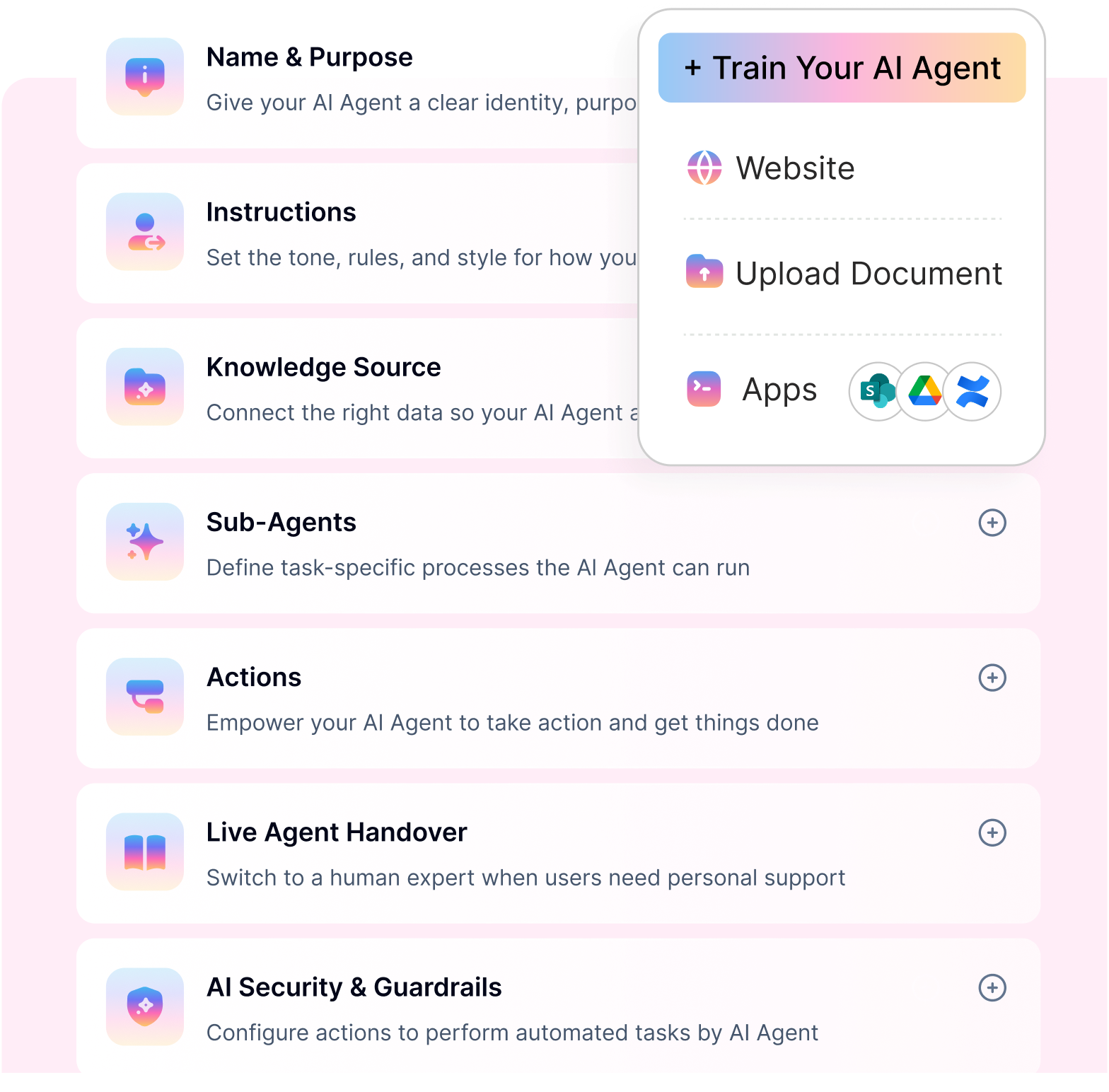
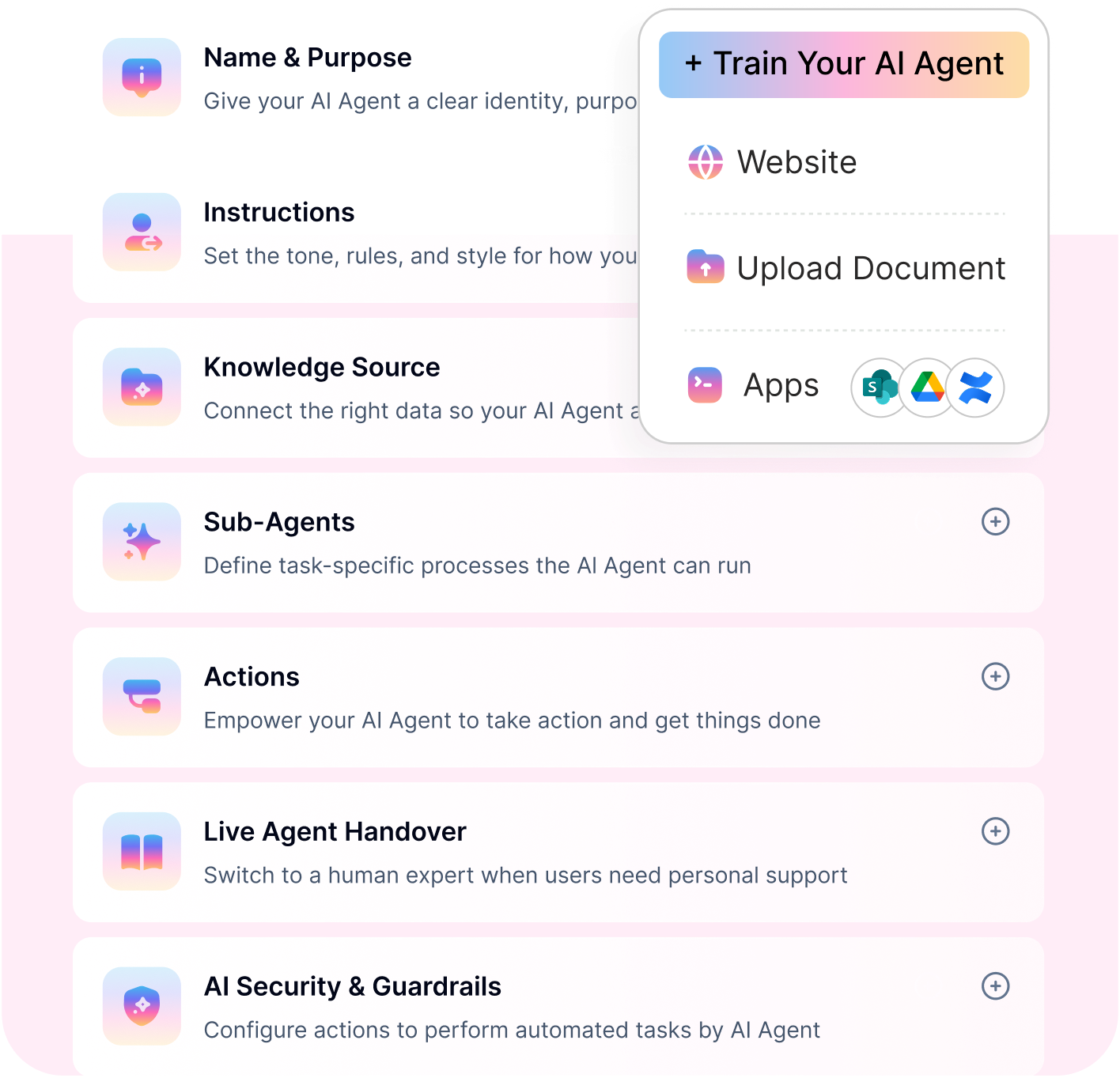
What is HR shared services automation?
HR shared services automation is the evolution of traditional, ticket-based HR support into AI-powered systems that can both respond to employee queries and execute HR workflows. Instead of relying on manual case handling, automation enables HR teams to resolve requests instantly through intelligent agents and trigger actions such as approvals, updates, and task completion without human intervention.
This shift transforms HR shared services from a reactive support function into a proactive, scalable service layer that improves efficiency, reduces delays, and eliminates repetitive work.
Key components of HR shared services automation
AI agents for employee support : AI agents act as the first point of interaction, handling employee queries in real time. They provide accurate, conversational responses and are available 24/7 across multiple channels.
Workflow automation for HR processes : Automation enables the execution of HR tasks such as leave requests, onboarding steps, approvals, and document handling without manual intervention.
Knowledge base powered by agentic RAG : A centralized, continuously updated knowledge base ensures that AI agents deliver accurate, context-aware responses grounded in HR policies and documentation.
Integrations with HR systems and tools : Seamless integration with HRIS, payroll, ticketing, and identity systems enables automation to go beyond responses and handle end-to-end HR actions.
Benefits of HR shared services automation
HR shared services automation delivers measurable outcomes that directly impact efficiency, cost, and employee experience. By replacing manual processes with AI-driven workflows, organizations can streamline operations and scale HR support without increasing complexity.
Reduction in HR ticket volume : Automation deflects repetitive queries such as leave requests, payroll questions, and policy clarifications. This significantly reduces incoming tickets and frees HR teams to focus on higher-value initiatives.
Faster SLA resolution and response times : AI agents provide instant, consistent responses to employee queries, ensuring faster resolution and improved adherence to SLA targets without delays caused by manual handling.
Elimination of HR shared services bottlenecks : Automation removes dependencies on manual triage and approvals, eliminating common HR shared-services bottlenecks and accelerating request resolution.
Improved employee experience and satisfaction : Employees receive accurate, real-time support across channels, leading to a more seamless and reliable HR experience that improves engagement and trust.
Scalable HR support for global teams : Automation enables organizations to support employees across time zones and languages without expanding HR headcount, making global operations more efficient.
Cost efficiency and operational optimization : By reducing manual effort and improving process efficiency, organizations lower operational costs while increasing overall HR productivity.
Challenges in HR shared services and how to overcome them
Even with centralized models in place, HR shared services teams continue to face operational challenges that limit efficiency and scalability. These issues often stem from legacy processes, disconnected systems, and limited automation.
Fragmented HR systems and data silos : HR operations are often spread across multiple tools that do not integrate well, leading to disconnected workflows and inconsistent data across systems.
Lack of a structured HR knowledge base : Scattered or outdated HR documentation makes it difficult to deliver accurate and consistent responses, impacting both employees and automation outcomes.
Over-reliance on manual case handling : Many HR processes still depend on manual intervention for triaging, approvals, and resolution, slowing down response times and limiting scalability.
Resistance to automation and change : Adoption of new technologies is often slowed by internal hesitation, concerns around control, and uncertainty about the impact of automation.
Inconsistent employee experience across channels : Employees receive varying levels of support depending on the platform they use, resulting in fragmented and sometimes confusing experiences.
Difficulty in measuring ROI and performance : Limited visibility into key metrics such as resolution rates and SLA performance makes it challenging to assess the effectiveness of HR shared services.
How AI agents transform HR shared services operations
AI agents are at the core of modern HR shared services transformation, enabling organizations to move from manual, ticket-driven support to intelligent, autonomous operations. Instead of relying on HR teams for every request, AI agents handle queries, execute workflows, and continuously improve performance at scale.
Instant resolution of employee queries : AI agents provide real-time, conversational responses to employee queries across channels. With multilingual capabilities, they ensure employees receive instant and accurate support regardless of location or time zone.
Automated HR workflows and actions : Beyond answering questions, AI agents can perform HR tasks such as leave requests, onboarding, approvals, and document management, reducing the need for manual intervention.
Intelligent ticket deflection and routing : By automatically resolving repetitive queries, AI agents significantly reduce incoming ticket volume. For more complex cases, they route requests intelligently to the right HR teams.
Consistent SLA performance at scale : AI agents ensure predictable response times and consistent service delivery, helping organizations maintain SLA commitments even during peak demand.
Continuous learning with agentic AI : AI agents improve over time by learning from interactions, identifying gaps, and refining responses, making HR shared services more efficient and accurate with every use.
ALL BENEFITS. ONE PLATFORM.
Workativ reduces tickets, eliminates bottlenecks, improves SLA and scales globally - no headcount added.
Key use cases of AI in HR shared services
AI agents enable practical, high-impact use cases across HR shared services by automating repetitive tasks and improving response efficiency. These use cases focus on reducing manual workload while delivering faster and more consistent employee support.
Employee self-service and HR helpdesk automation : AI agents act as the first point of contact, resolving common HR queries instantly and reducing dependency on HR teams for routine support.
Onboarding and offboarding workflows : Automation streamlines employee onboarding and offboarding by guiding users through tasks, triggering approvals, and ensuring completion of required processes.
Leave and payroll query resolution : Employees can get instant answers to leave balances, payroll details, and related requests without raising tickets, improving speed and accuracy.
Benefits and policy support : AI agents provide quick access to HR policies, benefits information, and eligibility details, ensuring consistent and up-to-date responses.
HR ticket triaging and routing : AI automatically categorizes, prioritizes, and routes tickets to the right teams, reducing manual effort and improving resolution efficiency.
Business impact of HR shared services automation
HR shared services automation delivers clear, measurable outcomes that directly improve efficiency, cost, and employee experience. By reducing manual effort and enabling faster resolution, organizations can transform HR operations at scale.
Reduction in HR ticket volume : Organizations can reduce repetitive HR tickets by 60–80% by using AI agents to handle common queries instantly, without human intervention.
Faster SLA resolution times : Response and resolution times improve significantly, with many requests resolved in seconds instead of hours or days, ensuring stronger SLA adherence.
Improved employee satisfaction : Instant, accurate, and 24/7 support leads to higher employee satisfaction, reducing frustration caused by delays and inconsistent responses.
Lower operational costs : Automation reduces the need for large HR support teams, lowering operational costs while increasing overall efficiency and productivity.
Scalable HR operations : HR teams can support a growing, global workforce without increasing headcount, enabling seamless scaling across regions, languages, and time zones.
How to implement HR shared services automation
Implementing HR shared services automation requires a structured approach that focuses on both efficiency and scalability. By aligning automation with real HR needs, organizations can move quickly from manual processes to autonomous service delivery.
1. Identify repetitive HR queries and workflows
Start by analyzing high-volume employee requests such as leave queries, payroll questions, onboarding tasks, and policy-related support. For instance, queries like “What is my leave balance?” or “When will my salary be credited?” often appear repeatedly and are ideal candidates for automation. Similarly, recurring onboarding steps or document submissions can be streamlined.
2. Build a centralized HR knowledge base
Create a single source of truth for HR policies, processes, and documentation. This could include consolidating leave policies, benefits guides, payroll FAQs, and onboarding documents into a structured repository so AI agents can retrieve accurate information instead of relying on scattered files or emails.
3. Deploy AI agents for employee interaction
Introduce AI agents as the first point of contact to handle employee queries in real time. For example, when an employee asks, “Can I carry forward my leave?” on Slack or Teams, the AI agent can instantly respond with a policy-based answer without requiring a ticket.
4. Integrate HR systems and tools
Connect automation with HRIS, payroll, ticketing, and identity systems to enable execution of HR workflows. When an employee submits a leave request, the AI agent can process the request, notify the manager for approval, and update the HR system automatically.
5. Monitor and optimize continuously
Track performance metrics such as resolution rates, SLA adherence, and ticket trends to improve outcomes. If analytics show repeated questions about a specific benefits policy, the knowledge base and workflows can be refined to improve accuracy and reduce follow-ups.
Want to know how you can deploy HR shared services automation through an AI agent in just 10 minutes and streamline HR services?
This 2-minute tutorial video is for you. https://www.youtube.com/watch?v=j_gXCZ2oV68
MOVE FROM REACTIVE TICKETS TO AUTONOMOUS HR?
See how Workativ transforms HR shared services into an intelligent, always-on support system - live demo.
No-code · Deep integrations · Deploy in minutes
See Workativ AI in actionBest practices for optimizing HR shared services with automation
Successfully implementing HR shared services automation requires more than deploying tools—it demands a strategic approach that ensures long-term efficiency, scalability, and consistent employee experience.
Focus on automation, not just self-service : Many organizations stop at enabling employees to find information, but true impact comes from automating actions. HR shared services should not only answer queries but also execute tasks like approvals, requests, and updates.
Prioritize high-volume HR queries first : Start with the most frequent and repetitive requests such as leave, payroll, and policy queries. Automating these areas delivers immediate value and reduces HR shared services bottlenecks quickly.
Maintain a continuously updated knowledge base : Accurate responses depend on reliable information. Keeping HR policies, documents, and FAQs updated ensures AI agents provide consistent and correct answers.
Integrate deeply with HR systems : Automation becomes powerful when it connects with HRIS, payroll, and ticketing systems. Deep integrations enable end-to-end workflow execution rather than just responding to queries.
Design for omnichannel support : Employees interact across multiple platforms such as Slack, Teams, and intranet portals. HR shared services should deliver a consistent experience across all channels.
Measure outcomes beyond ticket volume : Success should not be measured by the number of conversations alone. Focus on resolution rates, SLA adherence, employee satisfaction, and reduction in manual workload.
Enable continuous AI learning : AI agents should improve over time by learning from interactions, identifying gaps, and refining responses to increase accuracy and efficiency.
Balance automation with human escalation : Not all requests can or should be automated. Ensuring seamless handoff to HR teams for complex or sensitive cases helps maintain quality and trust.
How Workativ enables autonomous HR shared services
Modern HR shared services require more than basic automation—they need intelligent systems that can understand, act, and continuously improve. Workativ enables this shift by combining AI agents, workflow automation, and deep integrations to move HR teams from manual support to autonomous service delivery.
No-code AI agent studio for rapid deployment : Workativ allows HR teams to build and deploy AI agents without engineering effort. With a no-code interface and pre-built templates, organizations can go live quickly and start automating HR support in days instead of months.
Agentic RAG for accurate HR knowledge delivery : Workativ uses agentic retrieval to ensure AI agents provide accurate, context-aware responses based on HR policies, documents, and internal knowledge, reducing errors and improving consistency.
Pre-built HR automation workflows : Common HR processes such as leave requests, onboarding, approvals, and employee queries can be automated using ready-to-use workflows, eliminating repetitive manual tasks.
Omnichannel employee support : Workativ provides HR support across platforms such as Slack, Microsoft Teams, intranet, and web, ensuring employees receive consistent, real-time assistance wherever they are.
Enterprise-grade security and compliance : Built with enterprise requirements in mind, Workativ supports security and compliance standards such as SOC 2, ISO, and GDPR, ensuring safe handling of sensitive HR data.
With the ability to deploy quickly and scale seamlessly, Workativ helps organizations transform HR shared services into an intelligent, always-on support system—ready to go live in days, not months.
Scaling HR shared services with AI-driven automation
HR shared services are evolving from centralized support functions into intelligent, autonomous systems. By embracing automation and AI agents, organizations can eliminate long-standing HR shared services bottlenecks, significantly improve SLA performance, and deliver faster, more consistent support to employees.
This shift not only reduces repetitive workload for HR teams but also enables seamless scaling across global workforces without increasing operational complexity. As employee expectations continue to rise, automation becomes essential to maintaining efficiency, accuracy, and experience at scale.
To move from manual HR operations to autonomous service delivery, start leveraging AI-driven automation for HR shared services today.
Book a demo with Workativ to transform your HR support.
FAQs
What are HR shared services?
HR shared services is a centralized model where HR functions such as payroll, onboarding, and employee support are delivered through a single, unified team or system to improve efficiency and consistency.
What are HR shared services bottlenecks?
HR shared services bottlenecks refer to delays caused by manual processes, high ticket volumes, approval dependencies, and fragmented systems that slow down request resolution.
How does HR shared services automation work?
HR shared services automation uses AI agents and workflow automation to handle employee queries, execute HR tasks, and integrate with HR systems, reducing the need for manual intervention.
What are the benefits of HR shared services automation?
It helps reduce HR ticket volume, improve SLA response times, enhance employee experience, lower operational costs, and enable scalable support across global teams.
How long does it take to implement HR shared services automation?
Implementation timelines vary, but with no-code platforms and pre-built workflows, organizations can start automating HR shared services within a few days to a few weeks.
Can HR shared services automation integrate with HR systems?
Yes, modern solutions integrate with HRIS, payroll, ticketing, and identity systems to enable end-to-end automation of HR workflows.
'%3e%3cpath%20d='M11.5732%2031.7068L19.2977%2022.7433L11.5732%2011.5366H17.4664L22.6245%2018.942L29.0522%2011.5366H30.7788L23.4029%2020.0985L31.4127%2031.7086H25.4997L20.1231%2023.9069L13.3197%2031.7068H11.5732ZM16.6519%2012.8366H13.9536L26.354%2030.4462H28.9926L28.8265%2030.1576L16.6519%2012.8366Z'%20fill='%230C0C0C'/%3e%3c/g%3e%3cdefs%3e%3cclipPath%20id='clip0_505_14364'%3e%3crect%20width='19.7681'%20height='20.2432'%20fill='white'%20transform='translate(11.573%2011.5365)'/%3e%3c/clipPath%3e%3c/defs%3e%3c/svg%3e)

'%3e%3cpath%20d='M25.2175%2011.7557L26.9132%2011.911V15.0496C26.0135%2015.1444%2024.1746%2014.7452%2023.5821%2015.5947C23.4908%2015.726%2023.3291%2016.1592%2023.3291%2016.3091V19.002H26.7392L26.3346%2022.5281H23.3291V31.5952H19.707V22.5863L19.649%2022.5281H16.6628V19.002H19.707C19.7813%2017.4024%2019.4664%2015.7042%2020.1132%2014.1986C20.6748%2012.8902%2021.7857%2012.0974%2023.1666%2011.8435L23.7151%2011.7557H25.2183H25.2175Z'%20fill='%230C0C0C'/%3e%3c/g%3e%3cdefs%3e%3cclipPath%20id='clip0_505_14375'%3e%3crect%20width='10.2695'%20height='19.8027'%20fill='white'%20transform='translate(16.658%2011.7567)'/%3e%3c/clipPath%3e%3c/defs%3e%3c/svg%3e)
About the Author
Deepa Majumder

Senior content writer
Deepa Majumder is a writer who nails the art of crafting bespoke thought leadership articles to help business leaders tap into rich insights in their journey of organization-wide digital transformation. Over the years, she has dedicatedly engaged herself in the process of continuous learning and development across business continuity management and organizational resilience.
Her pieces intricately highlight the best ways to transform employee and customer experience. When not writing, she spends time on leisure activities.
Auto-resolve 60% of Your Employee
Queries With AI Agents & Automation
- No credit card required
- Setup in minutes
- Cancel Anytime